
 EN
EN
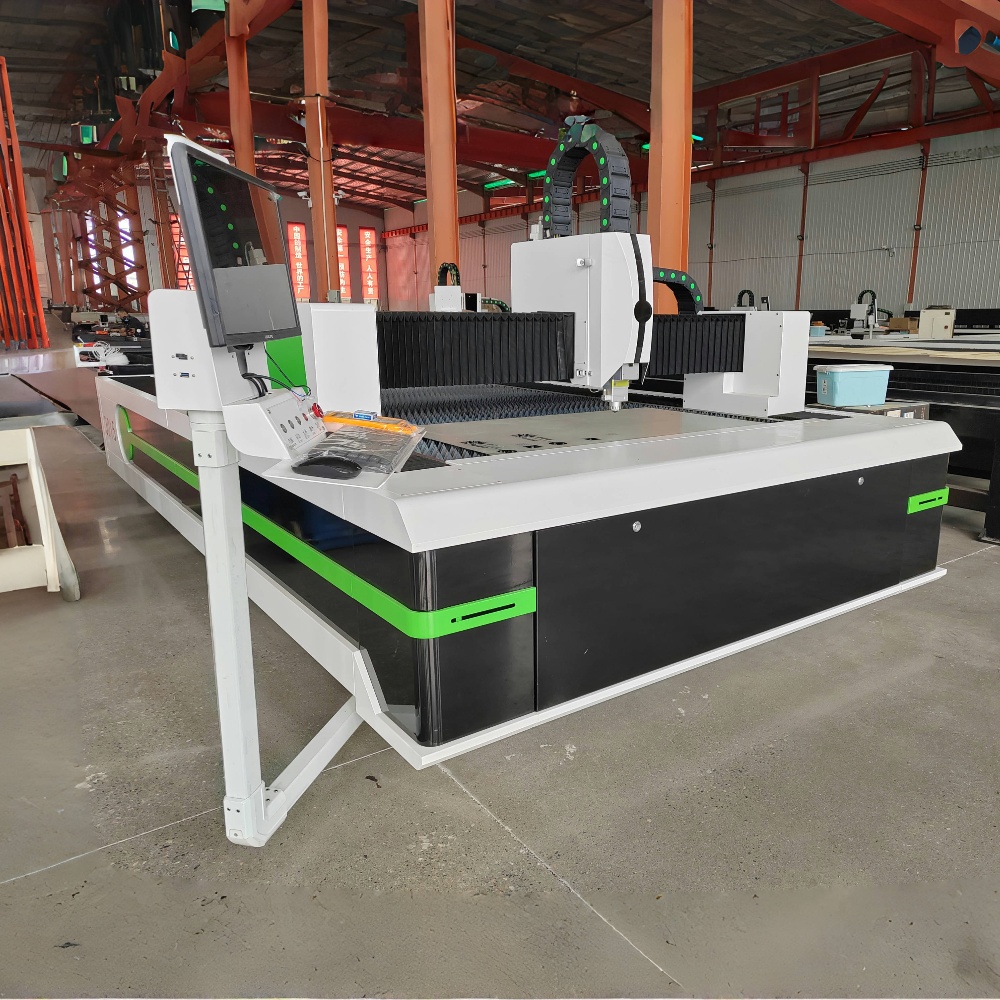
The manufacturing world has seen remarkable advancements in precision cutting technology over the past decade, and the fiber laser cutting machine sits firmly at the center of that evolution. In 2026, these systems are more powerful, more energy-efficient, and more accessible than ever before — yet many buyers and operators still have a limited understanding of what actually happens inside the machine during a cut. This article breaks down the working principles, core components, and real-world applications in plain terms.
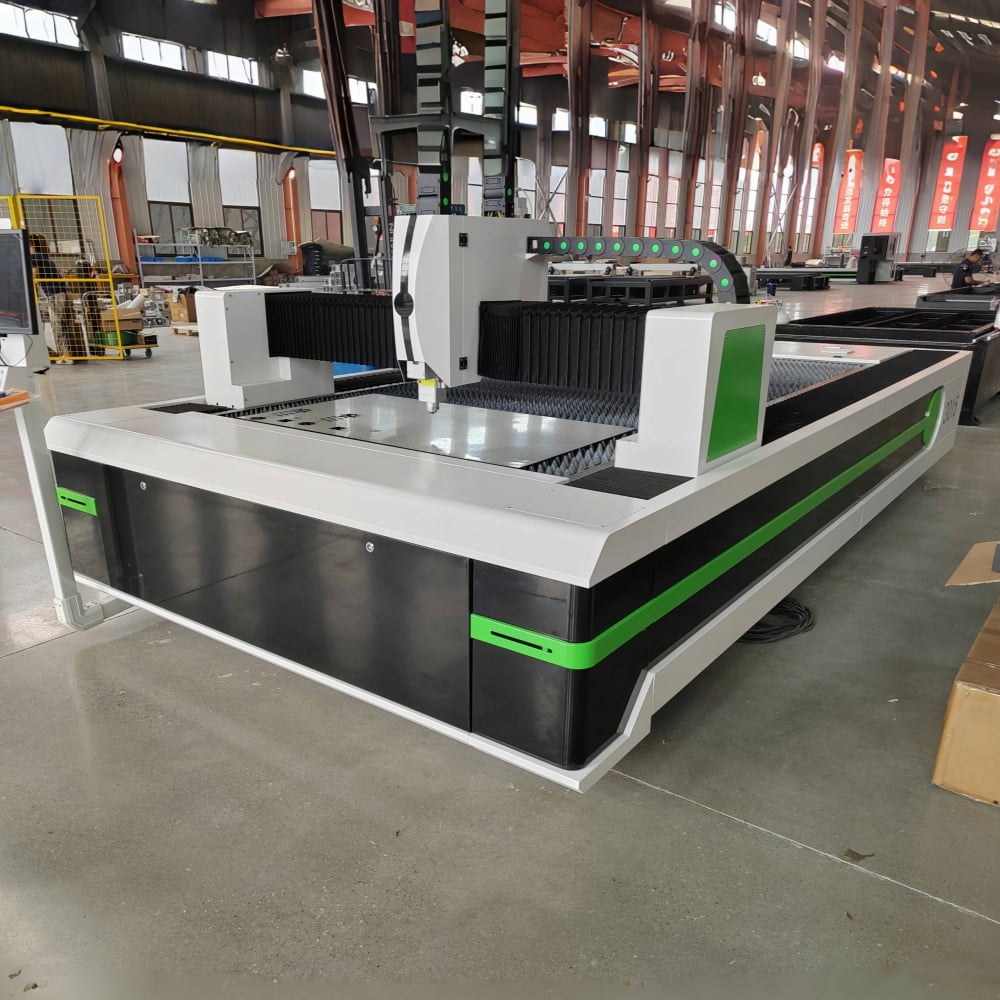
The Core Principle: How Fiber Laser Technology Generates a Beam
Unlike CO2 lasers, which generate their beam by exciting a gas mixture inside a tube, a fiber laser cutting machine produces its beam through a fundamentally different process. The light source is a seed laser diode, which generates a low-power laser signal. That signal is then fed into a fiber optic cable doped with rare-earth elements — most commonly ytterbium — and amplified as it travels through the fiber. The result is an intense, highly focused beam of infrared light with a wavelength of approximately 1,064 nanometers.
This wavelength is about ten times shorter than that of a CO2 laser, which has two significant consequences. First, the beam is far more readily absorbed by metals, making fiber technology inherently more efficient on conductive materials. Second, the shorter wavelength allows the beam to be focused to a much smaller spot diameter, which translates directly into finer kerf widths and higher cutting precision.
The amplified beam is delivered to the cutting head via a flexible fiber optic cable — a design that eliminates the complex mirror-based beam delivery systems found in older laser technologies and dramatically reduces maintenance requirements.
What Happens at the Cutting Head
Once the beam reaches the cutting head, it passes through a focusing lens or collimator that concentrates it to the precise focal point required for the material being cut. The focused beam strikes the metal surface with enough intensity to instantly vaporize or melt the material in a very small area.
Simultaneously, an assist gas — typically oxygen, nitrogen, or compressed air — is delivered coaxially through the nozzle surrounding the beam. The choice of assist gas has a meaningful effect on cut quality and edge characteristics. Oxygen accelerates the cutting process on mild steel through an exothermic reaction, producing faster cuts but with a slightly oxidized edge. Nitrogen is used for stainless steel and aluminum where a clean, oxide-free edge is required, acting as a blowing agent to expel molten material without chemical reaction. Compressed air offers a cost-effective middle ground for less demanding applications.
The cutting head moves across the material surface — guided by the CNC motion system — tracing the programmed toolpath with high speed and repeatability, while the beam and gas flow work together to produce a continuous, clean cut.
The CNC Motion System and Controller
The precision of a fiber laser cutting machine is only as good as the motion system guiding the cutting head. Modern machines use servo-driven linear motion systems on the X and Y axes, often with linear encoders providing closed-loop position feedback. This ensures that the actual position of the cutting head matches the commanded position at all times, even at high speeds.
The CNC controller interprets the G-code generated by the CAM software and coordinates the laser power, cutting speed, assist gas pressure, and axis motion simultaneously. In 2026, most mid-range and industrial fiber laser systems ship with intelligent controllers capable of automatic parameter optimization — adjusting power and speed in real time based on material thickness and geometry, including sharp corners and fine detail features where the machine needs to decelerate and reduce power to avoid burning.
Materials and Thickness Capabilities
| Material | Typical Thickness Range | Recommended Assist Gas | Edge Quality |
|---|---|---|---|
| Mild Steel | 0.5 mm – 30 mm | Oxygen / Air | Good, slight oxidation with O₂ |
| Stainless Steel | 0.5 mm – 25 mm | Nitrogen | Excellent, oxide-free |
| Aluminum | 0.5 mm – 20 mm | Nitrogen | Good, requires high power |
| Copper | 0.5 mm – 6 mm | Nitrogen / Air | Moderate (high reflectivity) |
| Brass | 0.5 mm – 8 mm | Nitrogen | Good |
| Galvanized Steel | 0.5 mm – 12 mm | Air / Oxygen | Good for structural parts |
Fiber laser cutting machines are purpose-built for metal. Their high beam absorption rate on conductive materials makes them the preferred technology for sheet metal fabrication, tube cutting, and structural component production across industries ranging from automotive and aerospace to construction and electronics manufacturing.
Power Levels and Their Practical Meaning
Fiber laser cutting machines are sold across a wide range of power outputs, typically from 1,000W (1kW) entry-level systems up to 30kW or beyond for heavy industrial use. Power level directly affects two things: the maximum material thickness the machine can cut cleanly, and the speed at which it can cut thinner materials.
A 3kW machine cuts 12mm mild steel at a practical production speed, while the same thickness on a 6kW machine runs significantly faster — reducing cycle time and increasing throughput. For thin sheet metal under 3mm, even a 1.5kW system can achieve very high cutting speeds, meaning higher-power machines on thin material spend most of their advantage on speed rather than capability.
Choosing the right power level requires an honest assessment of your typical material thickness distribution, not just your occasional maximum.
Why Fiber Laser Efficiency Matters More in 2026
Energy efficiency has become an increasingly important purchasing criterion, and the fiber laser cutting machine holds a clear advantage over older gas laser technologies in this respect. The wall-plug efficiency of a fiber laser system — the ratio of electrical input to laser output power — typically ranges from 25% to 35%, compared to roughly 10% for CO2 systems of equivalent output power.
In practical terms, this means lower electricity costs per cut part, reduced heat generation in the machine environment, and a smaller cooling system requirement. As energy costs have risen and sustainability considerations have gained commercial weight in manufacturing procurement, this efficiency gap has become a more prominent factor in purchasing decisions.
FAQ
What materials can a fiber laser cutting machine not cut? Fiber laser cutting machines are optimized for metals and perform poorly on non-metallic materials. Wood, acrylic, leather, fabric, and most plastics do not absorb the 1,064nm fiber laser wavelength efficiently, resulting in poor cut quality or no cutting at all. For non-metals, a CO2 laser is the appropriate technology.
How long does a fiber laser source last? Modern fiber laser sources are rated for approximately 100,000 hours of operational life under normal conditions — far exceeding the lifespan of CO2 laser tubes, which typically require replacement every 8,000 to 20,000 hours. This extended service life is one of the strongest total-cost-of-ownership arguments for fiber technology.
What is the difference between a fiber laser cutting machine and a CO2 laser cutter? The fundamental difference is the beam generation method and wavelength. Fiber lasers produce a 1,064nm beam that metals absorb far more efficiently, making them faster and more energy-efficient on metal cutting tasks. CO2 lasers produce a 10,640nm beam that works well on non-metals but is less efficient on metal and requires significantly more maintenance due to their gas tube and mirror-based beam delivery system.
Does a fiber laser cutting machine require much maintenance? Compared to other cutting technologies, fiber laser systems are relatively low-maintenance. There are no mirrors to align, no gas tubes to replace, and no consumable optical components in the beam path other than the protective window in the cutting head and the nozzle. Regular maintenance focuses on cleaning the cutting head optics, checking assist gas quality, and lubricating the motion system guide rails.
Is a fiber laser cutting machine suitable for small workshops? Entry-level fiber laser systems in the 1kW to 3kW range are compact enough and affordable enough for small fabrication shops and custom metalworking businesses. The key considerations for a smaller operation are available floor space, ventilation and fume extraction infrastructure, and the electrical supply capacity required by the machine and its chiller unit.
Understanding how a fiber laser cutting machine works at a mechanical and optical level helps operators get the most out of the equipment and helps buyers make better-informed purchasing decisions. As power levels increase and intelligent control systems become standard, the gap between what these machines can do and what most users ask of them continues to widen — leaving significant performance on the table for those who haven't taken the time to understand the technology.
