Leather is the only material in most laser shops that was once alive, and it still behaves that way.
A hide is not a manufactured sheet. Thickness changes as you move from the spine toward the belly. Grain density, fat content, and fiber structure all shift across the same piece. Two hides from the same tannery can respond differently to the same file.
That variability is the whole story of leather laser work. The machine does not know about it, and the software cannot compensate for it, so the operator has to establish the process on the material actually in front of them.
The payoff is worth the effort. Laser cutting seals the edge of leather as it separates it, so the cut does not fray and does not need the finishing that mechanical cutting demands. For thin straps, intricate shapes, and small repetitive parts, the laser produces results that die cutting struggles to match.
But leather also scorches more visibly than almost any other material. A setting that is slightly too hot does not just slow the job down; it permanently discolours the product.
Before any parameter is considered, the leather itself decides most of the outcome. Two categories dominate the trade, and they behave very differently under a CO₂ beam.
Vegetable-tanned leather is tanned with plant-derived agents. It is firm, takes engraving with strong dark contrast, and burns to a warm brown tone that many craft products rely on deliberately. Belts, wallets, patches, and tooled goods are usually veg-tan.
Chrome-tanned leather is tanned with chromium salts. It is softer, more pliable, and dominates garment, upholstery, and automotive use. Engraving on chrome-tanned leather is less defined, the surface can produce a sticky residue, and the chrome content makes fume control more important.
Surface finish matters almost as much as tanning. Dyed, oiled, waxed, coated, and suede finishes each change how the surface absorbs heat.
The final row is a hard rule, not a preference. Bonded and synthetic leathers are frequently PVC-based, and chlorine-containing materials release corrosive, hazardous fumes that also damage the machine. Material identity must be confirmed before any unfamiliar material reaches the bed.

Leather conducts heat poorly, so energy delivered at the surface stays near the surface. That is why leather marks easily, and why the same mistake is much more visible here than on wood or MDF.
The variables that decide the result are the same ones that matter on every material, but their relative importance shifts:
Engraving is where leather outperforms most other materials, but only on the right hide.
Vegetable-tanned leather produces a deep, warm contrast that is a product feature in its own right rather than a compromise. Chrome-tanned leather does not reproduce that effect reliably, which is why craft producers standardize on veg-tan for engraved goods.
Two rules control the outcome more than any parameter value:
Keep the depth shallow. Contrast on leather comes from the surface burn, not from how deeply the material is removed. Deep engraving weakens straps and thin panels, and it widens the mark until fine detail closes up.
Decide the sequence deliberately. Engraving before dyeing produces a mark that takes up the dye and blends into the finished colour. Engraving after dyeing cuts through the colour layer and reveals the lighter material underneath, producing a reversed, high-contrast effect. Both are valid product designs; they are simply not interchangeable within one batch.
Leather work concentrates three risks that are easy to underestimate.
Fumes. Leather is an organic material treated with chemicals. Chrome-tanned leather, coated leather, and any PVC-containing synthetic release fumes that must be captured at the source and exhausted outside or passed through proper filtration. A weak extraction system puts those fumes into the workshop.
Fire. Oiled, waxed, and heavily finished leathers can flare, and leather dust and char collect in the bed and ducting exactly as wood dust does. The rule for leather is the same as for any combustible sheet: never leave the machine running unattended, and keep the bed and extraction path clean.
Material identity. Synthetic and bonded leathers are frequently PVC-based, and some coated finishes are as well. Because these cannot be processed on a laser at all, composition must be confirmed before the material is loaded, not after.
A short pre-job routine covers all three: confirm the material type, check the extraction is at full performance, clean the bed, and verify focus and air supply before the first piece is cut.
On thin leather, one extra detail is worth planning for. Airflow strong enough to clear smoke can also lift the workpiece, so light materials are usually held flat mechanically. Holding the material down is a process decision, not an operator preference.
Most leather waste is not a machine problem. It comes from assumptions about a material that changes from hide to hide.

Leather production is a flatbed application, and the requirements are specific.
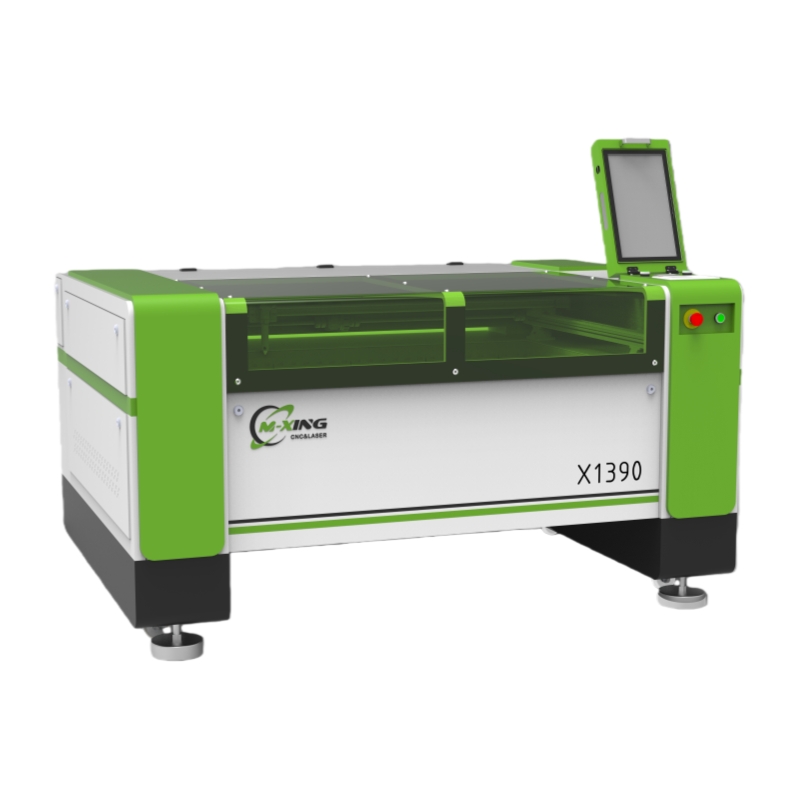
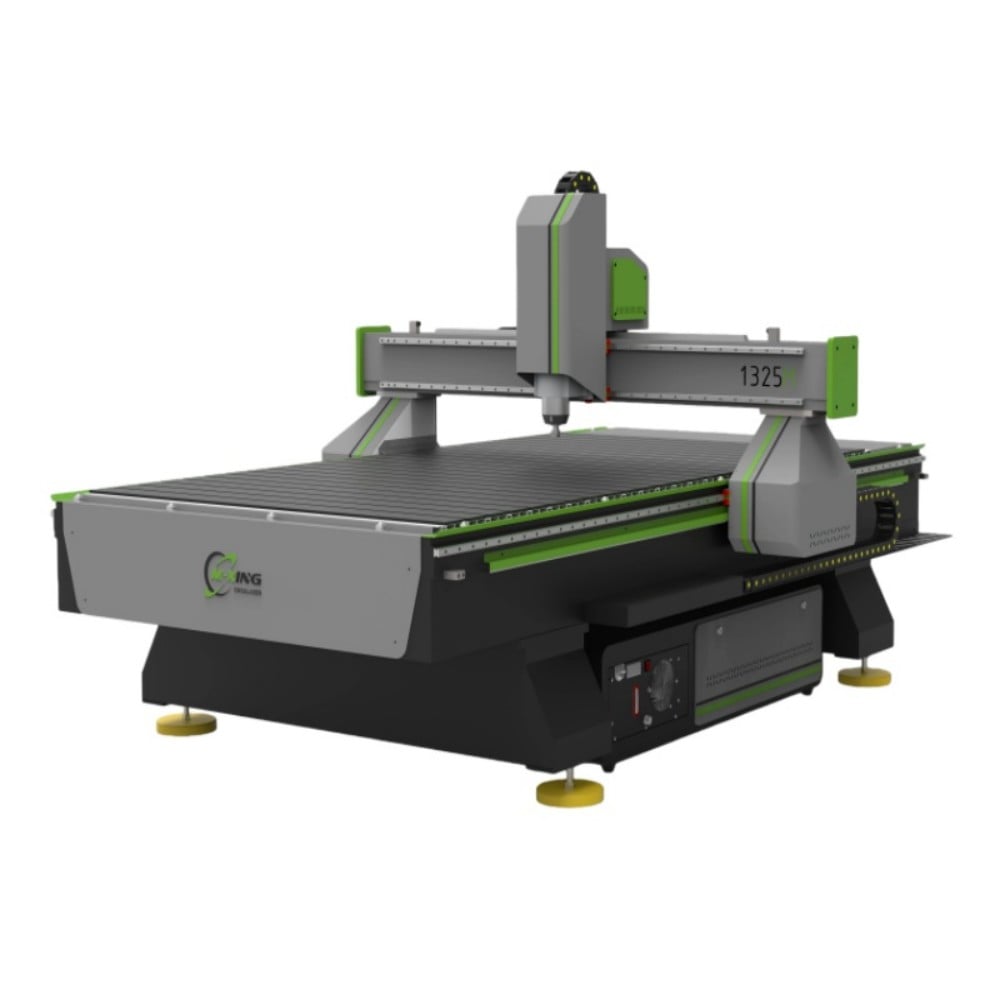
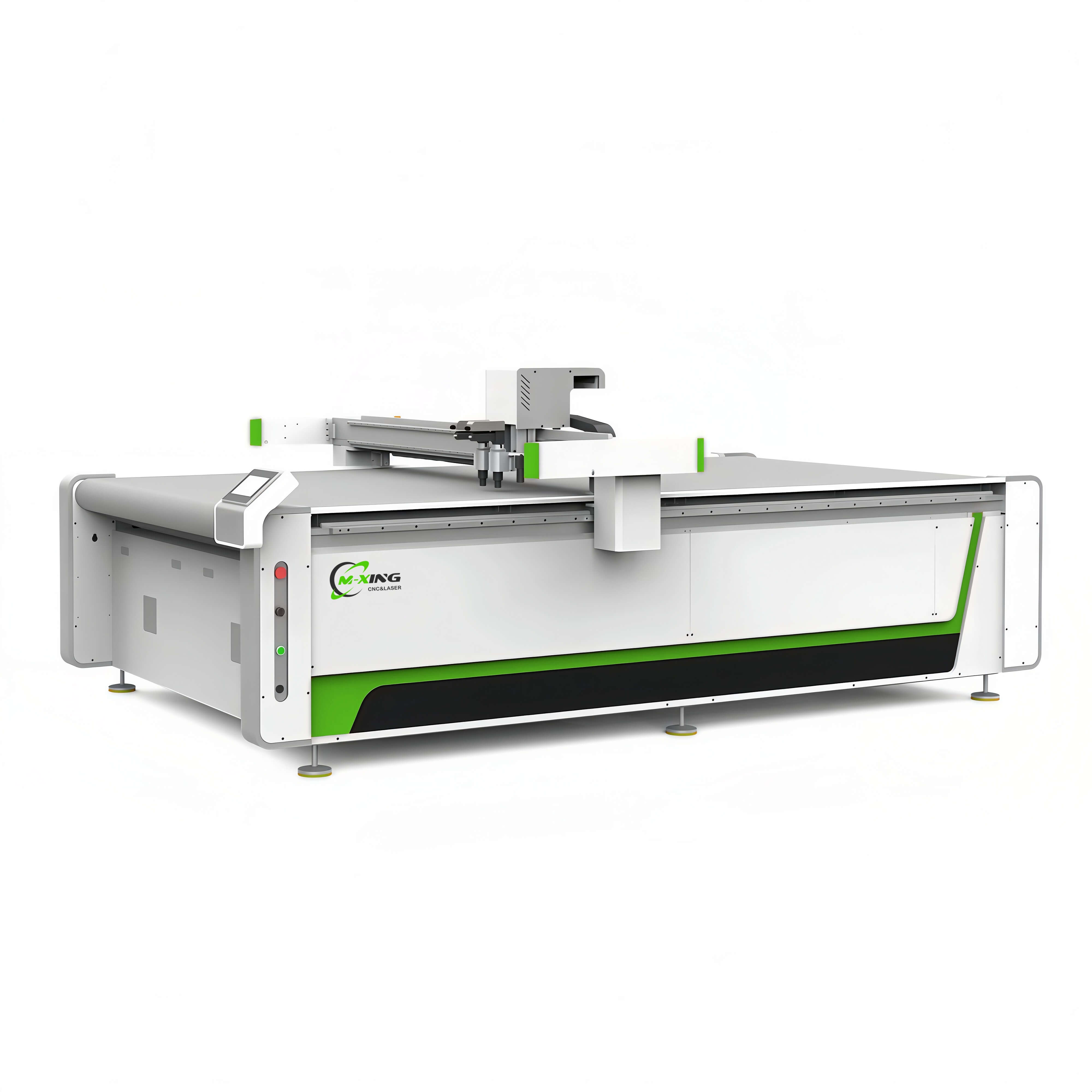
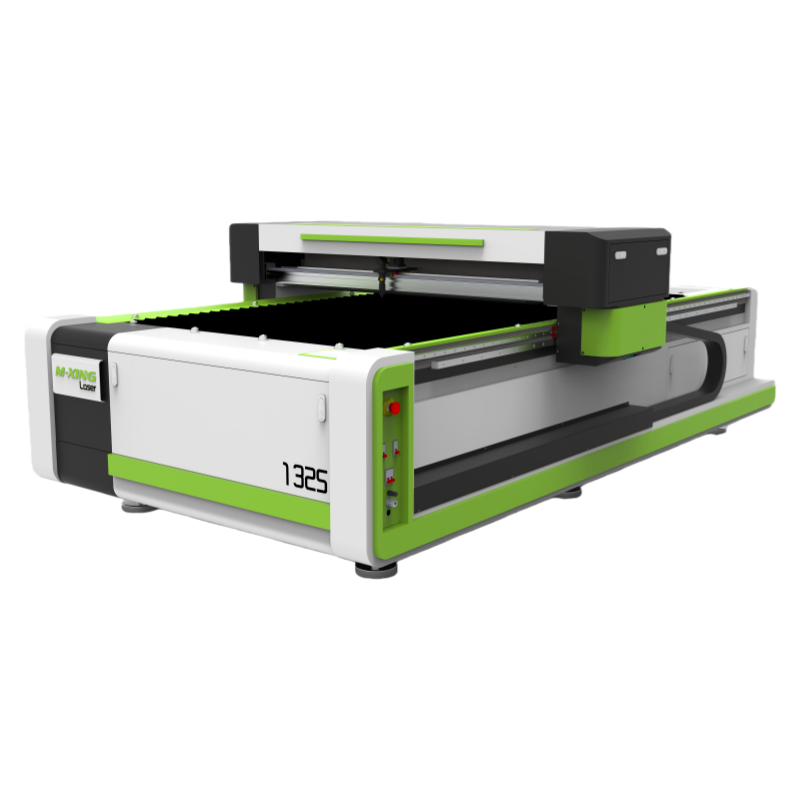
Working area. Leather goods range from small accessories cut from offcuts to full hides used for bags and upholstery panels. Mingxing Laser offers bed formats across the 6090, 1390, 1610, and 1325 sizes, so the working area can be matched to the piece sizes actually being produced rather than forcing every job onto one table.
Power. Leather is not a dense material, so a moderate power level cuts it comfortably, and the standard 100W, 130W, and 150W configurations cover the range of thicknesses used in accessories, garments, and upholstery. On leather, the value of a well-controlled power supply is consistency rather than maximum output: engraving quality depends on precise, repeatable low-power delivery.
Motion quality. Fine engraved detail on leather depends on steady, accurate motion. On the X1325 magnetic levitation platform, an X/Y-axis linear motor system delivers a maximum rapid travel speed of up to 1 m/s with repeat positioning accuracy of up to 0.05 mm, which supports both fast cutting of large panels and consistent engraving of small details.
Registration. Where parts must follow an existing pattern, a printed surface, or the natural grain of the hide, a camera positioning system helps align each cut to the material already on the bed.
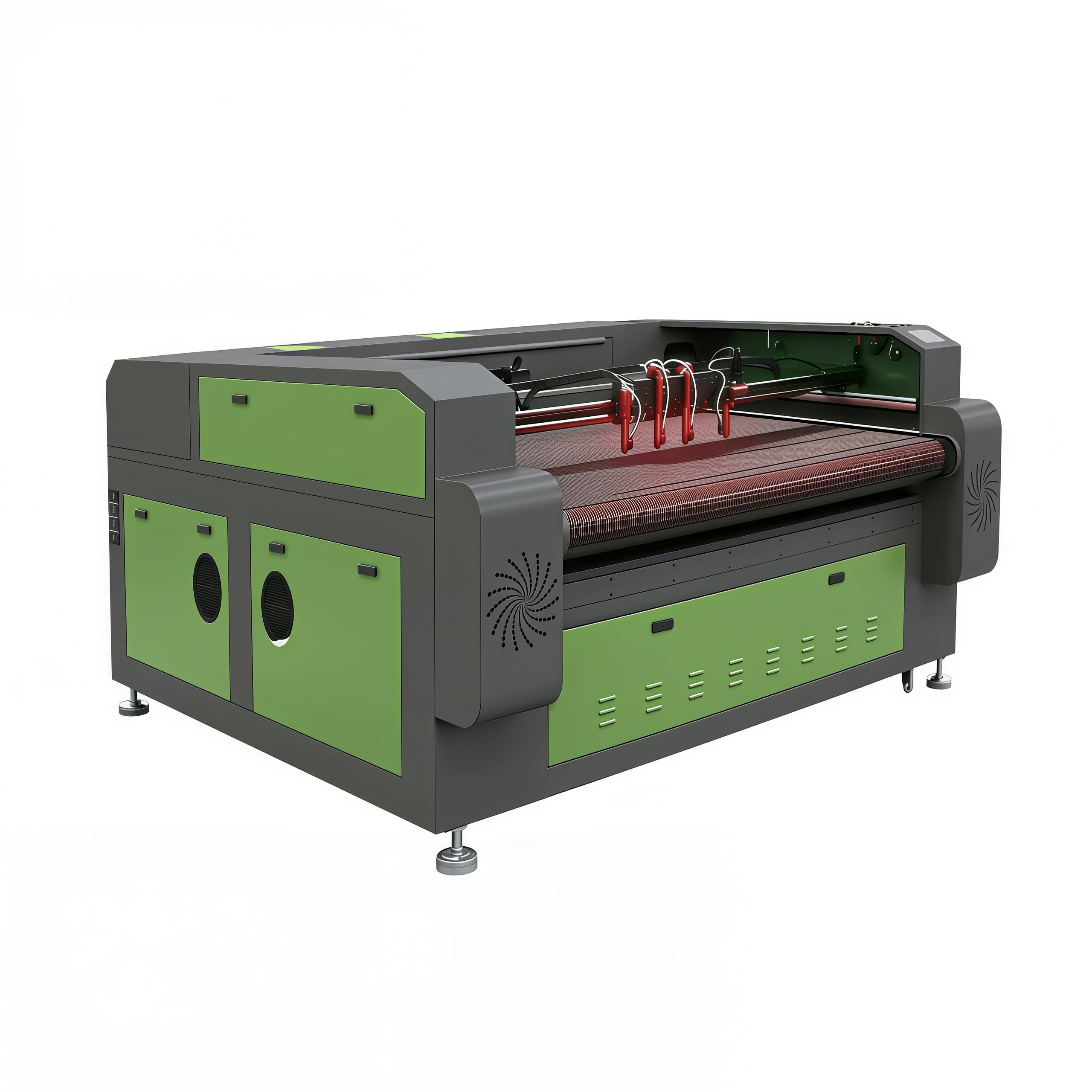
Throughput. For repetitive leather components such as straps, patches, and small panels, a double beam configuration allows two operations to run in parallel on the same platform.
Extraction. Leather generates sticky smoke and residue, so extraction capacity should be sized to the material and the duty cycle, not treated as an accessory.
The configuration details above are taken from the published product and technical documentation for the respective models. Final selection should be based on the piece sizes, material thickness range, and daily output of the actual production.
Consistent leather laser work comes down to three decisions made in the right order: identify the leather correctly, set focus and energy for its real thickness, and control the smoke before it can settle back onto the surface.
Vegetable-tanned leather for engraved goods, shallow engraving instead of deep removal, and clean dry air with properly sized extraction will solve most scorching, discolouration, and residue problems before they reach the finished product.
For workshops building a leather range, the most effective next step is the simplest: build a labelled reference library from offcuts of each hide and finish, record what works, and stop paying for the same lesson on every new batch.
 Hot News
2026-02-05
2026-02-03
2025-12-01

Mingxing Laser is a leading China-based laser machine manufacturer offering CO2 laser cutters, fiber laser cutting machines, CNC routers, laser welders & marking machines. OEM/ODM custom solutions available. Get a quote today!
- Company Headquarters: Room 1303, Building 4, UnitedFortune Plaza, High-tech Zone, Jinan City, Shandong Province, China
- Manufacturing Plant: No. 18, Yinhe Road, Jibei Street, Jiyang District, Jinan City, Shandong Province, China
Copyright © 2026 Century Mingxing (jinan) Intelligent Technology Co., Ltd. All rights reserved. Privacy Policy

 EN