MDF is the most predictable sheet material most laser shops will ever run, and it is also the one that punishes a badly set process most visibly.
Medium density fiberboard is made from wood fibers bonded with resin under heat and pressure. There is no grain direction, no knots, no voids, and no glue lines of the kind found in plywood. Every square centimeter of the sheet behaves almost identically.
That homogeneity is exactly why MDF engraves so evenly. Decorative panels, painted signage, and architectural models come out of MDF with a consistency that natural wood cannot match.
The trade-off is the binder. It is the resin, not the wood fiber, that produces the dark brown edge, the heavy smoke, and the fine abrasive dust associated with MDF.
So MDF laser cutting is not really a question of whether the edge will darken. It is a question of how much, and whether the darkened edge is acceptable for the finishing plan the part is going into.
A cut MDF edge is not the same material as the face of the sheet. It is a charred, resin-rich surface, slightly porous, and it behaves differently from the faces in every downstream step.
It absorbs moisture and paint differently. It sands differently. It swells if it is left unsealed in a humid environment.
This matters because a large share of MDF products are painted, wrapped, or edge-banded. The specification for the finished part, not just the cut, decides how much edge charring is acceptable.
Density also varies within a sheet. MDF panels are commonly denser near the faces than in the core, and thicker panels can vary more than thin ones. A setting tuned on a 6 mm panel will not necessarily produce the same edge on a 25 mm panel of the same brand.
That last row is not a process detail. It is a hard rule. Chlorine-containing plastics release corrosive and hazardous fumes and damage the machine, so material identity must be confirmed before any unfamiliar board goes on the bed.
MDF needs more energy to cut than plywood of the same thickness. It is denser and it contains more binder, so it absorbs the beam differently and releases more smoke as it separates.
The consequence is that thickness is the variable that most often breaks a working setup. As the sheet gets thicker, the kerf widens, more heat accumulates in the cut, and dimensional accuracy starts to drift. A part that fits perfectly in 6 mm may need kerf compensation in 18 mm.
There are two broad ways to handle thick MDF, and each has a cost:
Whichever approach is used, focus must be reset for the actual thickness. MDF is not transparent, but the focal point still sits at a fixed distance below the nozzle, and a lens set for a thin sheet will not cut a thick one efficiently.
Air assist matters more here than on many materials. A steady air stream clears the heavy smoke that MDF produces and stops that smoke from re-depositing on the cut edge and the surrounding face. Dry, oil-free air is essential; moisture and oil in the line show up immediately as a contaminated panel.
MDF is one of the best engraving substrates available, and it is also one of the least dramatic.
The surface is uniform, so raster fills come out completely even across a large panel with none of the tonal variation that wood grain creates. For architectural models, decorative panels, and jigs, that uniformity is exactly what is wanted.
The limitation is contrast. Engraved MDF does not turn bright white the way cast acrylic does, and it does not produce the strong tonal shift of some hardwoods. The mark is a slightly darker, recessed tone, read by depth and shadow rather than by colour.
The most common way to overcome that is to engrave through a painted or coated surface. Where the coating is removed, the lighter substrate appears, and the contrast becomes strong and controllable. Engraving first and painting afterwards is rarely a good order for the same reason.
MDF produces more dust than almost any other sheet material a laser shop handles, and that dust is the source of the two most serious risks.
The first is fire. MDF dust and charred residue collect in the machine bed, in the extraction ducting, and in corners of the cabinet. Piles of fine, partly burned dust can smoulder and then ignite, even after the job has finished. Cleaning the bed and the extraction path regularly is not housekeeping; it is fire prevention.
The second is air quality. The resin binder releases fumes that must be captured at the source and either exhausted outside or passed through proper filtration. Working with a partly blocked extraction system means those fumes end up in the workshop.
Three practical rules prevent most MDF incidents:
Abrasive MDF dust also contaminates optics faster than wood dust does. That shows up as reduced cutting power and progressively worse edges long before any alarm appears, which is one more reason cleaning and inspection cycles matter on MDF work.
Most wasted MDF is not caused by a machine fault. It comes from assumptions about the material and about what the finished part actually needs.

MDF production rewards machines that deliver energy consistently and keep the head moving at a stable rate, because both of those directly limit charring.
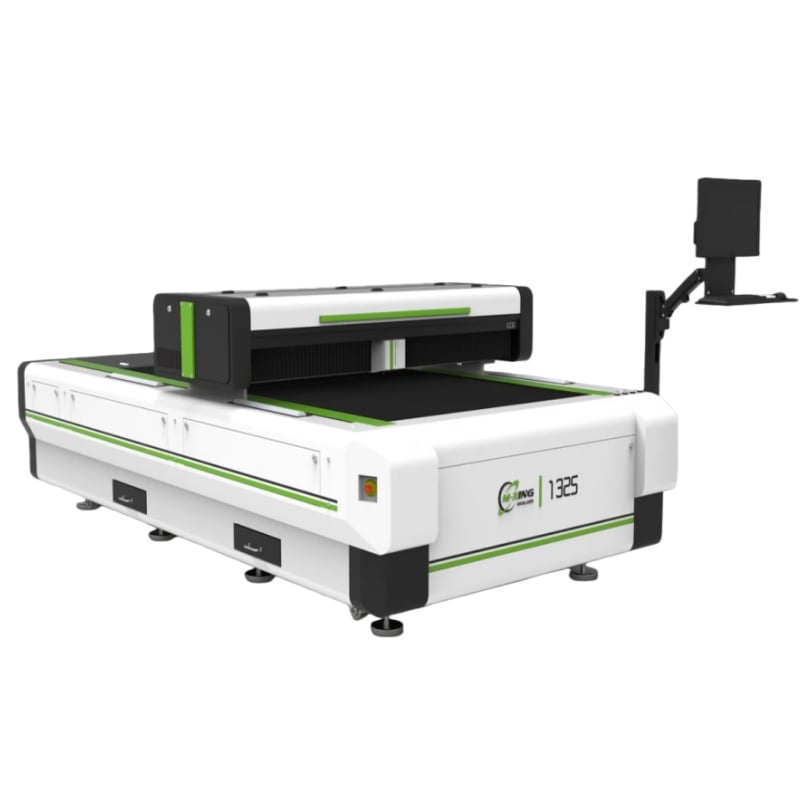
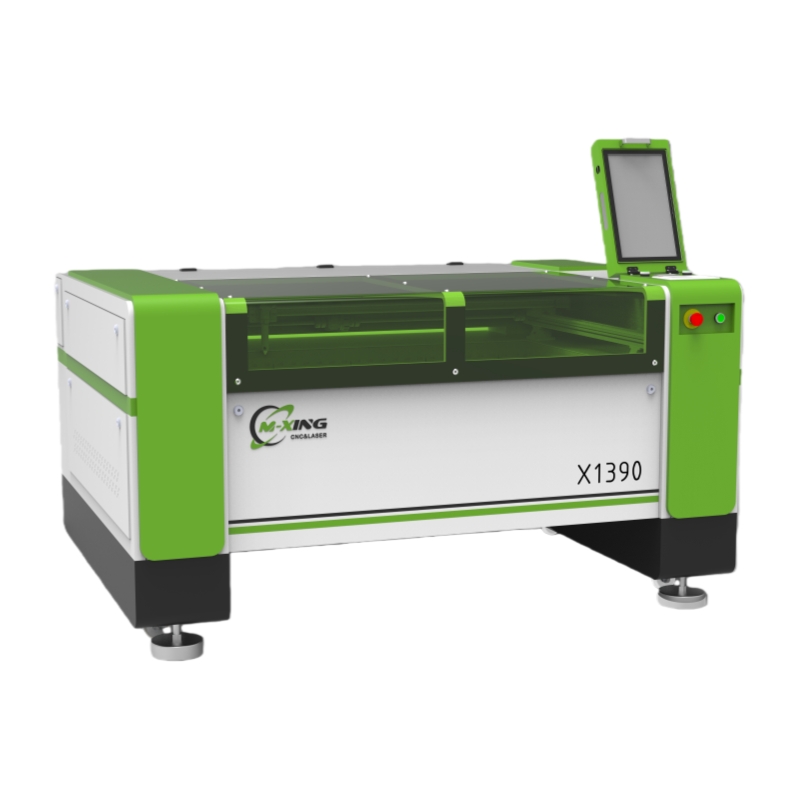
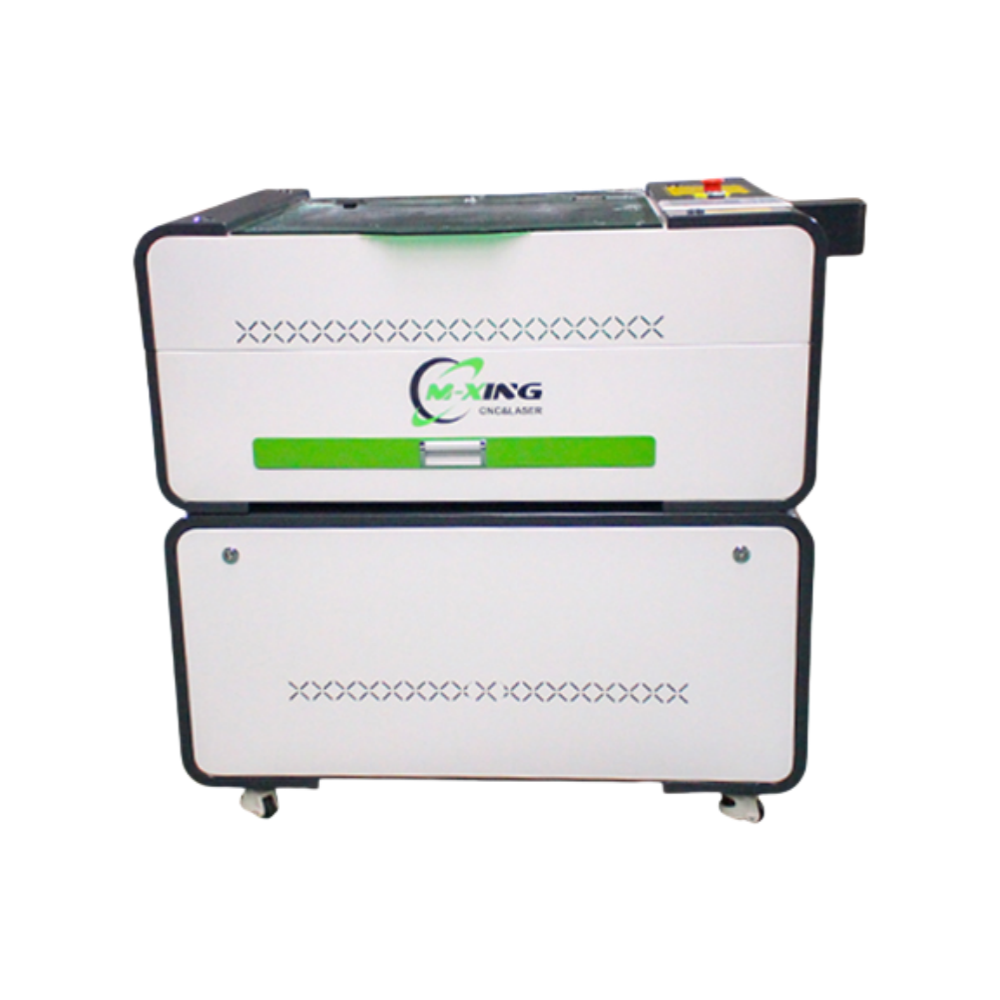
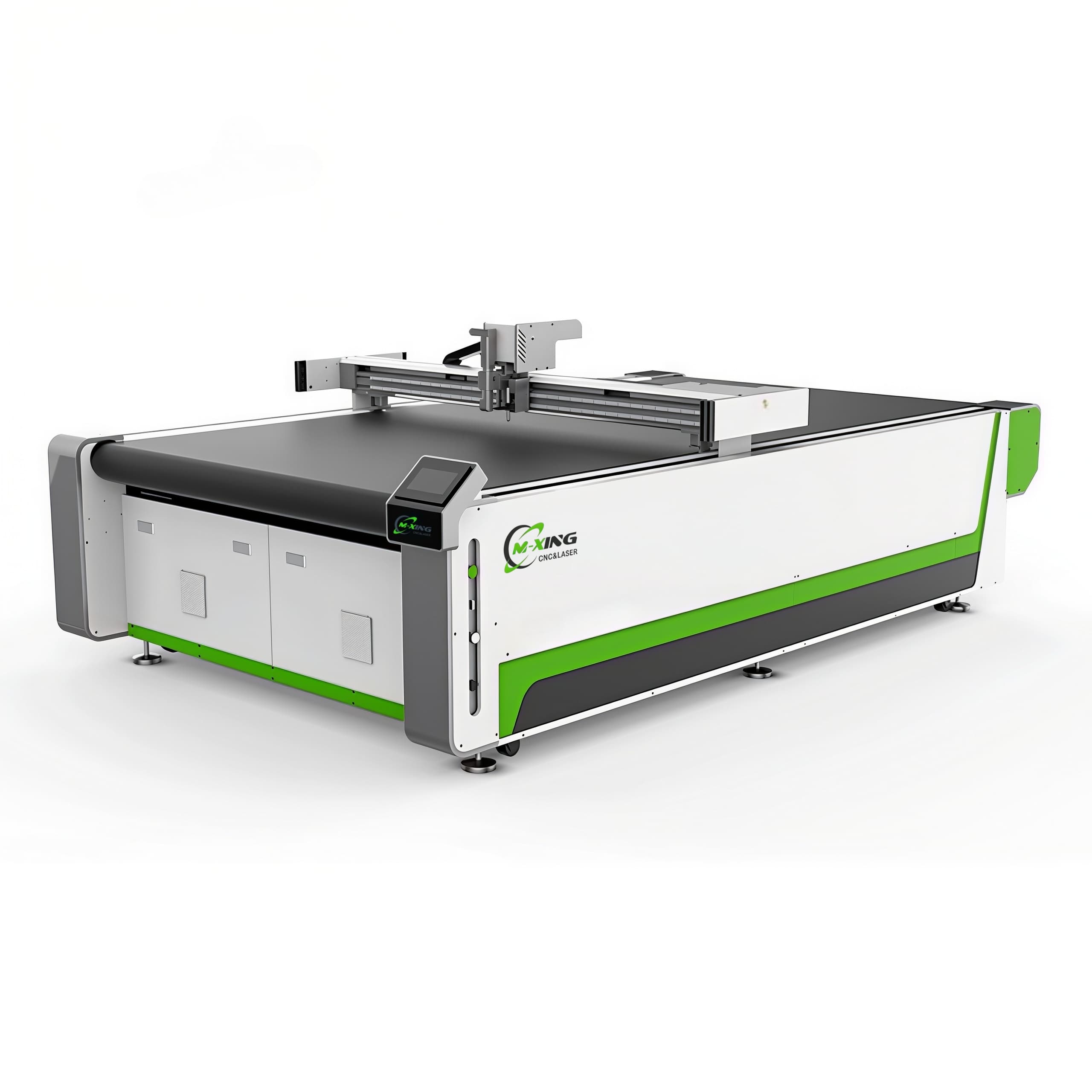
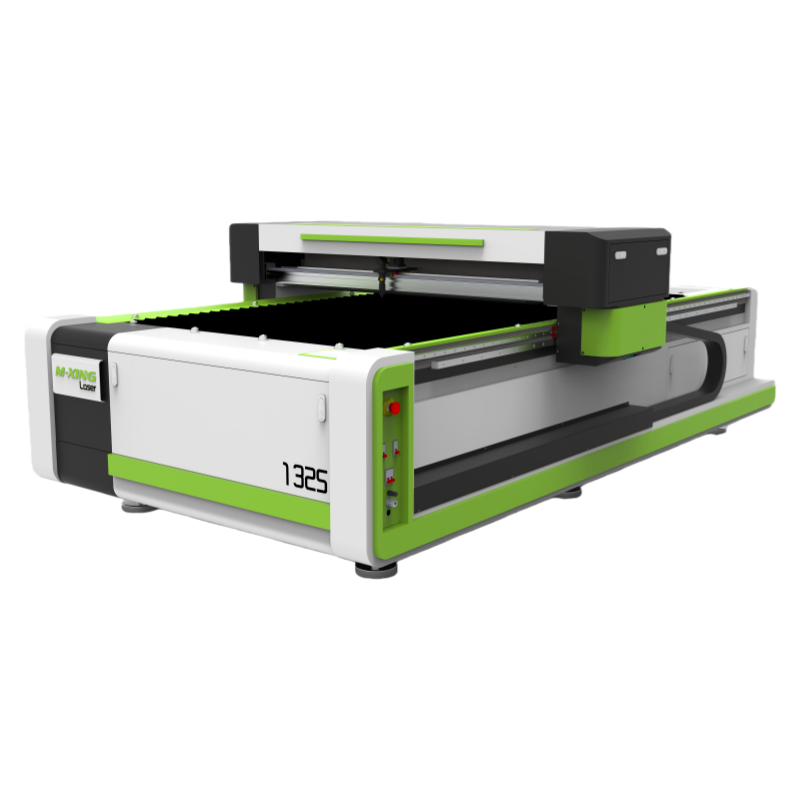
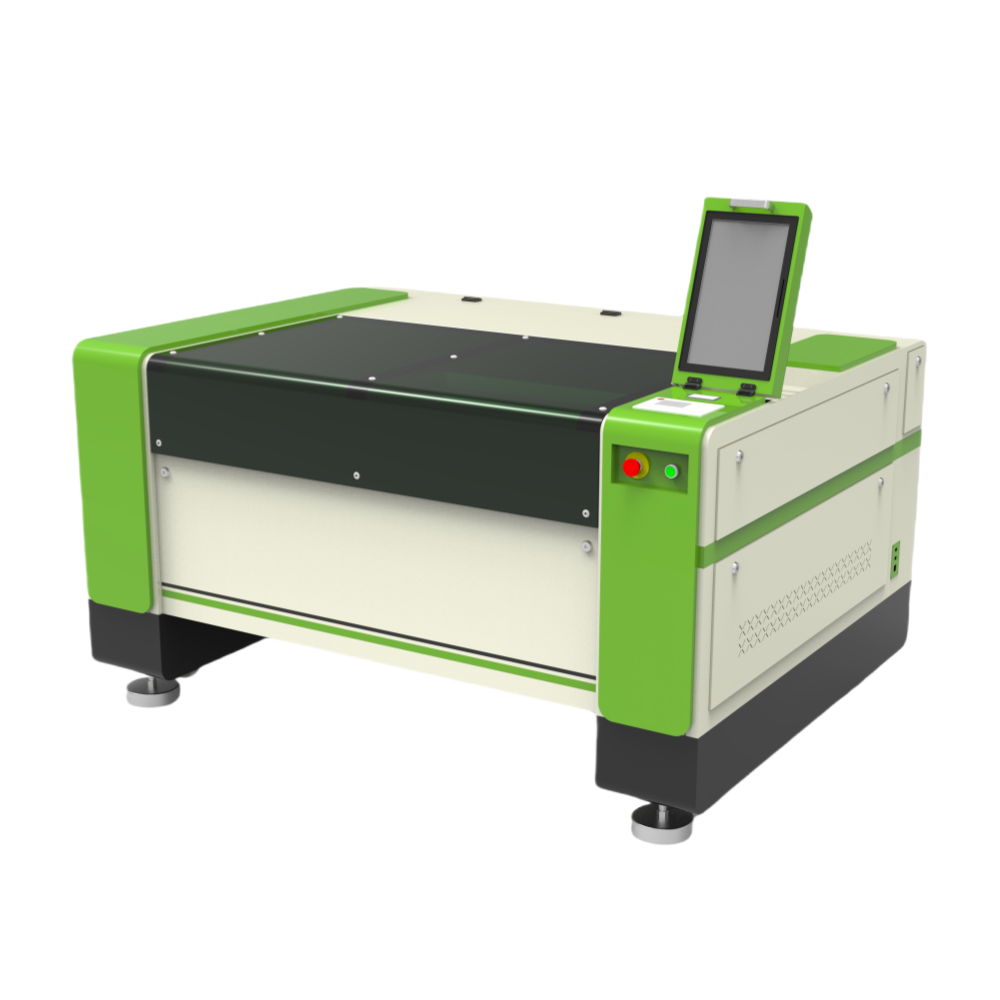
Working area. MDF is supplied in large standard panels, and repositioning a heavy panel mid-job costs accuracy. Mingxing Laser offers bed formats across the 6090, 1390, 1610, and 1325 sizes, so the working area can be matched to the panel sizes actually being processed.
Laser power. MDF is denser than plywood, so available power sets the practical thickness limit. Standard configurations are offered in 100W, 130W, and 150W for plywood, MDF, and acrylic work, while the MX-1325 is available in 130W, 150W, and 200W versions for heavier production.
Motion quality. Clean MDF edges depend on a steady feed rate. On the X1325 magnetic levitation platform, an X/Y-axis linear motor system delivers a maximum rapid travel speed of up to 1 m/s with repeat positioning accuracy of up to 0.05 mm, helping hold consistent speed through long cut paths.
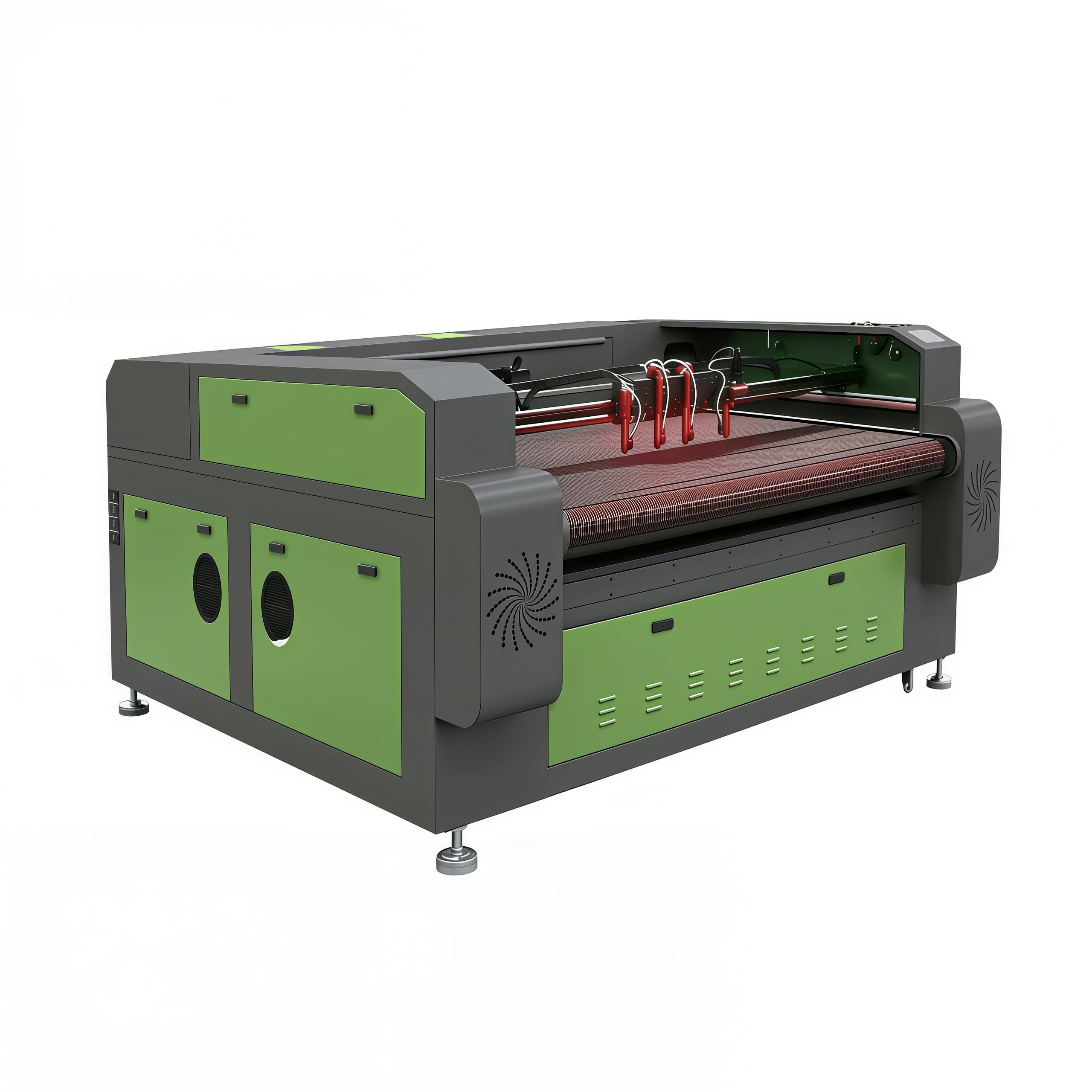
Registration and throughput. For printed or pre-decorated boards, a camera positioning system helps align each cut to the existing artwork. For repetitive MDF parts, a double beam configuration allows two operations to run in parallel on the same platform.
Focus and optics. Because MDF is run in many thicknesses, an automatic focusing head removes a repeated source of setup error. A constant optical path keeps cutting behavior consistent across a large panel.
Extraction and dust handling. Given how much dust and smoke MDF generates, extraction capacity is not an accessory. It should be sized to the material and the duty cycle, together with industrial cooling for continuous production.
The configuration details above are taken from the published product and technical documentation for the respective models. Final machine selection should be based on the panel sizes, maximum thickness, and daily throughput of the actual production.
Cleaner MDF cutting is not achieved by one parameter change. It comes from matching three things: the real board being cut, the actual thickness of that board, and the finishing method the part is destined for.
Confirm the board composition, set focus and speed for the measured thickness, control the dust and fumes at the source, and judge edge quality against the finishing specification rather than by appearance alone.
For shops already cutting MDF, the most useful next step is a simple one: build a small reference library from labelled offcuts, record what works for each thickness and board type, and replace the guesswork that produces most MDF scrap.
 Hot News
2026-02-05
2026-02-03
2025-12-01

Mingxing Laser is a leading China-based laser machine manufacturer offering CO2 laser cutters, fiber laser cutting machines, CNC routers, laser welders & marking machines. OEM/ODM custom solutions available. Get a quote today!
- Company Headquarters: Room 1303, Building 4, UnitedFortune Plaza, High-tech Zone, Jinan City, Shandong Province, China
- Manufacturing Plant: No. 18, Yinhe Road, Jibei Street, Jiyang District, Jinan City, Shandong Province, China
Copyright © 2026 Century Mingxing (jinan) Intelligent Technology Co., Ltd. All rights reserved. Privacy Policy

 EN