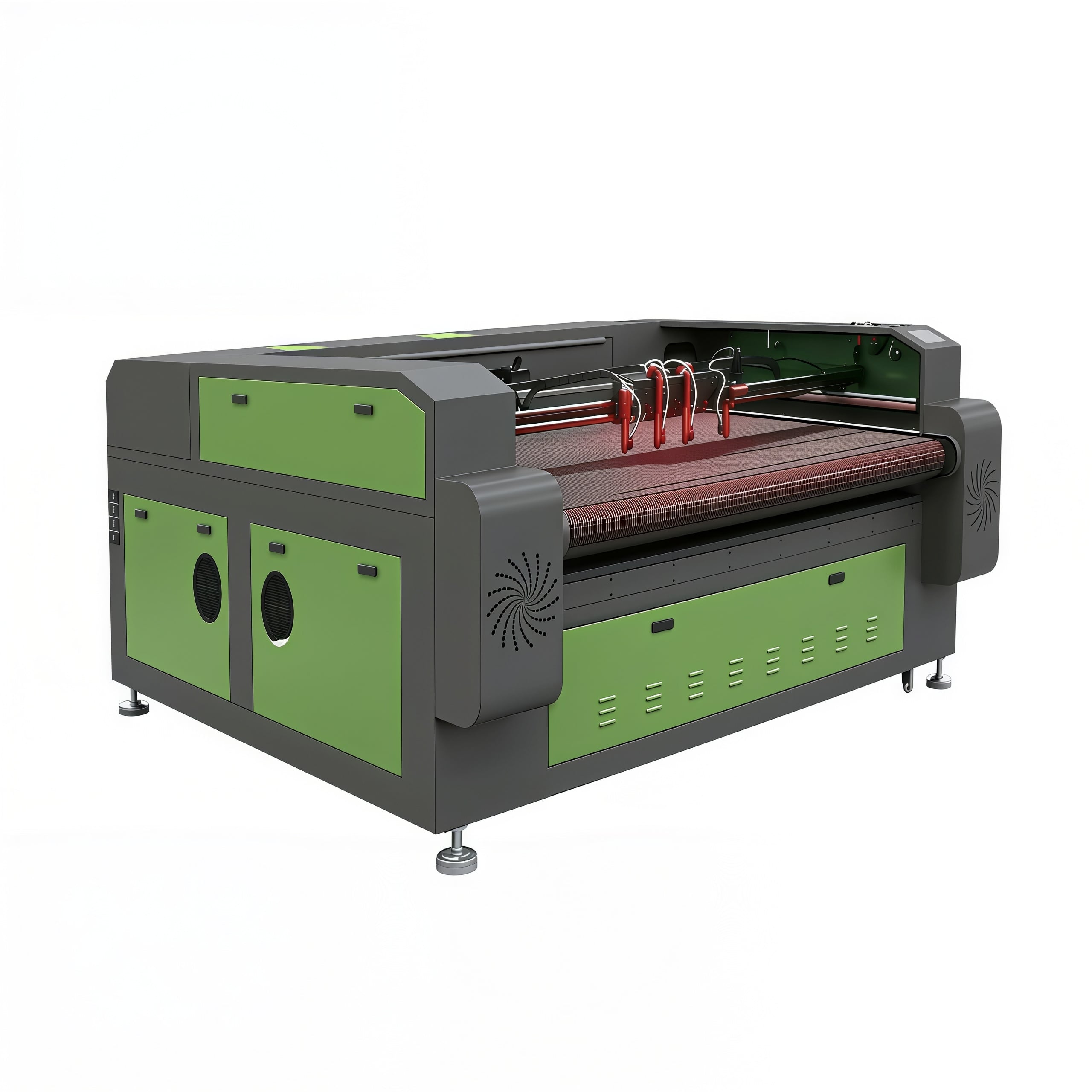
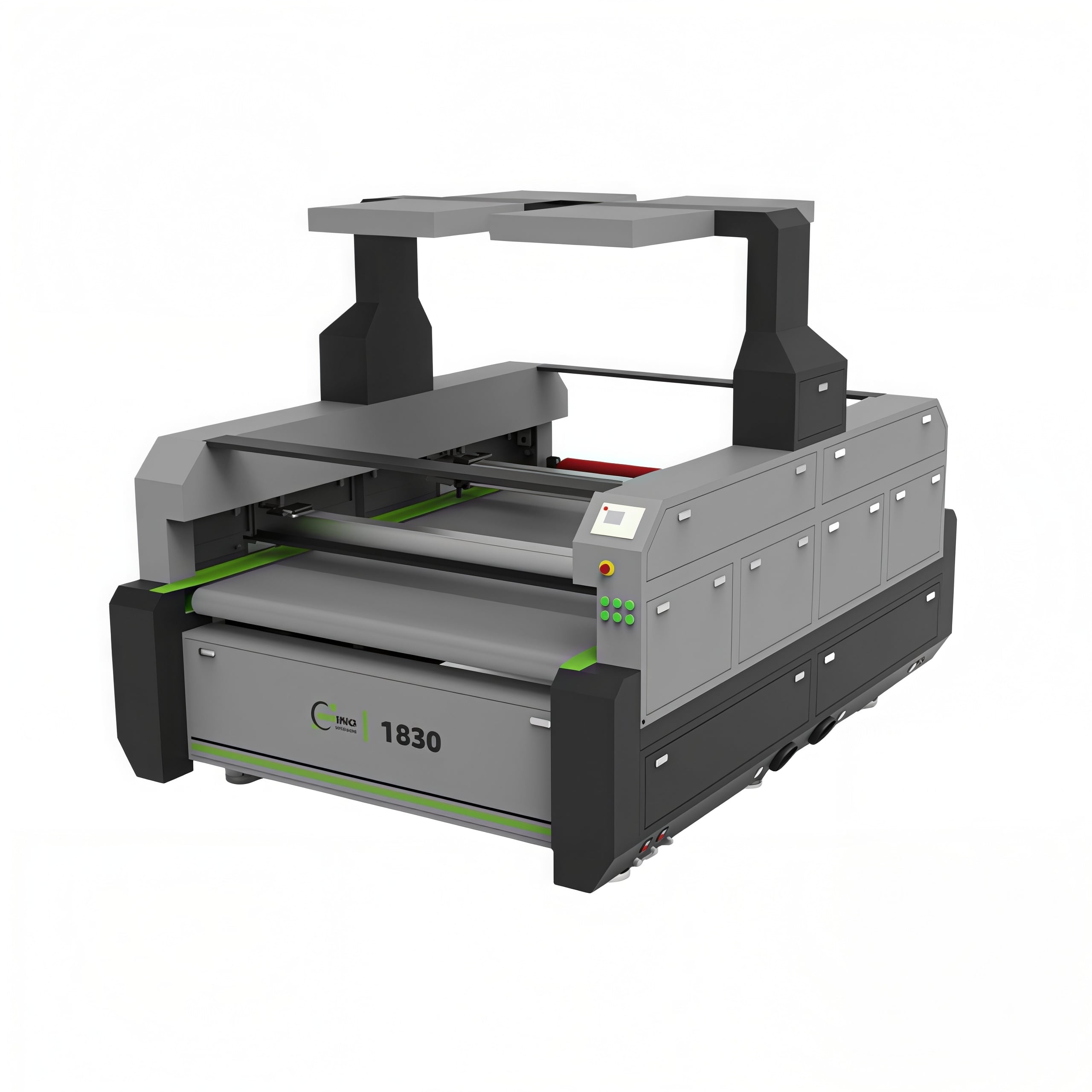
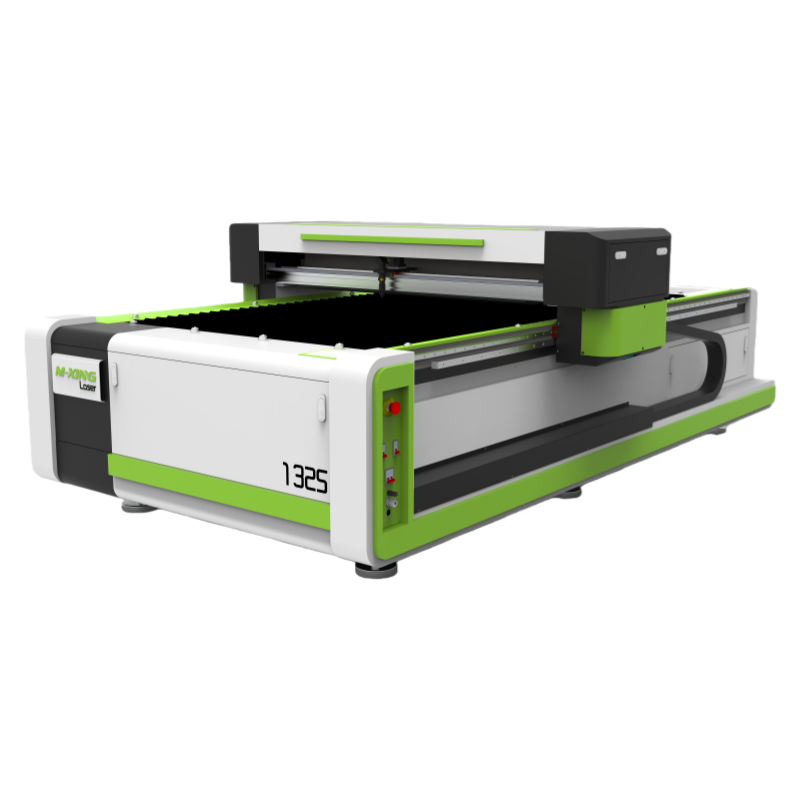
What laser cutter is best for acrylic, wood, and leather? For technical evaluators, a well-engineered CO2 laser cutting system is usually the strongest all-round choice.
However, wattage alone does not determine performance. Beam quality, optical alignment, motion control, exhaust capacity, and material handling determine whether results remain consistent in production.
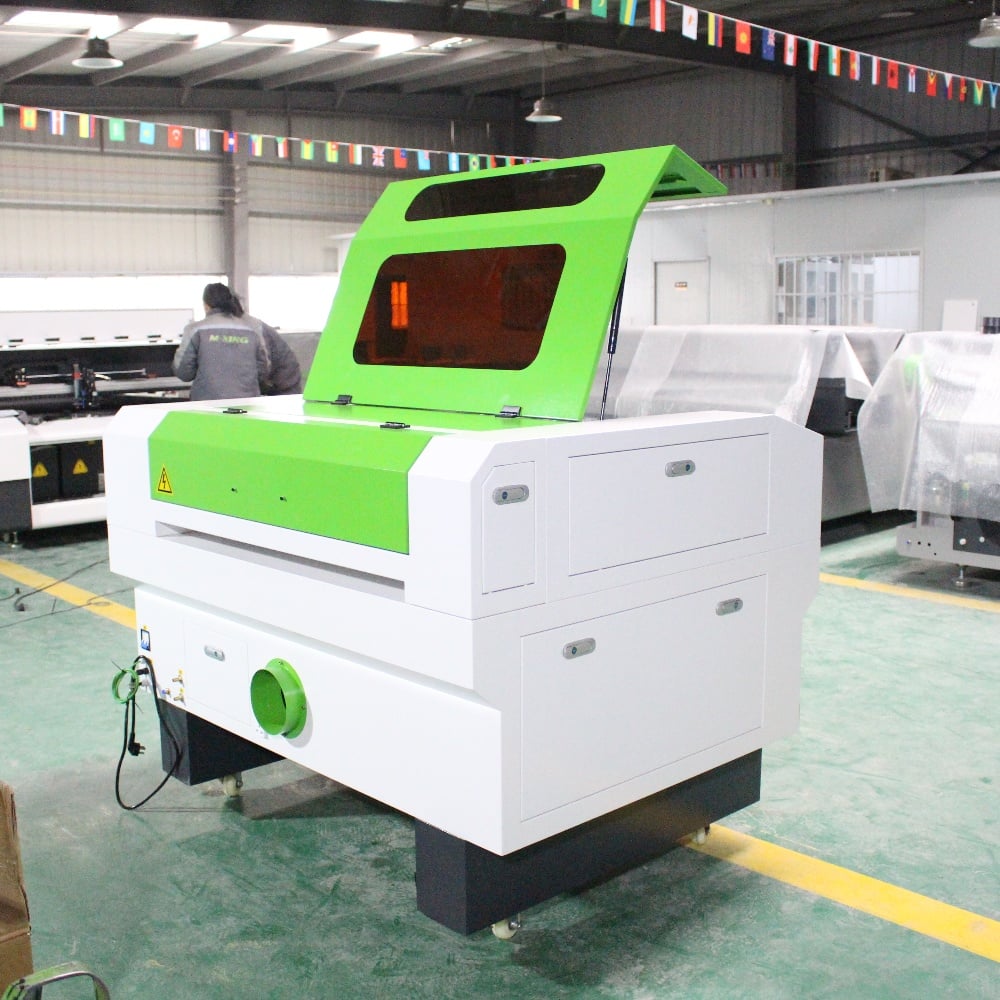
For acrylic, wood, and leather, a CO2 laser cutter offers the wavelength absorption characteristics needed for efficient cutting, engraving, marking, and surface finishing.
Its 10.6-micron wavelength is absorbed effectively by organic materials and acrylic sheet, producing cleaner cuts than fiber lasers in these common fabrication applications.
A fiber laser excels with many metals, but it is not the preferred universal machine for acrylic, wood, and leather processing.
Technical teams should therefore evaluate a CO2 laser cutting machine as a complete system, rather than selecting a tube simply by rated output.
The best laser cutter combines stable optical power, accurate motion hardware, reliable cooling, effective extraction, and software that supports repeatable production settings.
For mixed-material work, a machine in the 80W to 150W CO2 range is often the practical starting point for professional workshops and industrial users.
Lower-power systems can engrave effectively, but they may limit cutting speed, restrict material thickness, and create narrow process windows for higher-volume work.
Higher power can increase throughput, although excessive power may create wider kerfs, more heat-affected zones, and less control on thin leather or delicate engraving.
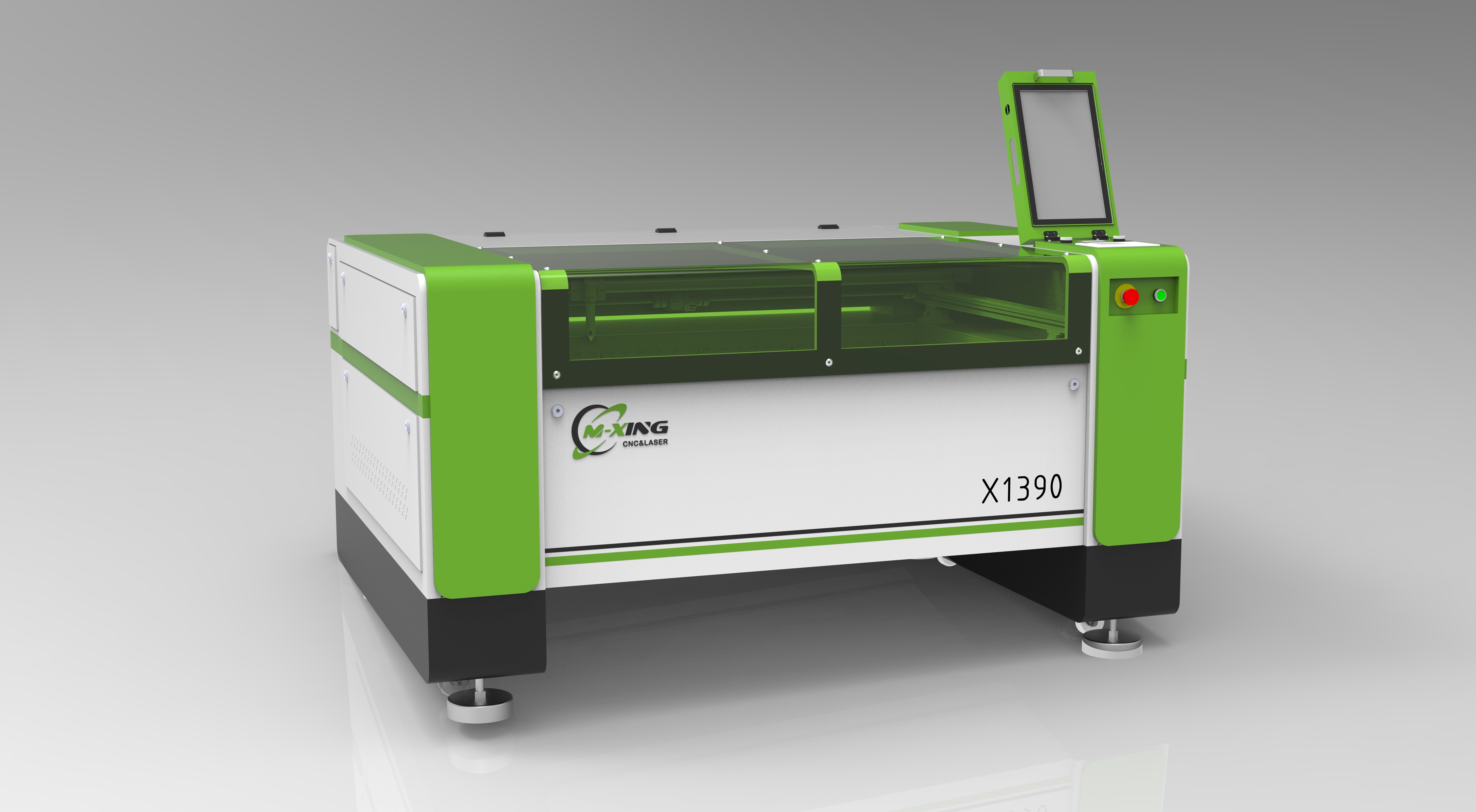
Rated wattage is useful for initial comparisons, but output stability has a greater effect on edge quality, cut consistency, and repeatable parameter development.
A stable CO2 laser source maintains predictable energy delivery over long production cycles, reducing variation between the first sheet and the final sheet.
This matters especially when cutting clear acrylic, where inconsistent energy can leave uneven edges, micro-cracks, or localized melting along the kerf.
Wood processing also exposes unstable power quickly. Variations can create visible changes in char depth, engraving darkness, and cut penetration across grain patterns.
Leather requires even tighter control because natural material thickness, moisture content, coatings, and tanning methods already introduce substantial process variation.
Ask suppliers how they verify actual output power, whether their laser tube is tested before shipment, and how output degradation is monitored.
A power meter test, documented factory inspection, and clear maintenance recommendations provide stronger evidence than a nominal wattage figure on a specification sheet.
Technical evaluators should also distinguish between peak power claims and usable continuous output during normal cutting and engraving conditions.
For many mixed-material applications, a stable 100W system can be more productive than an inconsistent higher-wattage machine with weak cooling or poor optics.
Beam quality affects focus diameter, kerf width, energy density, engraving detail, and the machine’s ability to cut consistently through varying thicknesses.
A well-focused beam produces narrow cuts and cleaner detail, helping manufacturers reduce post-processing requirements for signs, decorative products, packaging, and leather goods.
For acrylic, beam quality supports the polished flame-finished edge associated with CO2 laser cutting, particularly on cast acrylic sheet.
Extruded acrylic may respond differently because its composition can melt more readily, so evaluators should test representative materials before finalizing equipment.
Optical quality matters as much as source quality. Mirrors, focusing lenses, mounts, and alignment mechanisms must remain stable under continuous operating conditions.
Look for accessible mirror adjustments, quality optical components, rigid mounting structures, and a maintenance design that allows technicians to inspect alignment efficiently.
A poorly aligned optical path wastes power and creates inconsistent results, even when the machine has a high-rated CO2 laser tube.
Lens focal length should match the intended work. Shorter focal lengths improve engraving detail, while longer focal lengths can better support thicker material cutting.
Some production environments benefit from interchangeable lenses, allowing operators to optimize focal geometry for fine engraving, standard cutting, or deeper material penetration.
Mechanical accuracy matters when a job requires close-fitting acrylic parts, intricate wood inlays, repeated leather patterns, or engraved elements aligned with cut outlines.
Evaluate the linear guides, drive system, motors, belt or rack design, gantry rigidity, and controller interpolation performance as one motion platform.
A rigid frame and smooth guide system reduce vibration at speed, helping preserve curves, corners, lettering clarity, and small internal cut features.
Speed specifications should be viewed critically. Maximum travel speed is less relevant than stable cutting accuracy at the speeds used for real production jobs.
Ask for sample files that include fine lettering, small holes, sharp corners, nested shapes, and repeated engraving patterns across the entire worktable.
Machine table design also affects versatility. A honeycomb bed supports small pieces, while a knife-blade table reduces rear reflections and improves underside airflow.
A pass-through front and rear structure can be valuable for oversized wood panels, long acrylic signage, or continuous material processing workflows.
For leather and flexible stock, consider whether the table supports pin fixtures, vacuum hold-down options, or practical registration methods for repeated placement.
Reliable autofocus can improve throughput for variable-thickness jobs, although manual focus remains acceptable when operators use disciplined setup procedures and standardized materials.
Air management is frequently underestimated during machine selection, yet it directly affects flare-ups, edge residue, smoke removal, lens protection, and operator safety.
Strong, adjustable air assist helps clear vaporized material from the kerf while reducing the chance of sustained flame during wood and leather cutting.
Too little air can increase charring and smoke deposits. Excessive air may cool some cuts unnecessarily or disturb lightweight materials during engraving.
The ideal machine provides controllable air assist, allowing operators to use stronger airflow for cutting and lower airflow for sensitive engraving applications.
Exhaust capacity should be evaluated as a system. The blower, duct routing, filtration approach, room layout, and external discharge requirements all influence performance.
Acrylic fumes, wood smoke, and leather odors should not remain inside the machine enclosure or production room after cutting is completed.
Leather requires special attention because some synthetic leathers, coated products, or unknown materials may release hazardous fumes when laser processed.
Never assume a material is safe based on appearance. Suppliers should provide material composition information, and operators should prohibit PVC-containing materials from CO2 laser cutting.
Technical evaluators should include ventilation requirements in the procurement scope instead of treating extraction as an optional accessory after installation.
The most useful machine demonstration uses your own acrylic, wood, and leather samples, because laser behavior depends heavily on material composition and finish.
For acrylic, test both cutting and engraving. Inspect edge transparency, kerf width, corner melting, engraving contrast, and whether protective film affects results.
Test several thicknesses that represent actual demand, such as thin display panels, standard signage stock, and thicker fabricated components requiring clean edge quality.
For wood, include plywood, MDF, solid wood, veneer-faced panels, and any coated or adhesive-backed products used in your manufacturing process.
Wood products vary widely in resin content, glue chemistry, moisture, grain direction, and density, all of which affect charring and cutting performance.
Inspect the front and back surfaces after cutting. A good test should reveal whether masking, air assist, focus settings, or table selection reduces smoke staining.
For leather, separate genuine leather from synthetic materials. Check cut-edge color, odor, deformation, engraving definition, and the effect of heat on surface coatings.
Natural leather often benefits from lower-power, higher-speed processing, while thick vegetable-tanned leather may require different settings than softer garment leather.
Request a parameter matrix rather than a single demonstration result. It should document power, speed, frequency, focus, air assist, and material thickness.
This data becomes the beginning of a controlled process library, enabling faster setup when production teams repeat jobs or onboard new operators.
A capable CO2 laser machine needs controller software that imports common design files, supports layer-based parameters, and allows reliable job positioning before cutting.
For technical evaluators, useful features include camera positioning, red-light preview, origin management, rotary attachment support, and parameter storage for recurring jobs.
Layer-based control is particularly valuable because one file may require engraving, score marking, surface marking, and through-cutting with different settings.
Check whether the controller supports the formats used by engineering and design teams, including DXF, AI, SVG, PDF, and raster image files.
Safety requirements should include a fully enclosed working area, interlocked doors, emergency stop access, protective viewing windows, warning labels, and dependable grounding.
Water cooling is also essential for many CO2 laser systems. Confirm the chiller capacity, temperature control method, alarm functions, and recommended coolant maintenance schedule.
An underperforming cooling system shortens tube life and causes output instability, especially in warm environments or extended daily production shifts.
Evaluate the supplier’s documentation, spare-parts availability, remote troubleshooting process, installation support, and ability to provide OEM configuration when required.
For a manufacturer or wholesale buyer, support quality affects total ownership cost because downtime often costs more than the price difference between two machines.
Start by defining the largest sheet size, thickest regular material, smallest feature size, expected daily run time, and target production volume.
Then identify which process is most demanding: polished acrylic edges, low-char wood cutting, detailed engraving, or controlled leather processing with minimal distortion.
Select machine power according to this demanding application, while confirming that lower-energy settings remain controllable for thinner and more sensitive materials.
Compare demonstrations using identical files and materials. Supplier samples are useful, but they should not replace a documented side-by-side process evaluation.
Review delivered configuration details, including laser tube brand, controller type, lens options, chiller model, exhaust equipment, worktable structure, and included accessories.
Ask which components are consumables, their expected replacement intervals, and whether local or factory inventory is available for critical service parts.
Calculate productivity using cycle time, loading time, cleaning time, setup time, and anticipated reject rates rather than relying only on headline cutting speed.
Finally, assess whether the supplier understands your application. A credible partner discusses material risks, ventilation, parameter testing, and process limits openly.
What laser cutter is best for acrylic, wood, and leather? In most professional applications, the answer is a properly configured CO2 laser cutting system.
The strongest choice is not automatically the highest-wattage model. It is the machine that provides stable output, focused beam delivery, accurate motion, and controlled airflow.
It should also match your material thickness range, product dimensions, production volume, safety obligations, and maintenance capabilities without forcing compromise in everyday operation.
Before purchasing, validate performance with representative materials and production-style files. That evaluation reveals more than generic specifications ever can about long-term suitability.
When these factors are assessed together, technical evaluators can select a CO2 laser engraver and cutter that delivers clean acrylic, precise wood, and controlled leather results.
 Hot News
2026-02-05
2026-02-03
2025-12-01

Mingxing Laser is a leading China-based laser machine manufacturer offering CO2 laser cutters, fiber laser cutting machines, CNC routers, laser welders & marking machines. OEM/ODM custom solutions available. Get a quote today!
- Company Headquarters: Room 1303, Building 4, UnitedFortune Plaza, High-tech Zone, Jinan City, Shandong Province, China
- Manufacturing Plant: No. 18, Yinhe Road, Jibei Street, Jiyang District, Jinan City, Shandong Province, China
Copyright © 2026 Century Mingxing (jinan) Intelligent Technology Co., Ltd. All rights reserved. Privacy Policy

 EN
EN