Rubber and foam are usually grouped together because both are soft, both are non-metallic, and both cut easily on a CO₂ laser. That grouping is convenient and misleading.
Rubber is an elastomer. It is dense, it recovers its shape, and it is usually vulcanized, which means its properties were set by a chemical process the laser cannot undo. Cutting rubber is a genuine thermal separation process, and the edge quality depends on how quickly the beam gets through the material.
Foam is mostly air. Expanded polyethylene, EVA, EPE, and polyurethane foam are plastics whose structure is largely gas. There is very little material to cut, so the energy requirement is a fraction of what wood or MDF needs.
That difference matters in both directions. Foam cuts at energy levels so low that the main risk is over-cutting rather than under-cutting, while rubber needs enough energy to separate cleanly without smearing.
There is a third difference, and it is the one that decides whether a job is safe to run at all. Some rubbers and foams contain chlorine, and some foams are formulated to smoulder. Material identity has to be established before the material reaches the bed, not after.
Most problems in rubber and foam processing trace back to treating an unknown material as a familiar one.
Polyurethane foam is the clearest example. It cuts easily and the edge looks acceptable, which is exactly why operators underestimate it. Open-cell polyurethane foam can continue to smoulder internally after the beam has moved on, in a way that the visual appearance of the cut gives no warning about.
Chlorine-containing materials are the other hard boundary. Neoprene (polychloroprene) and PVC or vinyl foam release chlorine-based fumes that are hazardous to the operator and corrosive to the machine, so neither can be processed on a laser regardless of how well they cut.
The two hard rules in that table are not process preferences. Chlorine-containing rubbers and foams must be identified and excluded before loading, and any foam whose formulation is unknown should be treated as a fire risk until it has been tested under supervision.
Rubber and foam sit at opposite ends of the same trade-off.
For rubber, the risk is heat that lingers. A slow pass keeps energy in material that has already separated, which produces a tacky, smeared edge, an odour, and in filled rubbers a visible heat-affected zone along the cut. Thicker rubber sheet is often better handled with controlled multiple passes than with a single heavy pass.
For foam, the risk is the opposite. Foam has so little material that excess energy collapses the cell structure, leaving a rounded or "caved-in" edge instead of a crisp one. Foam wants low energy and fast traverse, and it responds to over-power much more visibly than to under-power.
Two further variables matter on both materials:
Rubber and foam production uses three distinct operations, and they should not be confused with one another.
Engraving rubber is one of the oldest laser applications in existence, and it remains a good one. Rubber sheet is engraved, not cut, and the engraved recess becomes the relief surface of a stamp. The material engraves with clean definition, and the process removes the tooling cost that traditional stamp making required.
Cutting gaskets is a functional application where tolerance decides the result. The contour and the bolt or port holes should be measured against the finished part, not assumed from the drawing, because gasket performance depends on the kerf.
Kiss-cutting foam with adhesive backing is a production technique rather than a cutting technique. The laser cuts through the foam layer and stops at the liner, leaving the parts in place on a single carrier sheet, which removes the need to handle loose pieces individually. It requires the adhesive and the liner to be laser-compatible.
Rubber and foam work concentrates three risks, and all three are manageable with routine discipline.
Fire. Foam is mostly air, so heat spreads into it quickly, and foam offcuts are a substantial fuel load in the machine bed. Polyurethane foam can smoulder internally after the beam has passed, which means a job that looks complete may not be finished burning. Foam and rubber work should be supervised from start to finish, and the bed and extraction path cleaned on a fixed schedule rather than when convenient.
Fumes. Rubber produces heavy smoke, and vulcanized rubber adds a strong odour that is difficult to ignore but easy to tolerate. Polyurethane foam releases fumes that must be captured at source. Neoprene and PVC foam release chlorine-based fumes and must not be processed at all.
Machine damage. Chlorine-based fumes are corrosive to machine components and optics. Adhesive-backed foam can deposit adhesive residue in the nozzle path and on the lens, which degrades cutting quality on every subsequent job, not only the foam one.
The routine for these materials is short: confirm the material, confirm extraction is at full performance, keep the bed clear of offcuts, and never leave the machine running unattended. After a foam job, check the bed for hidden embers before leaving the machine.
Most waste in this category is the result of assuming that soft materials are simple materials.
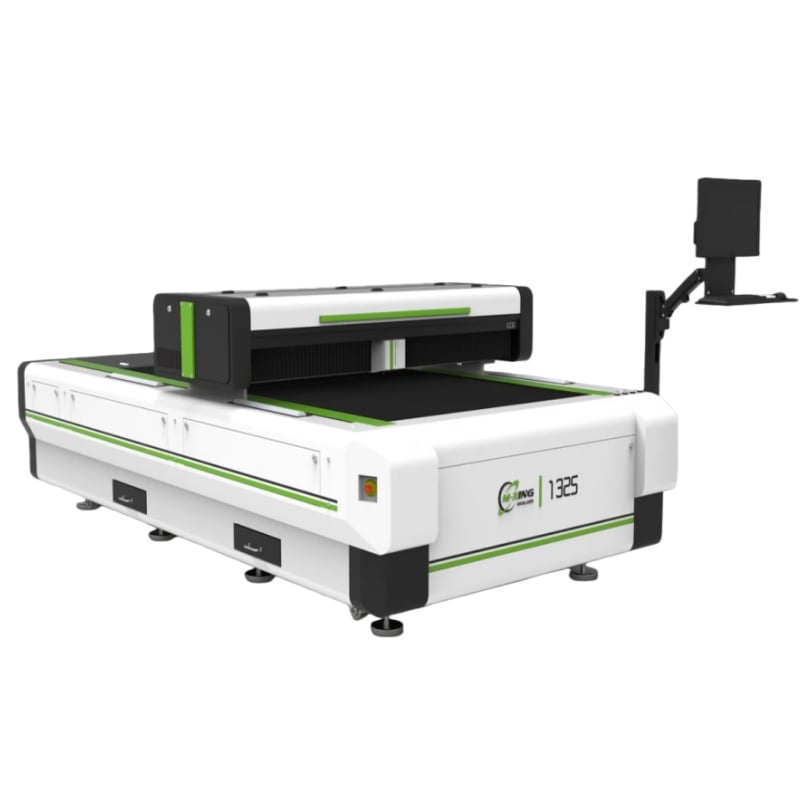
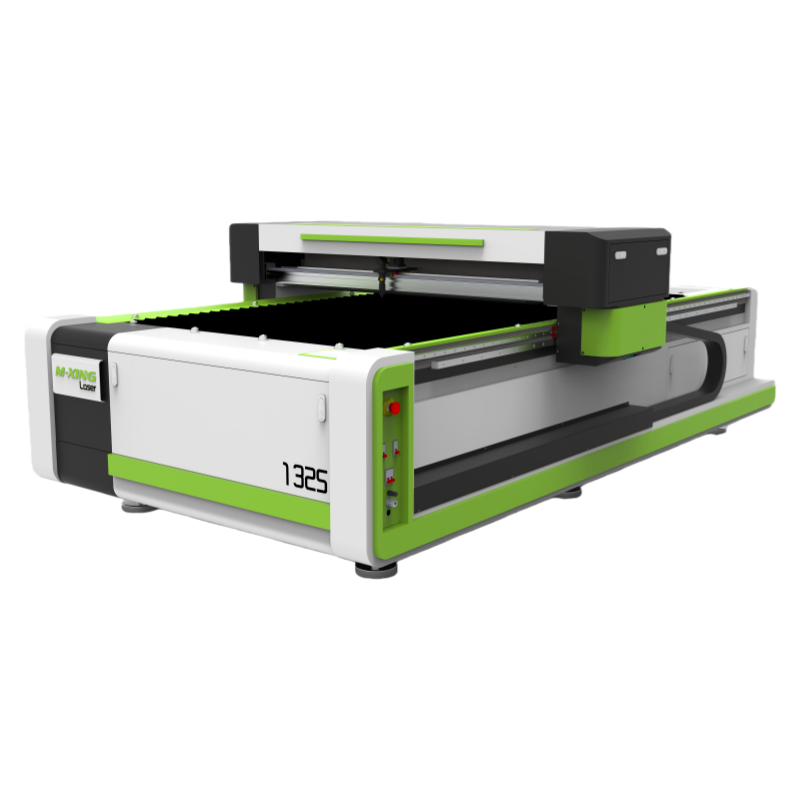
Rubber and foam are among the materials already listed for the X1325 platform, and the requirements they impose are specific.
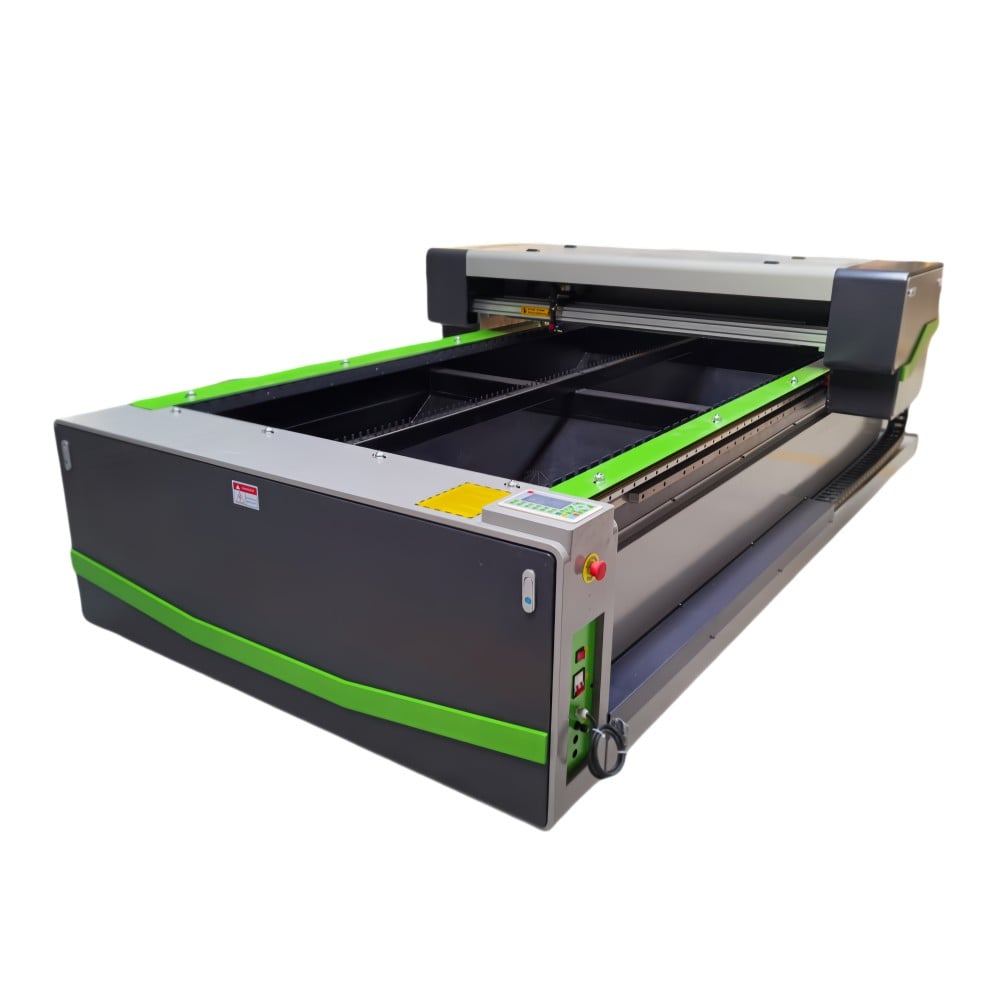
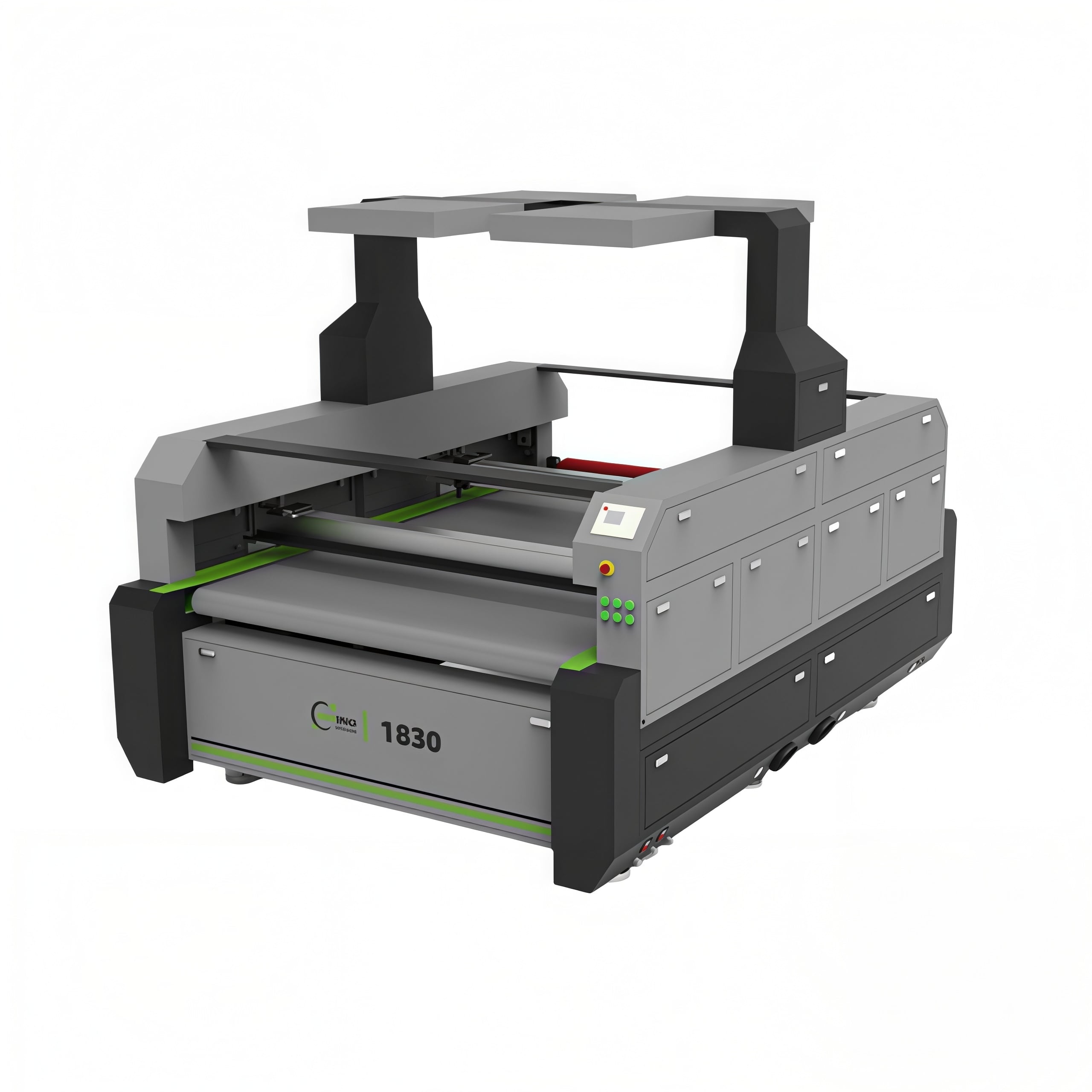
Working area. Foam work includes large packaging inserts and mats, while gasket production involves many small, closely nested parts. Mingxing Laser offers flatbed formats across the 6090, 1390, 1610, and 1325 sizes, so the working area can follow the part sizes actually being produced.
Power control. Neither material needs large amounts of energy; foam needs very little. The value of a controlled power supply here is precision at low output rather than maximum wattage, and the standard 100W, 130W, and 150W configurations are matched to the job by controlling delivered energy rather than running at the top of the range.
Material thickness. Foam blocks and thick rubber sheet are common in this category. The X1325 magnetic levitation platform supports a maximum feeding thickness of approximately 45 mm, which allows thicker blocks to be processed without splitting them into layers.
Motion quality. Consistent traverse speed directly controls edge quality on both materials, in opposite ways. On the X1325, an X/Y-axis linear motor magnetic levitation system delivers a maximum rapid travel speed of up to 1 m/s with repeat positioning accuracy of up to 0.05 mm, which supports the fast, even passes that foam requires.
Throughput. Gasket and insert production is repetitive. A double beam configuration allows two operations to run in parallel on the same platform, and where parts are cut from printed or pre-marked material, a camera positioning system helps align each cut to the existing layout.
Extraction. Rubber smoke and foam fumes are the primary reason extraction should be sized to the material and duty cycle. For chlorine-containing materials, the correct choice is not better filtration; it is not processing them at all.
The configuration details above are taken from the published product and technical documentation for the respective models. Final selection should be based on material type, sheet or block thickness, and daily output.
Rubber and foam look like easy materials and behave like two different engineering problems. The useful approach is to separate them from the start.
Confirm the material before anything else, because chlorine-containing rubbers and foams must never be processed and polyurethane foam must never be left unsupervised. Cut rubber with enough energy to separate cleanly without lingering heat, and cut foam fast and light so the cell structure stays intact.
For shops producing gaskets and packaging inserts, the practical first step is a measured one: cut a test part, measure the real kerf on the finished gasket rather than the drawing, and record the setting that produced a part that actually seals or fits.
 Hot News
2026-02-05
2026-02-03
2025-12-01

Mingxing Laser is a leading China-based laser machine manufacturer offering CO2 laser cutters, fiber laser cutting machines, CNC routers, laser welders & marking machines. OEM/ODM custom solutions available. Get a quote today!
- Company Headquarters: Room 1303, Building 4, UnitedFortune Plaza, High-tech Zone, Jinan City, Shandong Province, China
- Manufacturing Plant: No. 18, Yinhe Road, Jibei Street, Jiyang District, Jinan City, Shandong Province, China
Copyright © 2026 Century Mingxing (jinan) Intelligent Technology Co., Ltd. All rights reserved. Privacy Policy

 EN