Almost everything else in a laser workshop is processed by removing material. Wood, MDF, acrylic, leather and fabric are all cut or engraved because the beam takes material away: it burns, melts or vaporises the spot it touches, and the result is a groove or a kerf.
Glass does not work that way. On a CO2 laser, glass does not melt away like acrylic. The beam is absorbed in a very thin surface layer, which heats that layer faster than the heat can spread into the body of the glass. What follows is a controlled micro-fracture: thousands of tiny chips along the surface, each one scattering light. That is what reads as a white, frosted mark.
Three consequences follow from this, and all three change how you run the job.
First, you cannot cut glass the way you cut sheet material. The material does not disappear from the kerf. A normal flat-bed CO2 job on a glass sheet cracks it rather than separating it cleanly. Industrial glass separation exists, but it works by controlled thermal fracture on purpose-built equipment, not by running a cutting file on a general flatbed machine.
Second, more power does not give a better mark. Because the mechanism is fracturing rather than vaporising, extra energy drives the damage deeper and wider instead of making the mark cleaner. That is where chipping, cloudy patches and hairline cracks come from.
Third, the mark is permanent and sub-surface. It cannot be wiped, washed or worn off, which is exactly why awards, glassware and corporate gifts are engraved rather than printed or sandblasted one piece at a time.
So the goal on glass is never depth. It is brightness, edge cleanliness and repeatability, and those are decided by the glass type and by how gently the energy is delivered.
In wood or acrylic, the material varies and you adjust. In glass, the variation is more serious, because some glass types cannot be engraved at all.
Tempered glass is not a settings problem, it is a materials rule. Toughened glass carries internal stress from the heat-treatment process, and a localised hot spot can release that stress so that the whole panel shatters into fragments. No power setting, speed or masking film makes it safe to engrave. If you cannot confirm that a panel is not tempered, treat it as tempered.
The same caution applies to coatings and backings whose composition is unknown. Some coatings and laminates contain chlorinated compounds, which must never be put into a laser. Ask the supplier before the job is quoted, not after it is loaded.
Three variables decide almost everything: how much energy reaches the surface, how long it stays there, and how evenly it is delivered.
Heat shock is the real enemy. Glass is a poor conductor of heat, so a hot spot surrounded by cold glass expands unevenly, and that difference is what produces chipping and hairline cracks. Slower is not safer on glass. A slow pass pours heat into one spot, while a fast, light pass spreads the same total energy over time and leaves a cleaner mark.
Never re-run the same line in the same place. A second pass over a finished mark re-heats glass that is already fractured and usually widens the damage instead of brightening the mark.
Optics matter more here than on wood. A dirty lens, a damaged nozzle or a smeared window produces hot spots, and hot spots on glass become cracks. Clean the lens and nozzle, and check focus against the actual glass thickness, because the focal point has to sit exactly where the mark is wanted.
Masking is standard practice on glass. A wet paper mask or a thin, even film of soapy water spreads heat, holds debris and noticeably reduces chipping; it also keeps dust off the surrounding surface. Whatever mask you use must be applied evenly, because a dry patch is where chipping starts.
Air assist should be moderate: enough to clear smoke, not so strong that it chills the mark or blows debris across the surface. On glass, over-assisted air is a common cause of uneven marks.
Flat work covers sheets, plaques, mirrors and decorative panels. The surface sits at a constant height, so focus stays consistent across the whole job. The real risks are support, reflections and edge handling: glass must sit fully supported and must not rock, because any rocking changes the focal distance mid-job.
Cylindrical work covers tumblers, bottles, mugs and vases. Here the surface curves away from the lens, so the working distance changes across the mark and line density changes with it. If a design needs consistent density across the full width, the item has to be held in a rotational fixture that keeps the surface at focus and turns the item in step with the axis. A raster job run on a cylinder from a flat-bed setup is always less uniform towards the edges of the mark. Before quoting cylindrical glassware, confirm with your machine supplier whether a rotational fixture is available and what maximum diameter it supports.
Bases and rims are usually thicker than the wall, so they hold and dissipate heat differently from the body of the item, and heavy pieces need real support rather than simply being placed on a honeycomb bed.
The practical rule: never quote cylindrical glassware from a flat test piece. Test on the actual product geometry.
Engraving glass produces fine glass dust, which is a respiratory and skin hazard. Extract at the source, clean the machine with the extraction running, and never dry-sweep the bed.
Lead crystal contains lead oxide, so dust collected from crystal work has to be treated as contaminated waste rather than ordinary shop dust. Operators should know which items are crystal before the job starts.
Any glass can break, and tempered glass can release suddenly, throwing fragments across the working area. Eye protection is not optional, nobody should lean over the bed while a job runs, and broken glass needs a defined clean-up procedure rather than a brush and a bin.
Chips and fragments left on the bed change the focal distance for the next job and can scratch the work. Clean between jobs, not at the end of the day.
Finally, material identity: if a coating, backing or laminate is of unknown composition, it does not go on the machine until the supplier confirms what it is. Chlorinated compounds in particular must never be laser processed.
Every item on that list costs a few minutes and one offcut. The alternative is finding a chip in a piece that has already been accepted by a customer.
What glass engraving asks of a machine is fine, repeatable energy control rather than maximum power. Engraving sits at the low-energy end of what a CO2 system does, so the practical requirements are consistent low-power output, sharp focus and stable motion, because an uneven traverse speed shows up directly as banding in the mark.
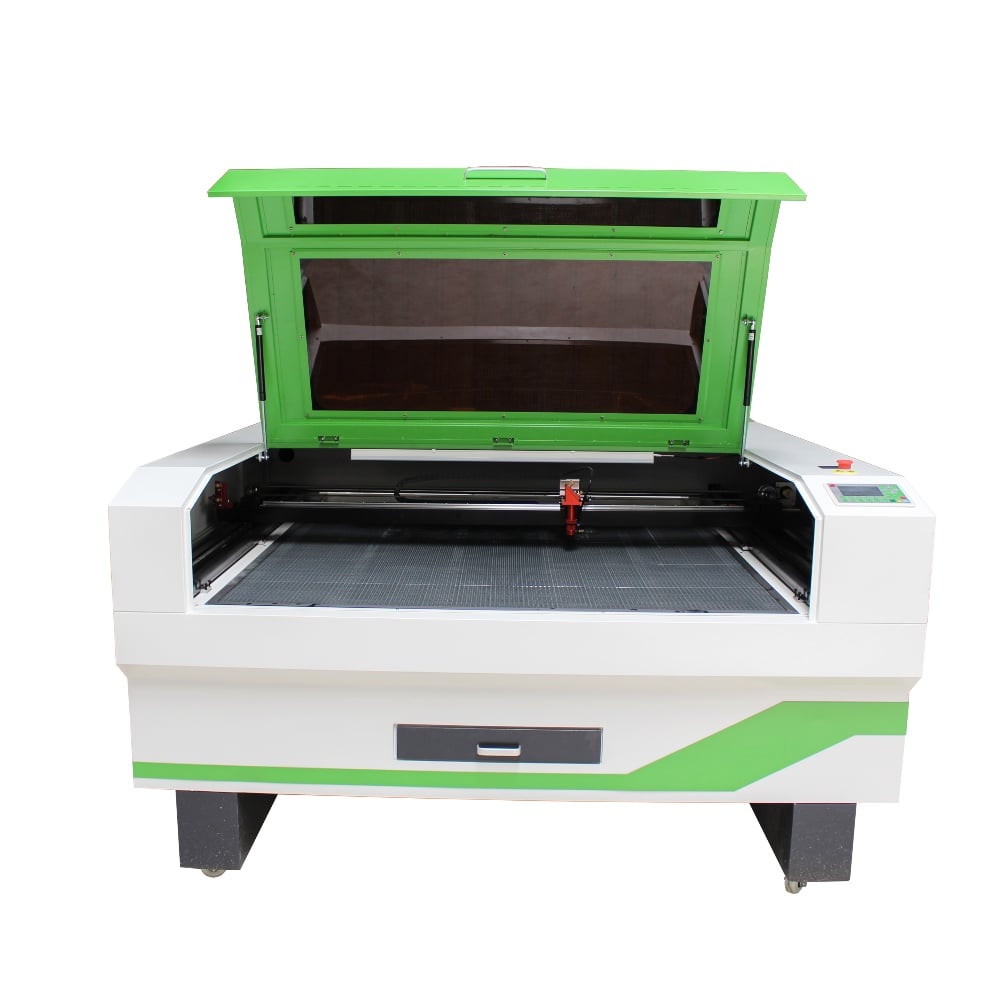
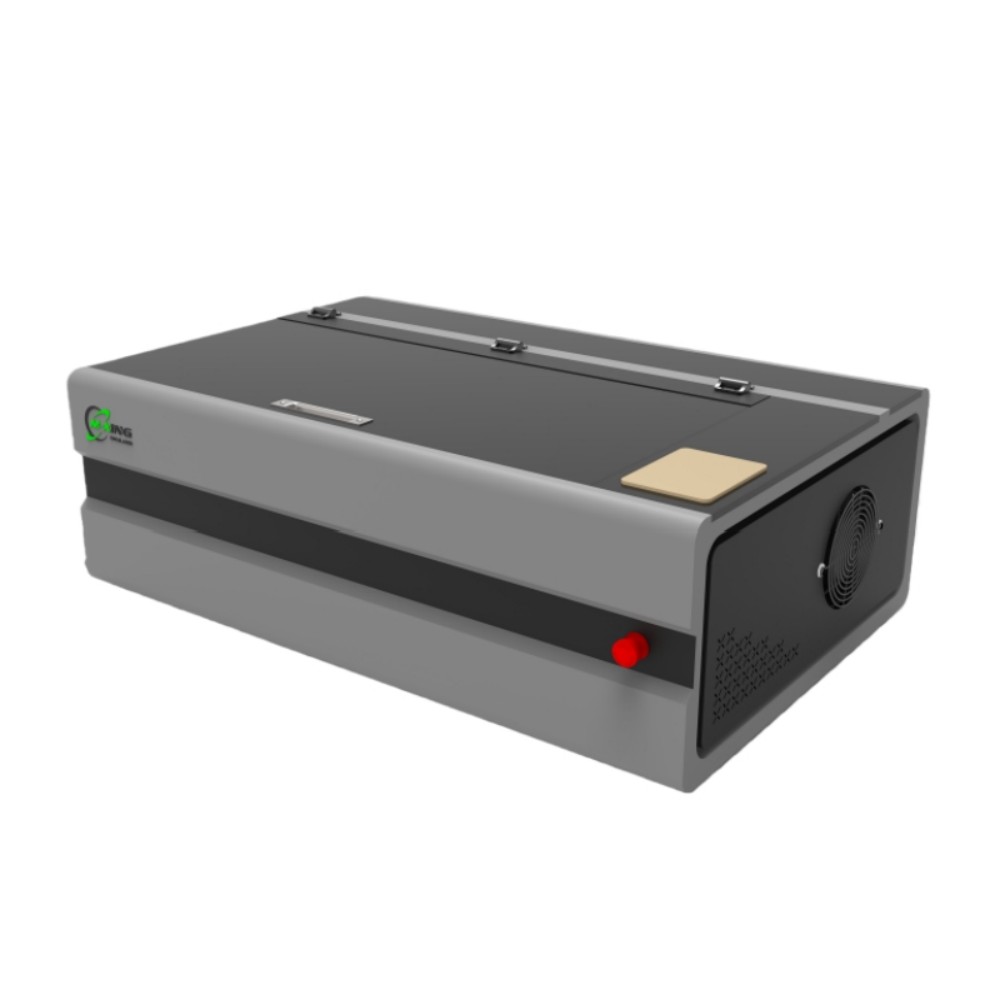
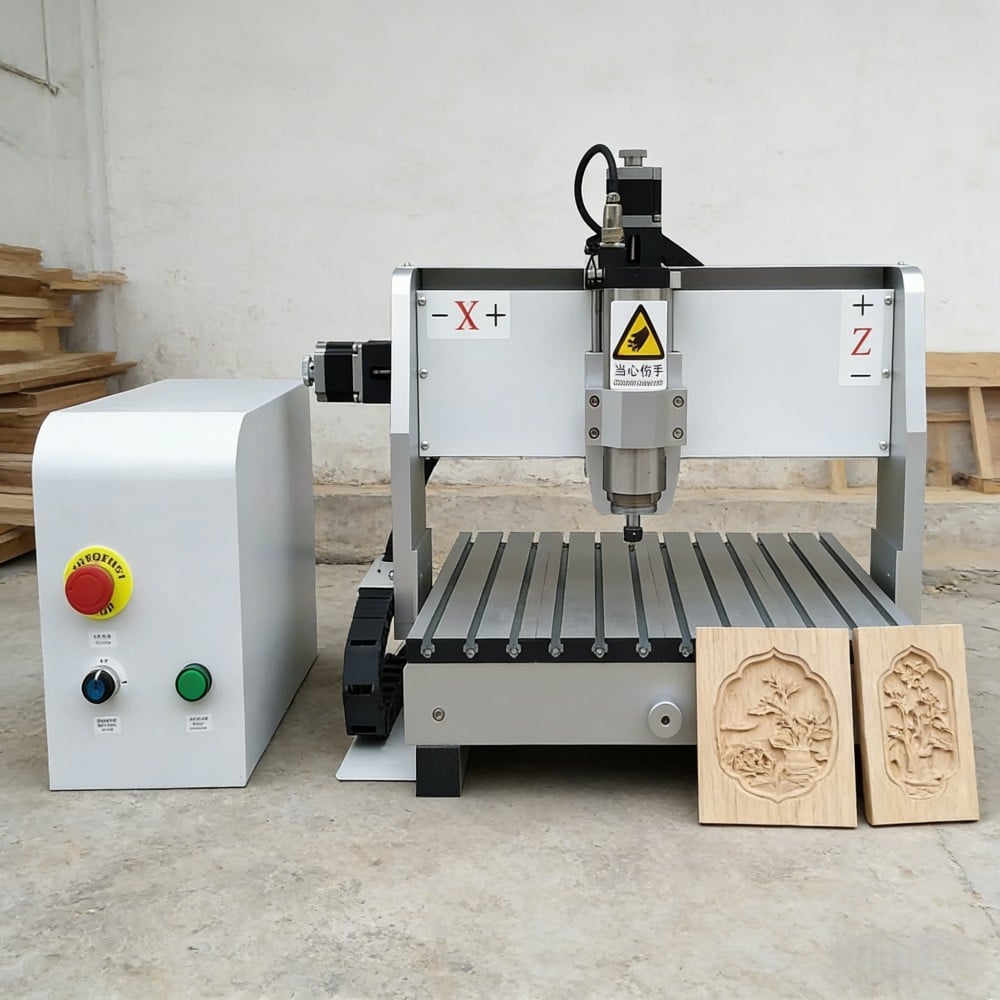
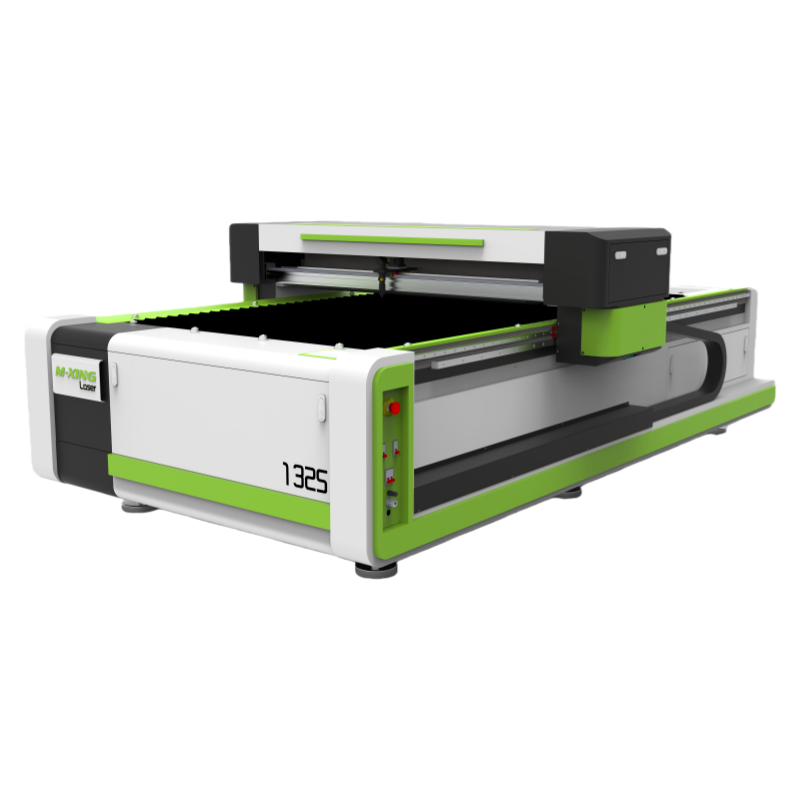
Working area should follow the products you intend to sell. A 6090 format suits awards, glassware and small gift work. The 1390 and 1610 formats suit large decorative panels, architectural glass and signage panels. A 1325 machine makes sense where glass is one of several materials moving through the same production floor. Mingxing Laser's published documentation lists crystal engraving among the applications of the 1390 CO2 laser machine and crystal word making among the applications of the 1530 CNC router, and machines across the 6090, 1390 and 1610 platforms are offered in 100W to 150W configurations. Engraving glass does not require the highest power available; it requires that the low end of the range is controllable.
Two requirements are easy to overlook. The first is extraction rated for glass fines rather than only smoke. The second is a bed that supports glass flat and fully, because a rocking sheet produces an inconsistent mark no matter how good the settings are.
If cylindrical glassware is part of the plan, settle the rotational fixture question and its diameter limit before the machine order, not after.
Glass is the material that punishes assumptions. It does not cut like acrylic, it does not respond to power the way wood does, and one glass type in the range will shatter instead of accepting a mark.
The working rules are short. Identify the glass type before quoting anything, treat tempered glass as untouchable, accept that engraving is controlled fracturing rather than cutting, keep energy low and delivery even, mask the surface, and test on the actual product geometry rather than on a convenient offcut.
A workshop that follows those rules can treat awards, glassware and decorative panels as a profitable, low-material-cost product line, running on the same machine that cuts acrylic and MDF earlier in the day.
 Hot News
2026-02-05
2026-02-03
2025-12-01

Mingxing Laser is a leading China-based laser machine manufacturer offering CO2 laser cutters, fiber laser cutting machines, CNC routers, laser welders & marking machines. OEM/ODM custom solutions available. Get a quote today!
- Company Headquarters: Room 1303, Building 4, UnitedFortune Plaza, High-tech Zone, Jinan City, Shandong Province, China
- Manufacturing Plant: No. 18, Yinhe Road, Jibei Street, Jiyang District, Jinan City, Shandong Province, China
Copyright © 2026 Century Mingxing (jinan) Intelligent Technology Co., Ltd. All rights reserved. Privacy Policy

 EN