Bamboo has no annual rings. It is a grass: a hollow culm divided by nodes, with vascular bundles embedded in a soft parenchyma matrix. That structure explains almost every surprise an operator meets on the first bamboo job.
Two densities sit in one cross-section. The outer rind is hard and silica-rich; the inner material is soft and porous. A beam that cuts the soft inner wall cleanly may leave a rough, charred line on the rind, and an engraving that looks even on the face can turn patchy where it crosses a node.
Then there is the part most people miss: what arrives on the bed is usually not bamboo, it is a bamboo composite. Strips glued into a board, fibres crushed and pressed with resin, layers bonded into ply, or polymer blended into a composite. Each has its own density, its own adhesive, and its own behaviour under the beam.
So the first question is never "what settings for bamboo". It is "which bamboo product is this".
Two rows deserve a hard rule. For bamboo-plastic composite, the polymer decides everything: confirm what it is, and if it contains PVC, it must never go on a laser. For round culms, the geometry is the problem, not the material: a flat-bed machine cannot keep focus across a curve, and thin walls split when the heat input is uneven.
Two failure modes account for most bamboo rejects, and they have opposite causes from the operator's point of view.
Charring comes from too much heat in a dense material. The rind holds heat at the surface, and in composites the resin adds both fuel and smoke. A slow pass on bamboo does not produce a smoother edge; it produces a wider char band and a stickier one.
Splitting comes from heat concentrated in a thin or weak section. Bamboo fibres run lengthwise, so a hot spot creates a stress line and the material separates along the fibre instead of along the toolpath. Thin strips, veneer, and anything within a node band are the usual victims. Damp stock splits more readily, because the escaping moisture drives fibres apart as it turns to steam.
The practical response is counter-intuitive to anyone trained on wood: go faster and lighter, not slower and heavier. Two light passes with a cool gap between them generally beat one slow pass on thick strip board, because the second pass cuts the charred material rather than boiling it.
Three habits remove most of the rest:
On a strip board, the broad face is usually planed, so the strips read as a pattern and the node lines appear as darker bands. The rind may be removed entirely, or retained on one face for a harder, more wear-resistant surface. Those are not cosmetic details: they change how an engraving looks.
Depth is where bamboo engraving is usually overdone. Going deeper does not increase contrast on bamboo; it widens the mark, fuzzes the edges where fibres tear, and makes the char harder to clean out. A shallow, consistent depth with a masked surface produces a sharper result than a heavy pass.
That matters most when the mark will be filled — with resin, paint, or a contrasting wax, a very common treatment on bamboo boards and utensils. A fill only looks clean if the engraved pocket has a consistent depth and a crisp wall. Two light passes with a clean-out between them give a better pocket than one heavy pass, and the fill will not bleed into torn fibres.
A bamboo part is not finished when it leaves the bed. The cut edge is charred and open, and an unsealed edge will smudge on handling, absorb moisture, and stain unevenly. Most bamboo complaints that get blamed on the laser are finishing complaints.
The sequence that works is short:
Clean the char, do not smear it. A light sand on the cut edge removes the loose carbon. Brushing or wiping a charred edge just spreads it into the surrounding fibres.
Seal the edges first. Cut edges and end grain absorb far more finish than the planed face. Two coats on the edge, one on the face, gives an even result; the other way round leaves a dry-looking outline around every part.
Clean engraving before oiling. Oil applied over char turns a crisp mark into a muddy one. Blow or brush the pocket out first, then finish.
Seal both faces, not just the top. Bamboo takes up and releases moisture readily, and a part sealed on one side only will cup as it equilibrates.
For boards and utensils, a food-safe oil and wax finish is the usual choice; for decorative panels, a lacquer or water-based film finish suits better. Whichever is used, the finish must be compatible with the adhesive in the board, and the supplier's data sheet is the place to confirm that.
Bamboo dust is finer and more abrasive than most wood dust because of the silica in the rind. It irritates airways, it settles into guides and optics, and it does not sweep up cleanly. Extract at the source, and never dry-sweep the shop at the end of the day.
Adhesives are the second issue, and they are invisible in the finished look. Strip boards, ply and strand-woven products are glued, and the resin type differs by supplier. Some boards carry formaldehyde-based adhesives, which changes what the extraction has to handle; phenolic-bonded strand-woven board produces heavier and darker smoke. If the job involves volume, ask the board supplier what the adhesive is before you plan the extraction.
Food contact deserves a straight answer rather than a marketing one. Bamboo cutting boards and utensils are engraved constantly, and two things determine whether that is appropriate: what is left in the engraving, and what the board is bonded and finished with. Char removed, pocket clean, food-safe finish applied — the mark is sound. Char left in a deep pocket, an unknown adhesive, and an unspecified oil — that is a product you should not describe as food safe.
If a customer asks for a food-contact claim, get the adhesive and finish data from the board supplier first. That is a documentation question, not a laser question.
Bamboo boards are denser than the wood most shops are used to, so the requirement is consistent energy delivery rather than headline power. A machine that holds its focus and speed across the bed produces an even char band; one that surges or slows leaves visible banding on a material where the edge is the product.
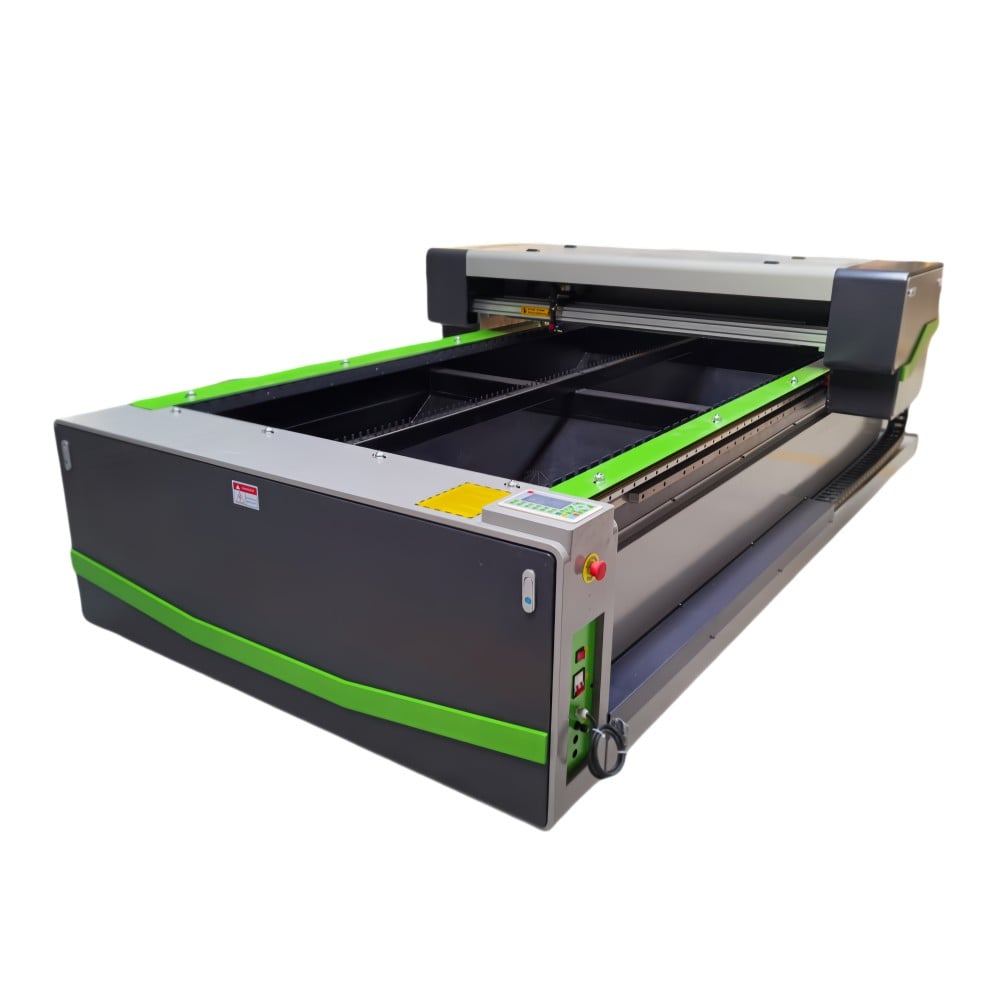
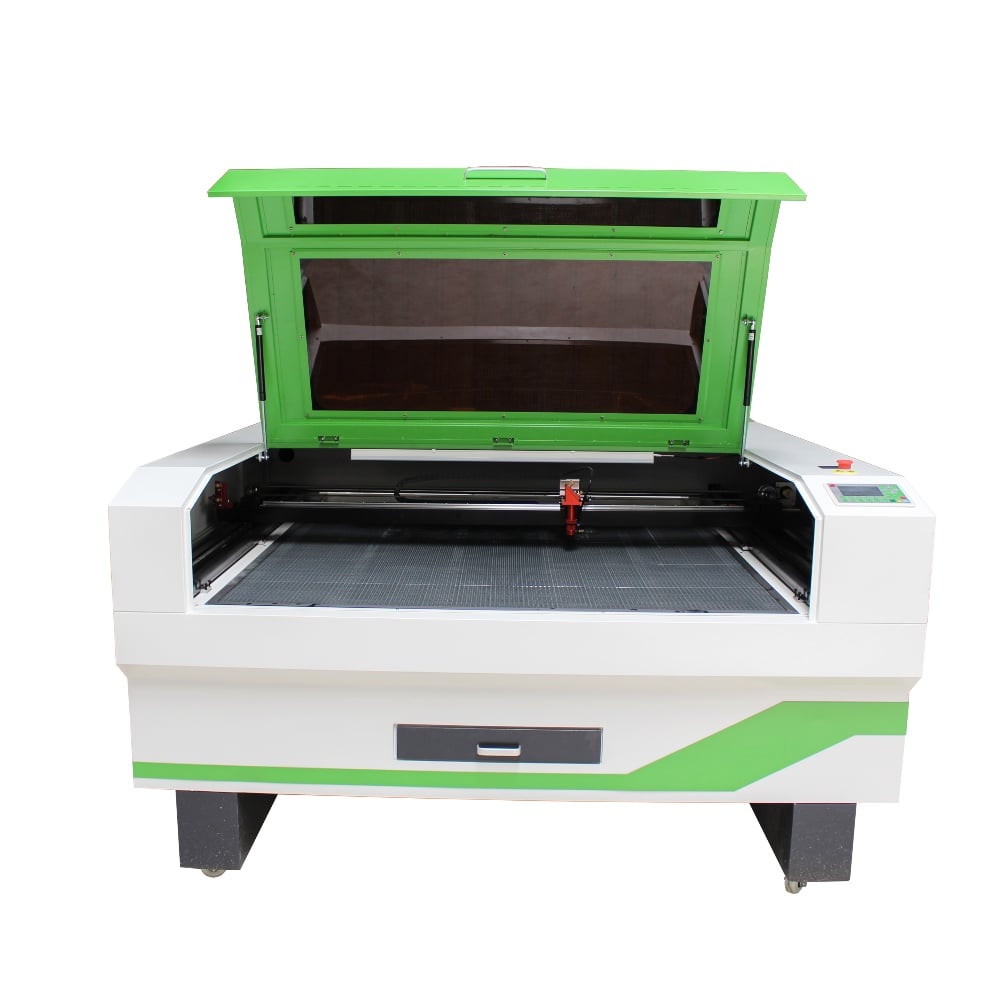
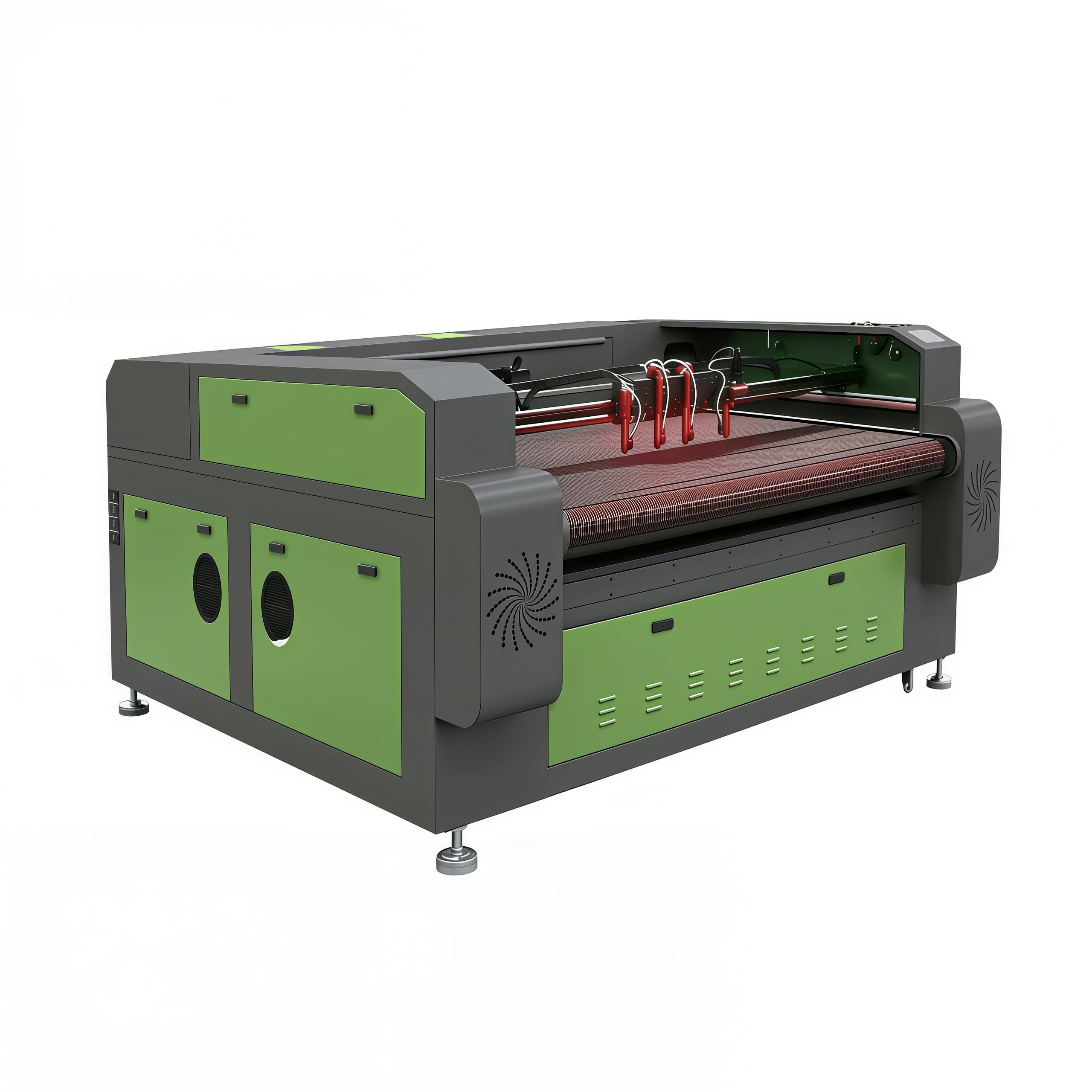
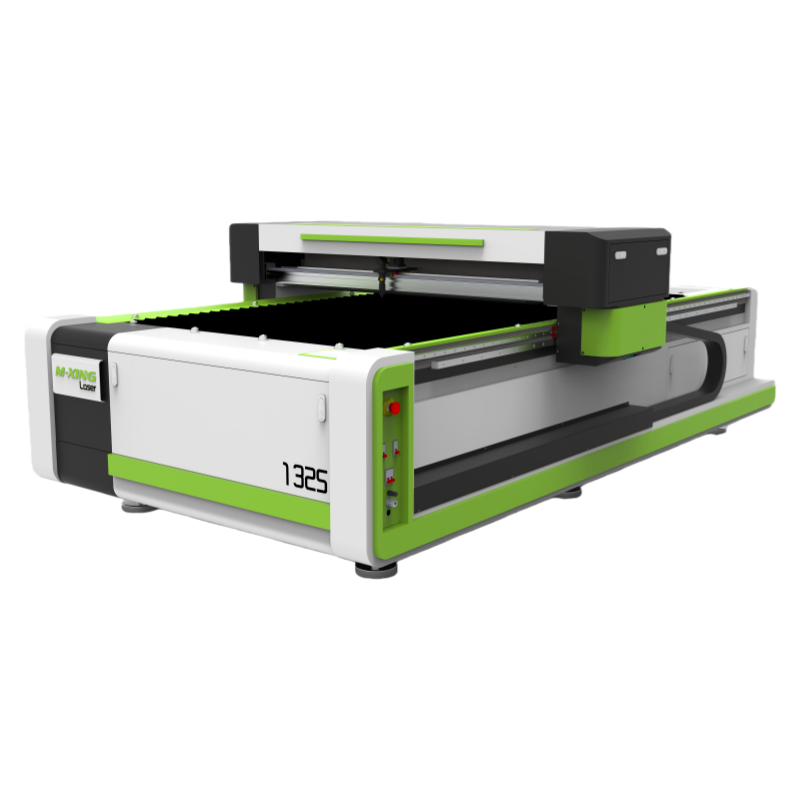
Working area should follow the parts. The 6090 format suits cutting boards, utensils and small craft runs. The 1390 and 1610 formats suit panels, signage and furniture components. The 1325 format suits sheet production where bamboo is one of several materials on the same bed.
Two requirements are less obvious. Extraction has to be sized for resin smoke, not just wood dust, because strand-woven and ply load filters much faster. And the bed has to hold thin stock flat: veneer and thin strips lift with air assist and curl with heat, so hold-down matters more than on a rigid sheet.
One honest boundary: the laser is a two-dimensional tool. For thick solid bamboo components, shaped edges, or three-dimensional furniture parts, a CNC router is the correct machine, and many bamboo workshops run both — laser for panels, engraving and thin parts, router for solid stock. Mingxing Laser's range covers both categories, which is worth knowing before a customer's job is quoted onto the wrong machine.
Bamboo rewards the operator who asks what the material actually is before touching the settings. Strip board, strand-woven board, ply, culm and composite are five different jobs, and the difference shows up in the edge within the first ten centimetres.
Cut light and fast rather than slow and heavy. Mask the face. Watch the nodes. Then finish the edge properly, because on bamboo the edge is what the customer inspects first.
Get those four things right and bamboo becomes one of the more profitable materials on the bed: inexpensive, visually distinctive, and popular in exactly the product categories — boards, utensils, gifts, tableware — where short runs and personalisation carry a price premium.
 Hot News
2026-02-05
2026-02-03
2025-12-01

Mingxing Laser is a leading China-based laser machine manufacturer offering CO2 laser cutters, fiber laser cutting machines, CNC routers, laser welders & marking machines. OEM/ODM custom solutions available. Get a quote today!
- Company Headquarters: Room 1303, Building 4, UnitedFortune Plaza, High-tech Zone, Jinan City, Shandong Province, China
- Manufacturing Plant: No. 18, Yinhe Road, Jibei Street, Jiyang District, Jinan City, Shandong Province, China
Copyright © 2026 Century Mingxing (jinan) Intelligent Technology Co., Ltd. All rights reserved. Privacy Policy

 EN