A sheet of plastic arrives with a colour, a thickness and a price. None of those three things tells the laser what it is about to do.
"Plastic" describes a family of materials with completely different chemistries, and a CO2 beam at 10.6 microns responds to chemistry, not to the label on the protective film. Two consequences follow, and they organise everything else in this guide.
Settings do not transfer between plastics. Acrylic, polystyrene and ABS can look similar on the rack and behave completely differently at the same power and speed. A file that cuts cleanly on one will bead, string or flame on another.
Some plastics must not be cut at all, at any setting. Not because the edge would be ugly, but because the process produces gases that damage the machine and endanger the operator. No amount of air assist, speed or filtration turns a banned material into a safe job. This is a materials decision, not a parameter decision.
Most thermoplastics are cut by melting and vaporising, so the "cut edge" is really a resolidified melt. That is why plastic edges come out glossy, stringy or sticky rather than clean and fibrous like wood. How much melt is produced, and how fast it cools, decides what the edge looks like.
Thermosets are a different case again. Epoxy, phenolic and glass-reinforced board do not melt; they char, dust and leave a rough edge. They are not cut so much as damaged in a straight line.
This is the part of the guide worth printing and putting on the wall. Every material below is refused, regardless of thickness, settings, or how small the job is.
Two practical notes on this list.
First, the economic argument is stronger than the health argument for most workshops, and it is worth stating plainly: chlorine gas attacks the optical coating and the metal surfaces it touches. A single PVC job can leave a film on the lens and start corrosion on guides that shows up months later as degraded cut quality. That is why the rule has no exceptions for "just one small part".
Second, the list includes materials that are perfectly safe to machine, saw or route. Acetal and PVC are normal engineering materials. The restriction applies to thermal processing, not to the material's existence.
The single most useful habit in plastic work is refusing to cut anything you cannot name. Identification is usually easy, and it almost never requires a test.
The rule that follows is simple: no data sheet, no cut. If a customer supplies their own material, ask for the polymer name in writing before it goes on the bed. If they cannot provide it, quote the job as "material to be confirmed" or decline it.
The most common failure is not ignorance, it is continuity: "we cut this last month and it was fine". Suppliers change grade, additives and surface treatment without changing the product name, and a material that behaved one way in March may behave differently in October.
Assuming the material has passed the never-cut list, behaviour still varies enough that each family needs its own test.
Two patterns are worth noticing. Materials with a low melt viscosity, such as PP and PE, produce strings because the melt is thin and gets dragged by the air assist. Materials that discolour easily, such as PC, punish any excess heat with a brown edge that cannot be polished out.
Thickness changes the picture more than it does with wood. A 2 mm PP sheet may cut acceptably while a 6 mm sheet of the same grade warps and strings, because the heat has further to travel and more melt to clear.
In wood and paper the cut edge is a cut surface. In plastic it is a freeze-dried version of the melt, and the appearance is a direct readout of how much liquid material was created and how quickly it solidified.
That gives three failure modes and one success mode.
Stringy edges happen when the melt is thin enough to be pulled instead of ejected. The air assist drags threads of polymer across the cut, they cool in mid-air and weld themselves to the part. Common on PP, PE and PETG. The fix is counter-intuitive: go faster and use less energy, so less material is liquefied; then adjust air assist so it clears the kerf without dragging.
Sticky or tacky edges happen when the melt solidifies soft. Polycarbonate is the classic case: the edge looks fine, then marks and sticks under a fingernail, and the part cannot be handled without leaving prints. Reduce energy and increase speed; if the material still will not give a dry edge, the job may belong on a saw or a router.
Beaded or raised edges happen when melt is pushed upward rather than out of the kerf. The cut is dimensionally correct but the top face carries a rim that will not sit flush. ABS shows this clearly. Check focus first, then air assist direction.
Clean edges come from materials that vaporise more than they melt, such as PMMA and PS, and from keeping the energy just above the threshold needed to complete the cut.
Protective film deserves its own note. Leaving the factory film on protects the face but the film itself melts into the edge and can weld to the part. If the face must be protected during cutting, a low-tack transfer tape applied by the operator is usually a better choice than leaving the shipping film in place, and the tape must be tested on a scrap before a batch.
Plastic fume is the main hazard in this material group, and it is the one most often underestimated because it is frequently invisible.
The fume condenses. Unlike wood smoke, which largely leaves the machine, plastic vapour cools and deposits on the first cold surface it meets: the lens, the nozzle, the inside of the duct, the extraction fan. That film degrades cut quality long before anyone notices a smell, and it is the reason optics cleaning schedules are shorter on plastic work than on wood.
Extraction has to match the material. Cutting plastic with extraction rated for wood dust is a common and expensive mistake. Plastic fume needs appropriate filtration, and the extracted air should not be recirculated into the workshop unless the filtration is designed for that duty. If the machine vents outdoors, check that the outlet is not next to an air intake.
Molten drip is a fire path. Melting plastics can drip. A flaming droplet falls through the honeycomb onto the bed, the floor or the waste tray and starts a second fire below the one the operator is watching. PC, PP and PE are the materials to watch. Keep the area under the bed clear, and never store offcuts in the machine.
Never leave a plastic job unattended. This is standard practice for all laser work, but plastic earns the repetition: it can ignite, drip and continue burning inside the extraction path after the head has stopped.
Two housekeeping habits make the biggest difference. Clean the lens and nozzle on a schedule rather than on symptoms, because plastic film builds invisibly. And empty the waste tray at the end of every plastic session, because mixed plastic offcuts are both a fuel load and, if any of them were misidentified, a contamination risk for the next job.
The last line is the one that saves the most material over a year. A simple log — polymer, supplier, thickness, settings, edge result — turns "we cut this last month and it was fine" into evidence that can be checked before the next batch.
Plastic sheet work does not reward maximum power. It rewards controlled low-end energy, stable motion, and extraction that is actually designed for fume, because most plastic jobs sit at the low-energy end of what a CO2 system can do and the failure mode is too much heat rather than too little.
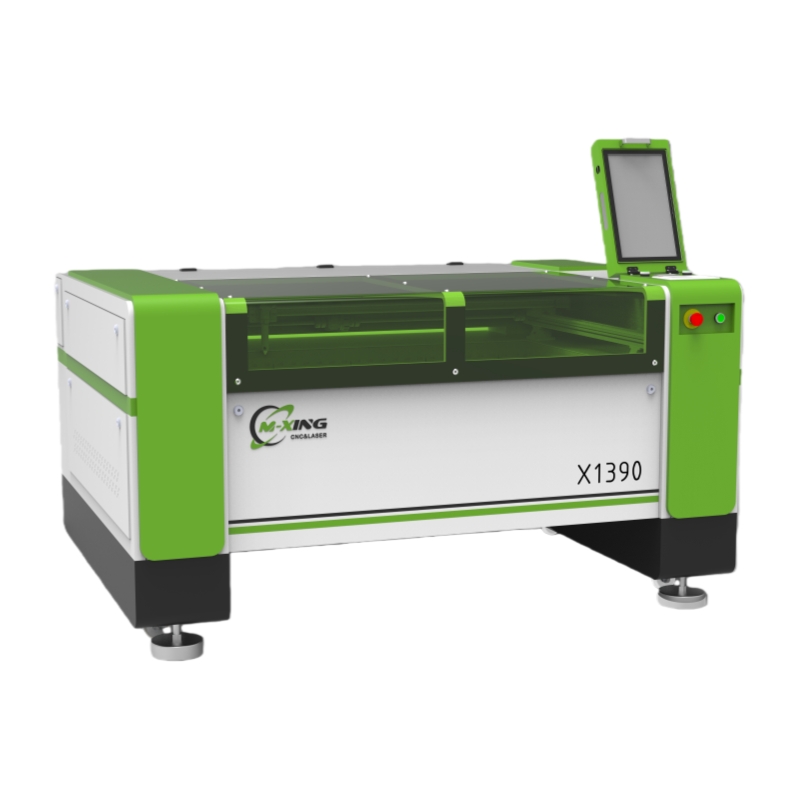
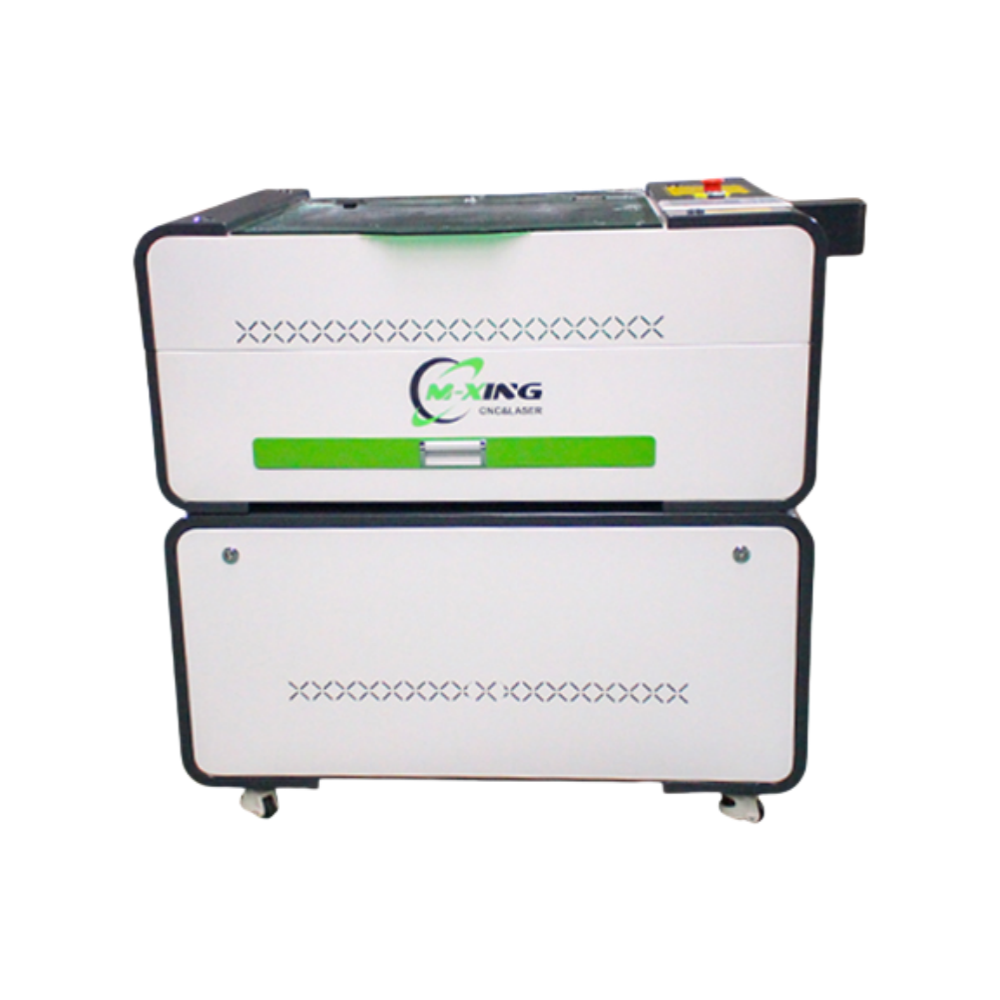
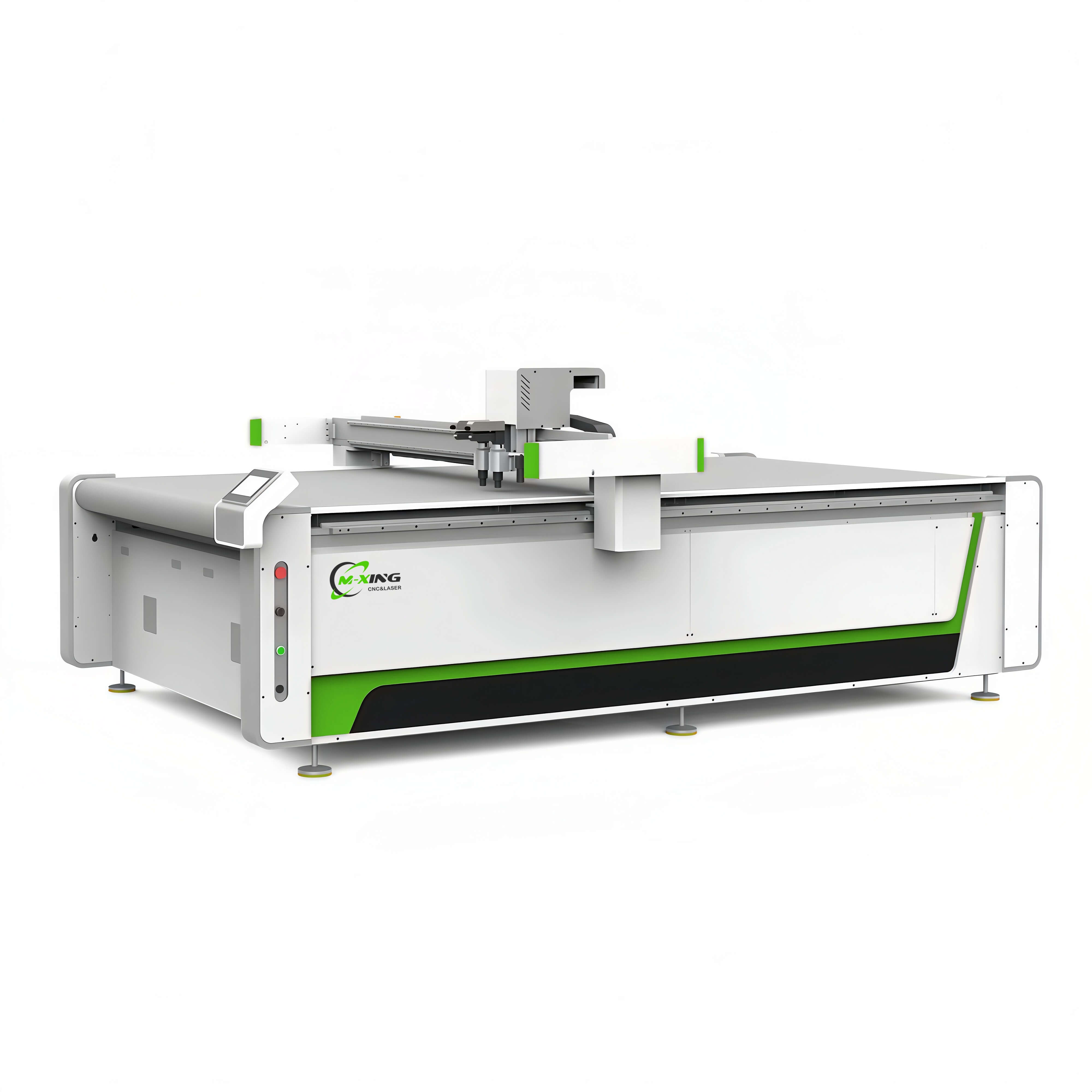
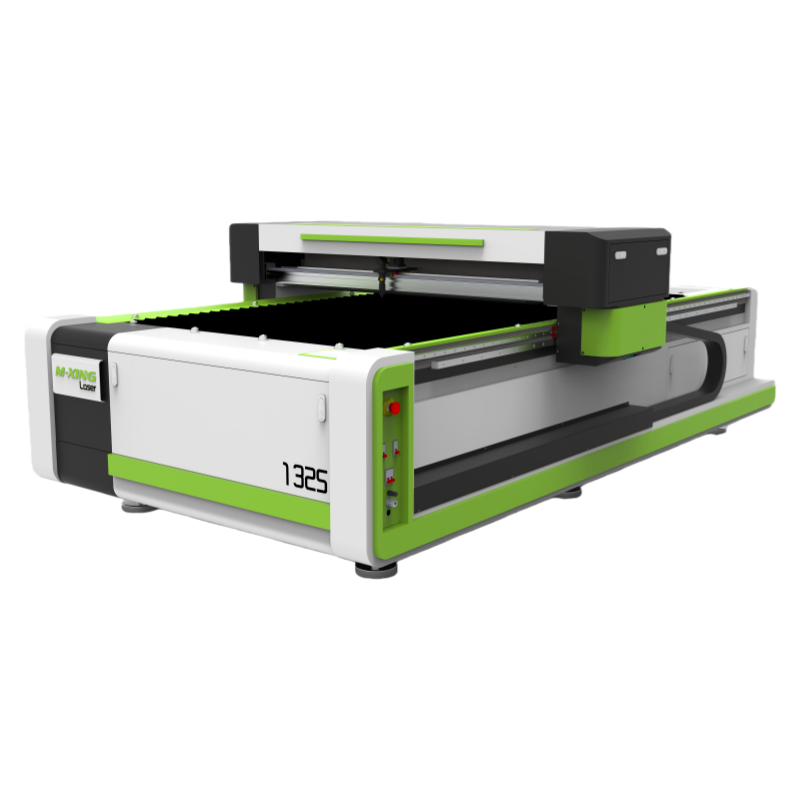
Bed size follows the sheet, not the part. Standard plastic sheet formats are large, and a bed that cannot take the sheet flat forces either pre-cutting or a redesign. The 1325 and 1610 formats suit full sheets and nested production; a 6090 format suits small parts, prototypes and single-sheet work where handling dominates.
Motion stability shows up directly in the edge. On plastics, an inconsistent traverse produces visible banding and variable edge quality, because the melt history changes with speed. A machine that holds constant velocity through curves produces a more even edge than one that surges and slows.
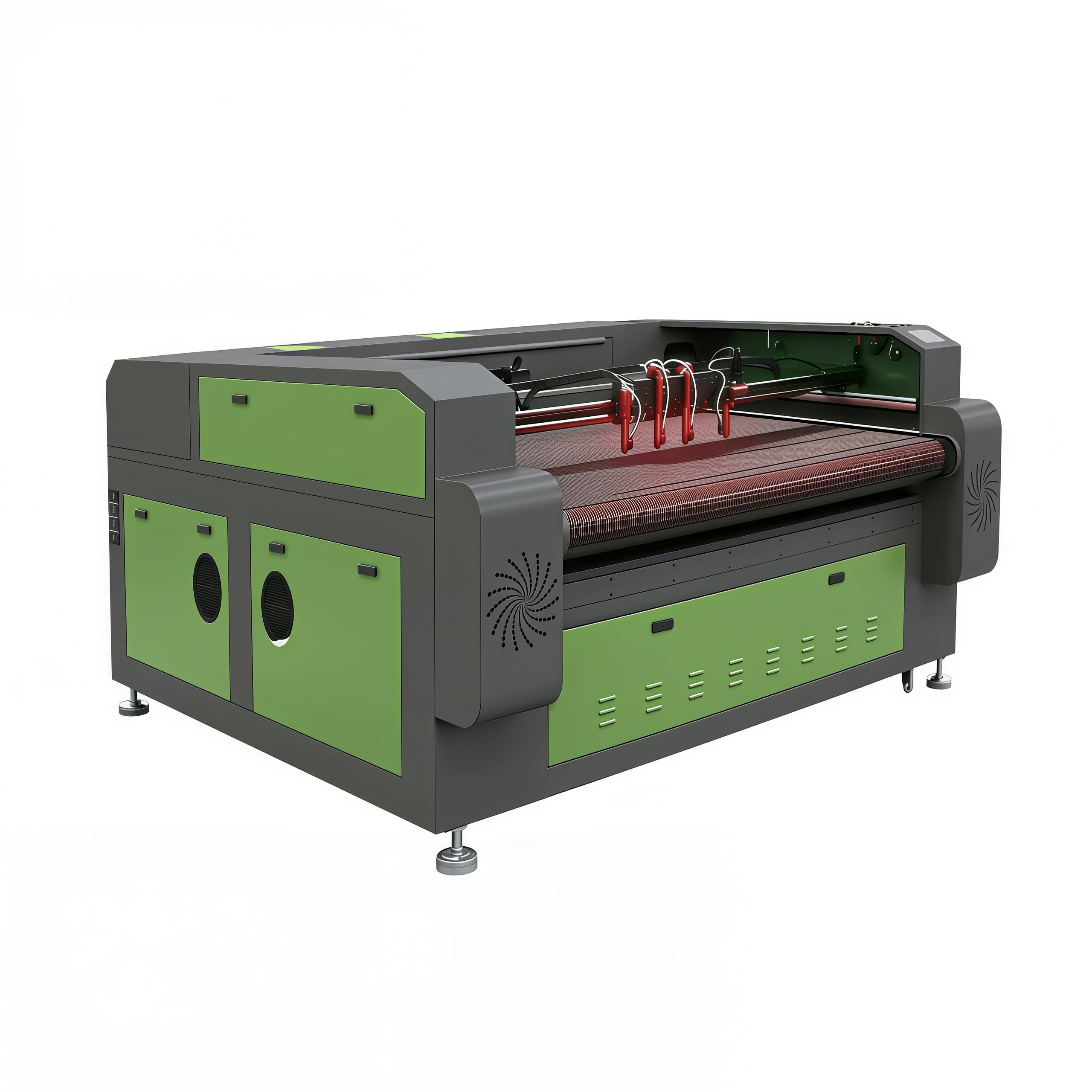
Camera positioning is useful where cuts must register to printed plastic sheet, which is common in signage and display work. A double-head configuration raises throughput on repeated parts without changing the process.
Power configurations across the 6090, 1390 and 1610 platforms are offered from 100W to 150W, and for plastic sheet that is ample; what matters is how controllably the machine delivers the bottom of that range. If the requirement is marking rather than cutting — part numbers, labels, serial plates — a CO2 marking machine is the correct tool, and using a cutter for marking work wastes capability in both directions.
The specification that is easiest to under-buy is extraction. Plastic fume is the constraint on how long a machine can run plastic, and filtration sized for wood will clog, pass odour, and put film on the optics.
Plastic is the material group where a single unidentified sheet can do the most damage, and where the fix is procedural rather than technical.
The rules are short enough to remember. Name the polymer before it reaches the bed, and refuse anything that cannot be named. Keep the never-cut list absolute: PVC, PTFE, acetal and glass-filled epoxy are not parameter problems. Expect the edge to be a frozen melt, and control it with speed and energy rather than with more power. Treat fume as a maintenance issue and a health issue at the same time, because it condenses on the machine as readily as it enters the air. Keep the area under the bed clear, because molten plastic drips.
A workshop that follows those rules can cut PS, ABS, PET, PP, PE and PC profitably on the same machine it uses for acrylic, MDF and board — and it can decline the jobs that would quietly destroy the optics.
 Hot News
2026-02-05
2026-02-03
2025-12-01

Mingxing Laser is a leading China-based laser machine manufacturer offering CO2 laser cutters, fiber laser cutting machines, CNC routers, laser welders & marking machines. OEM/ODM custom solutions available. Get a quote today!
- Company Headquarters: Room 1303, Building 4, UnitedFortune Plaza, High-tech Zone, Jinan City, Shandong Province, China
- Manufacturing Plant: No. 18, Yinhe Road, Jibei Street, Jiyang District, Jinan City, Shandong Province, China
Copyright © 2026 Century Mingxing (jinan) Intelligent Technology Co., Ltd. All rights reserved. Privacy Policy

 EN