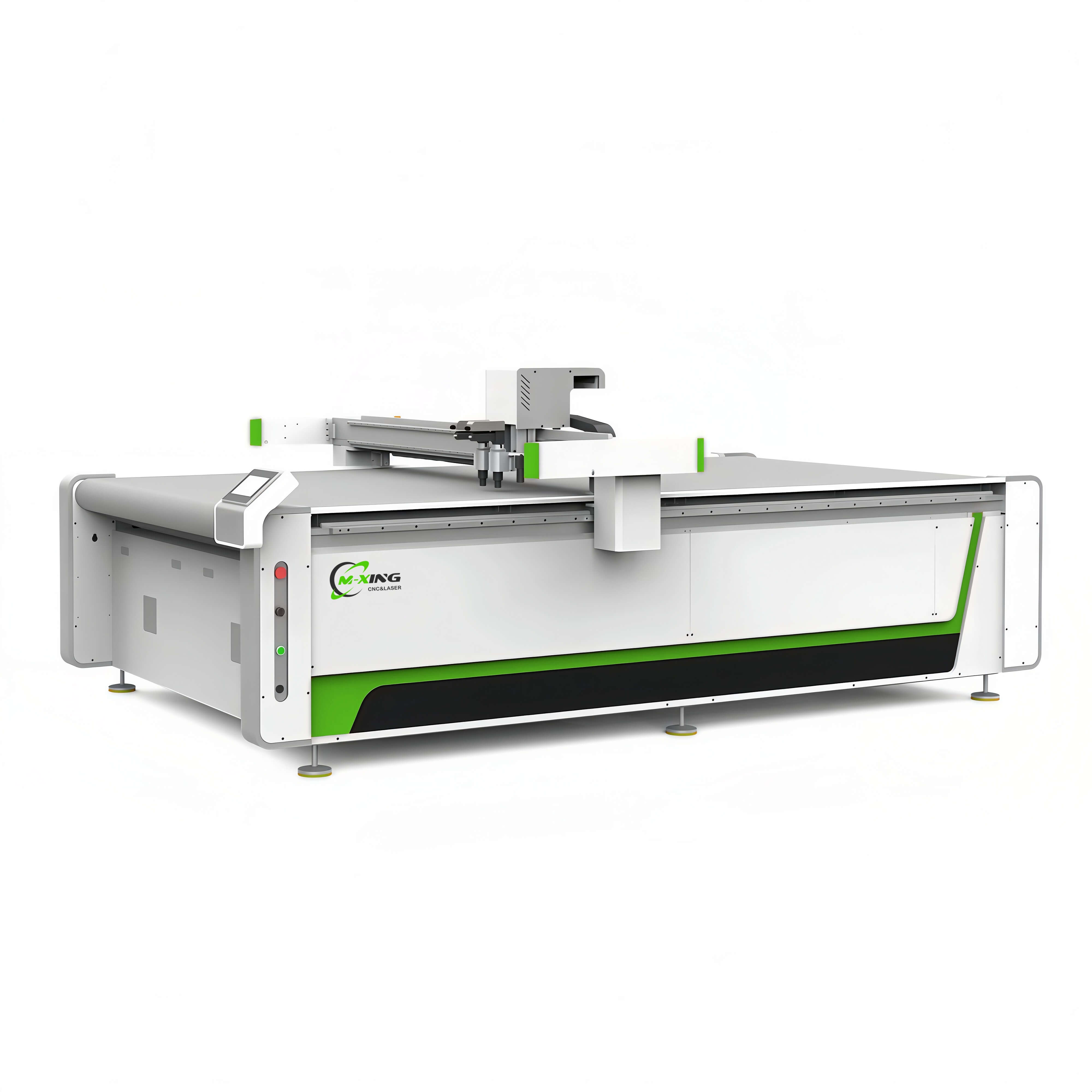
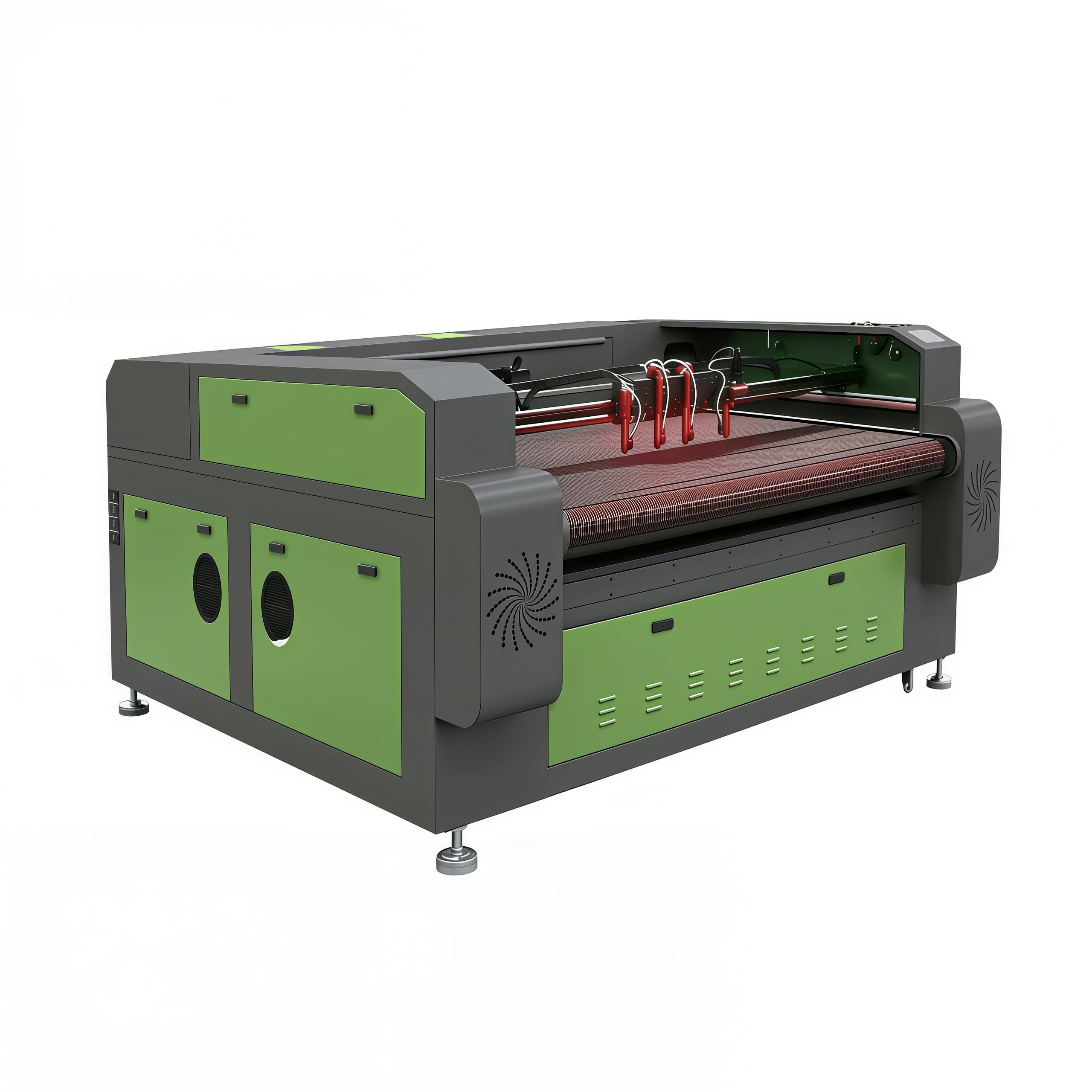
Ask an operator where a laser fire starts and most will point at the beam. In practice the beam is rarely the whole story. The fires that damage machines and buildings usually begin with something that was already hot, already smouldering, or already sitting in the wrong place.
Four conditions have to line up:
Fuel. Offcuts in the bed, dust under the honeycomb, char on the edge of the last job, residue on the nozzle, lint in the duct.
Heat. The beam, but also the heat stored in a freshly cut edge, in a pile of char, or in a filter that has been absorbing smoke all shift.
Oxygen. The room. And, critically, the air assist and extraction system, which are designed to move large volumes of air through exactly the place where the fuel and heat are.
Air movement. The same airflow that clears smoke will carry a glowing ember into a duct or a filter box and leave it there.
That fourth one is the part people miss. Air assist is a firefighting tool when it cools a cut and clears debris, and a fire-propagation tool when it lifts an ember off the bed and deposits it somewhere nobody is watching.
The practical consequence is uncomfortable: the highest-risk moment is not while the machine is cutting. It is the twenty minutes after the job looks finished.
Almost every workshop fire can be traced to one of these.
1. Edge smouldering. Cardboard, MDF, paper and some foams keep charring after the head has moved on. The job looks complete. The edge is still reacting.
2. Bed debris. Offcuts, dust and dried residue under the honeycomb catch stray reflections, drips or hot char. Nobody sees it because it is below the workpiece.
3. Duct and filter fires. Embers carried by air assist or extraction land in a duct, in a filter pleat or in a collection bin, and smoulder in a place with plenty of air and no observer.
4. Nozzle and lens residue. Plastic fume and wood tar condense on the nozzle and the lens. A contaminated lens absorbs heat, and a burning flake of residue drops onto the workpiece.
5. Melt drip. Plastics melt before they burn, and the drip carries flame downward, through the bed, onto the floor or into the waste tray.
6. Materials that should not be there. Open-cell polyurethane foam, oiled or waxed leather, solvent-wiped parts, adhesive-backed sheet, aerosols and solvent containers stored within the machine zone.
There is a seventh worth naming separately because it is not a material at all: reflective surfaces. Mirror-backed acrylic, polished metal, and foil-faced board can send the beam somewhere the design never intended.
Fire risk is not proportional to how easily a material ignites. It is proportional to how long it stays hot after the beam leaves.
Most of the protection in a well-run shop is procedural, and it costs nothing.
No unattended cutting. Ever. This single rule prevents more damage than any device on the market, because it converts a fire that has been burning for twenty minutes into one that has been burning for twenty seconds.
No overnight queue. A machine that finishes at 2 a.m. and sits until 8 a.m. with a fresh edge in it is the classic loss. If a job must run long, someone stays.
A defined fire watch after each job. Not "have a look" — a set interval during which the bed is checked before the operator moves to something else. For board and foam work this is the habit that catches smouldering.
Waste handling that matches the risk. A metal bin with a lid, emptied at the end of each shift, not at the end of the week. Cardboard offcuts in a cardboard box next to the machine is a fuel package with a lid that does not close.
A clear bed between jobs. Not at the end of the day. Residue from the previous job is the fuel for the next one.
Nothing flammable in the machine zone. Solvents, adhesives, aerosols, spare foam, packaging film. Compressed air should not be used to blow dust around the room, because it puts the fuel into the air.
Duct and filter discipline. Inspect on a schedule, not when smoke appears. A duct with a visible coating inside is a fire path along its whole length.
Devices are worth buying when they shorten the gap between ignition and response. That usually means four things.
Detection close to the risk. A smoke detector in the room responds when the room is already filling. Detection at the machine enclosure, and ideally in the extraction duct, responds while the fire is still small.
An isolation damper in the duct. This is the device that stops a duct fire from becoming a building fire: it closes the path, starves the fire of the airflow that has been feeding it, and keeps the fire out of the filter bank and the rest of the building.
Suppression matched to the fuel. CO2 is the practical choice for electrical equipment and for fires inside the machine because it leaves no residue. A fire blanket handles small surface fires on the bed. Water mist cools and is effective on paper and board, but needs to be applied by someone who knows what is energized. Dry powder works but writes off electronics and optics.
A known, reachable, inspected extinguisher. The most common failure in a real incident is not the wrong extinguisher, it is an extinguisher behind a stack of material or discharged three years ago.
Also worth checking: whether the machine has a fire-detection interlock option, whether the enclosure is metal rather than plastic, and whether the emergency stop and the main isolator are reachable without stepping over material.
The first minute decides whether this is an incident or a loss.
After any fire, the machine needs more than a wipe-down: optics, wiring, belts and the extraction system should be inspected before the next job.
Fire safety is partly a purchasing decision, and it is worth asking about explicitly rather than assuming.
The questions that change outcomes: does the machine offer fire detection with an interlock that stops the job? Is the enclosure metal, and is the viewing window rated for it? Is the bed accessible for cleaning without dismantling anything? What is the extraction port size, and does the recommended duct design include a damper? Is the emergency stop reachable from the operating position?
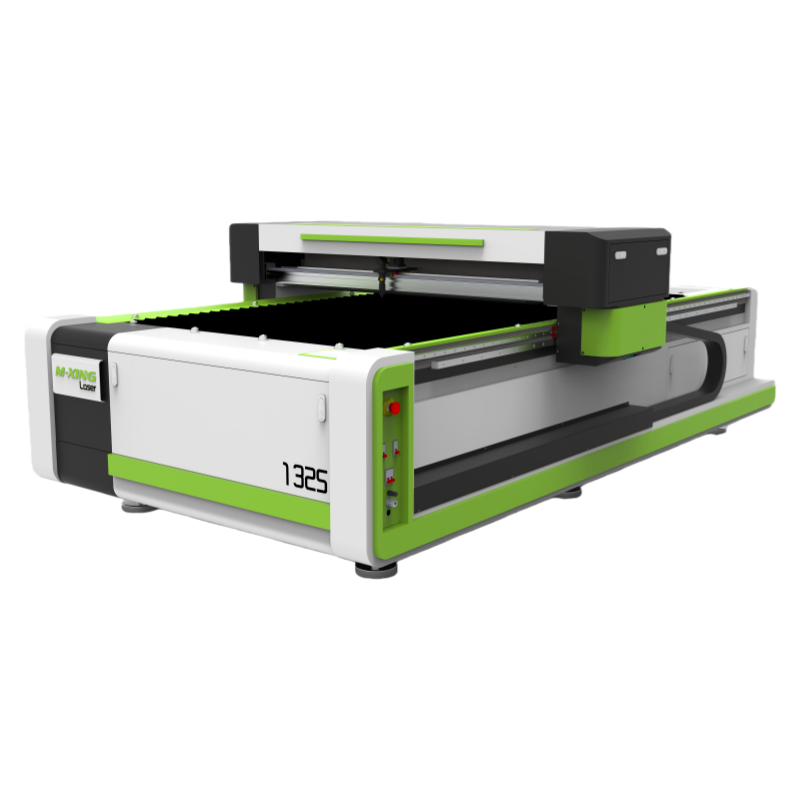
Format matters too. On a 1300 x 2500 mm bed, there is simply more area to keep clean and more material in the machine at any moment, so housekeeping discipline matters more than on a 6090 — not because the machine is less safe, but because the fuel load is larger. On large-format work, zoning the cut sequence and clearing the bed between sheets is the practical equivalent of a smaller machine's easier housekeeping.
Laser fires are rarely dramatic at the start. They begin as a glowing edge, a warm patch of dust, or an ember that travelled further than anyone expected, and they become serious during the time nobody was looking.
The protection that works is unglamorous: never leave the machine, watch the edge after the job, keep the bed and the duct clean, keep the fuel away from the machine, and know exactly what you will do in the first minute. A shop with those habits and one inspected extinguisher is safer than a shop with a suppression system and an overnight queue.
 Hot News
2026-02-05
2026-02-03
2025-12-01

Mingxing Laser is a leading China-based laser machine manufacturer offering CO2 laser cutters, fiber laser cutting machines, CNC routers, laser welders & marking machines. OEM/ODM custom solutions available. Get a quote today!
- Company Headquarters: Room 1303, Building 4, UnitedFortune Plaza, High-tech Zone, Jinan City, Shandong Province, China
- Manufacturing Plant: No. 18, Yinhe Road, Jibei Street, Jiyang District, Jinan City, Shandong Province, China
Copyright © 2026 Century Mingxing (jinan) Intelligent Technology Co., Ltd. All rights reserved. Privacy Policy

 EN