Packaging has two very different halves, and conflating them is why some shops buy a laser expecting the wrong thing.
The first half is structure: turning a product into a foldable, printable, stackable object. This is where samples are made, where a designer tries five versions of a box in a week, and where a brand decides whether the pack works. A laser is close to ideal here — no tooling, no minimum order, change a vector and cut again.
The second half is volume production: the same carton, ten thousand times, creased so it folds on a machine, printed in register, glued automatically. A laser does not win here, and no honest supplier should suggest it does. That work belongs to die cutting and creasing, and the economics are not close.
The businesses that get value from a laser are the ones operating in the first half and at the boundary: design studios, packaging converters doing samples and short runs, brands packing their own product, and printers adding structural work to a print offer.
A packaging project is not a design, it is a negotiation. The structure gets revised because the product does not fit, because the retailer wants a different shelf presence, because the material scuffs, because the closure is awkward to open. Each of those revisions normally costs a tooling order and a week of waiting.
That is the real value of cutting samples in-house: the loop goes from weeks to hours, so more revisions happen, and more revisions produce a better pack. A design studio that can cut three structural variants before lunch will sell better packaging than one that cuts one and waits.
The last row is the one that saves money. A laser sample and a production die-cut sample are not the same object, and a brand that approves the laser version and then orders dies can be surprised by a fold that no longer closes cleanly. Approving on a creased sample, from the converter who will actually run the job, is the discipline that prevents it.
In packaging, the drawing is not a picture of the part, it is the part. A dieline carries cut lines, fold lines, glue tabs, notches, registration marks and bleed, and every one of those layers means something different to a die maker and to a laser.
That difference is the most common source of wasted material in a laser-equipped packaging shop.
A die maker offsets the cut line for the blade. The steel rule has thickness, so the die is built to a compensated line. Send that compensated file to a laser without adjusting it and every panel comes out slightly wrong — glue tabs too tight, lids too loose.
Kerf does the same thing in the other direction. The beam removes material along the toolpath, so an uncompensated laser cut makes each panel marginally smaller than drawn, and a box that relies on a snug tab-to-slot fit will feel loose.
Notches and slots are where errors become visible. A hairline difference in a slot is invisible on the bench and obvious once the box is filled and stacked. This is the same kerf logic covered in the separate kerf and nesting guide, applied to a product where the tolerance is felt rather than measured.
Version control beats precision. In a sampling loop, the most expensive mistake is not an inaccurate cut, it is a good cut of the wrong revision. Naming files by structure, material and date, and keeping a single source dieline per structure, prevents most of it.
A fold line in paperboard is compressed, not removed. A crease crushes the board along a line so the fibres bend where intended, leaving the surface intact. A laser cannot compress: it can only remove, mark or weaken material.
This matters because a folding carton is judged by its folds. A laser-scored line produces a fold that is either too stiff or, at higher energy, visibly broken along the surface — and on printed board, a broken line shows as a light line through the ink.
The practical answer for a laser shop is straightforward: cut with the laser, score by hand for samples, and be honest with the customer that a production fold will be creased by a die. A shop that promises a laser-creased carton has promised something it cannot deliver at volume — and the failure shows up at the customer's filling line, not in the sample room.
There is one exception worth knowing. On rigid boxes and thick board, a laser-cut shallow groove is genuinely useful, because the fold is a wrapped corner rather than a machine fold, and the groove controls where the wrap turns. That is a different product from a folding carton, and it should be treated as one.
Every sheet of corrugated board and most paperboard has a direction: flutes run one way, fibres align one way, and the board is stiffer across the grain than along it.
Two consequences matter on the laser.
Flute direction decides how a box folds. Fold along the flutes and the board bends cleanly; fold across them and it resists, then crushes. A dieline that ignores flute direction produces a box that assembles badly and looks tired on shelf. The orientation is set at the nesting stage, so it is decided before the first cut.
Grain direction decides whether the panel stays flat. A blank cut with the grain running the wrong way across a large lid will bow as it takes up moisture from the air. This is not a laser fault, and no setting will fix it — the layout has to change.
Both are the packaging version of a general rule: the machine reproduces the file, so the file has to carry the material knowledge. Where the flute runs, where the grain runs, and which panel is allowed to flex are all decisions made in the drawing and the nest, not in the settings screen.
If there is one packaging application where a laser has no serious competitor at low volume, it is protective inserts.
A foam, EVA or corrugated insert is a three-dimensional fit problem: the product sits in a cavity, the cavity has to hold it without play, and the surrounding material has to protect it in transit. Every new product needs a new insert. There is no tooling-free alternative that produces the same result at the same speed.
The fit is where the value is. A cavity cut slightly tight holds the product and looks intentional; the same cavity cut slightly loose lets the product rattle, and the customer reads that as cheap. Getting it right is a matter of testing one insert, adjusting by the amount the product actually moves, and cutting again — which is exactly the loop a laser makes cheap.
One material caution that belongs in every packaging conversation: PVC-based foams and any chlorinated material must not be laser cut. The gas attacks the machine and the operator, and packaging is one of the categories where unnamed "foam" is most likely to turn out to be something that should never be on the bed.
The packaging market has moved toward smaller runs: e-commerce brands with several SKUs, subscription boxes, seasonal editions, personalised gift packaging. Die cutting is poor at this end — the tooling cost has to be amortised over a run that may only be a few hundred pieces.
A laser serves this segment directly. There is no tooling, so a run of fifty is economic, and a change of name or colour between runs costs nothing but a file edit. Engraving the brand directly onto the board is often the most profitable version of this: it removes a label, a printing pass, and a stock-keeping item at the same time.
There is a real limit, though. Personalised packaging is still packaging: it has to fold, close, protect and stack. A laser shop that can produce a beautiful engraved box which does not survive a courier is not in the packaging business. Structural testing on a filled sample is part of the job, not an optional extra.
The honest question for any packaging business is not "can a laser do this" but "at what volume does it stop being the right tool".
Two habits make the boundary manageable. First, keep the laser for what it is good at — samples, revisions, inserts, personalisation, replacement parts for a run that is short a few boxes — and let a die cutter own the frozen structure. Second, cost the two properly: a laser quote that ignores labour for hand scoring and assembly is not a comparison, and a die quote that ignores tooling revision costs is not one either.
The most successful pattern in small packaging businesses is a hybrid: laser in-house for structure development and short runs, a die cutter for the volume order, and the same dieline maintained as a single source of truth for both. That last part is what stops the two processes from drifting apart.
The smell row is worth a note. Packaging is the one laser application where the customer puts their nose close to the product, and a faint burnt odour inside a sealed box reads as a quality failure even when the print and structure are perfect. Cutting cleanly, extracting properly, and letting parts air before packing solves it; masking the smell does not.
Packaging work is mostly flat sheet, so the priorities differ from general fabrication.
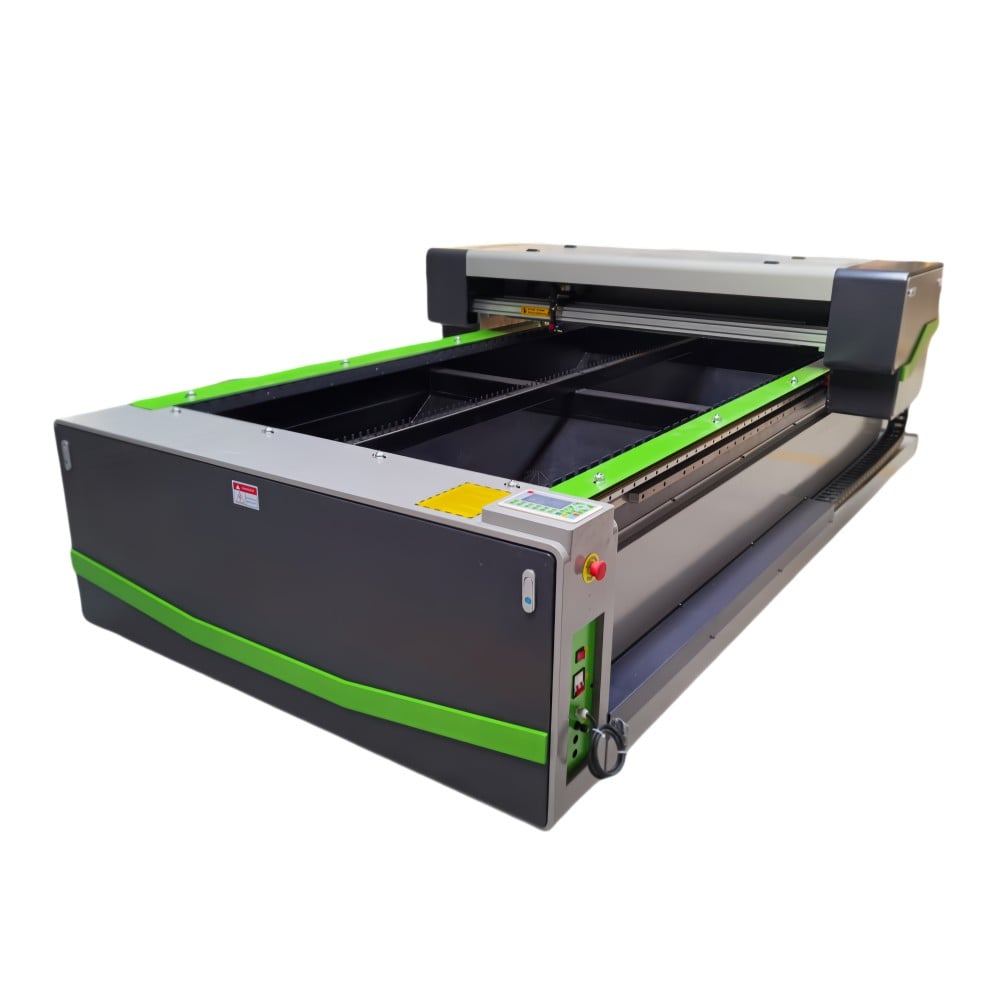
Bed size should take the sheet the print house supplies. Cutting from a full sheet and nesting several blanks per sheet is what makes short runs economic; a bed that forces pre-cutting adds handling and waste to every job.
A camera is close to essential if printed board is involved. Structure samples are usually cut from printed or mocked-up sheets, and registration turns a fiddly alignment into a routine operation. It also helps when cutting to an existing printed sheet rather than a blank.
Dual heads and auto-feeding suit repeat sample sets and insert batches, where the same shapes are cut many times. For a studio cutting one of everything, they add little.
Extraction has to be sized for adhesive and coating smoke, not just paper dust. Coated board, foil laminates and foam inserts all load filters differently from plain kraft, and a packaging shop that cuts mixed materials should plan for the heaviest one.
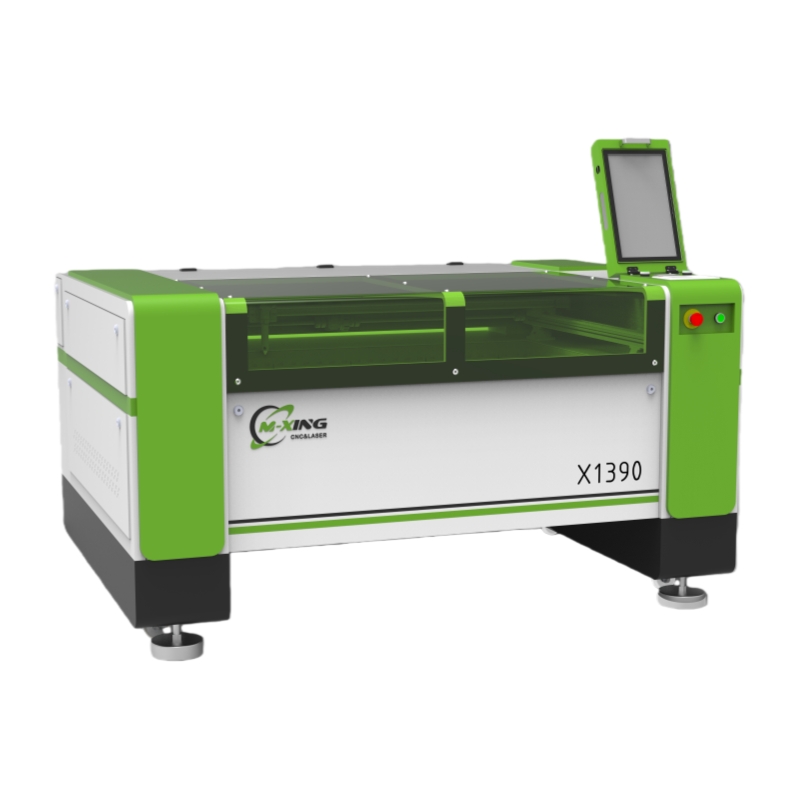
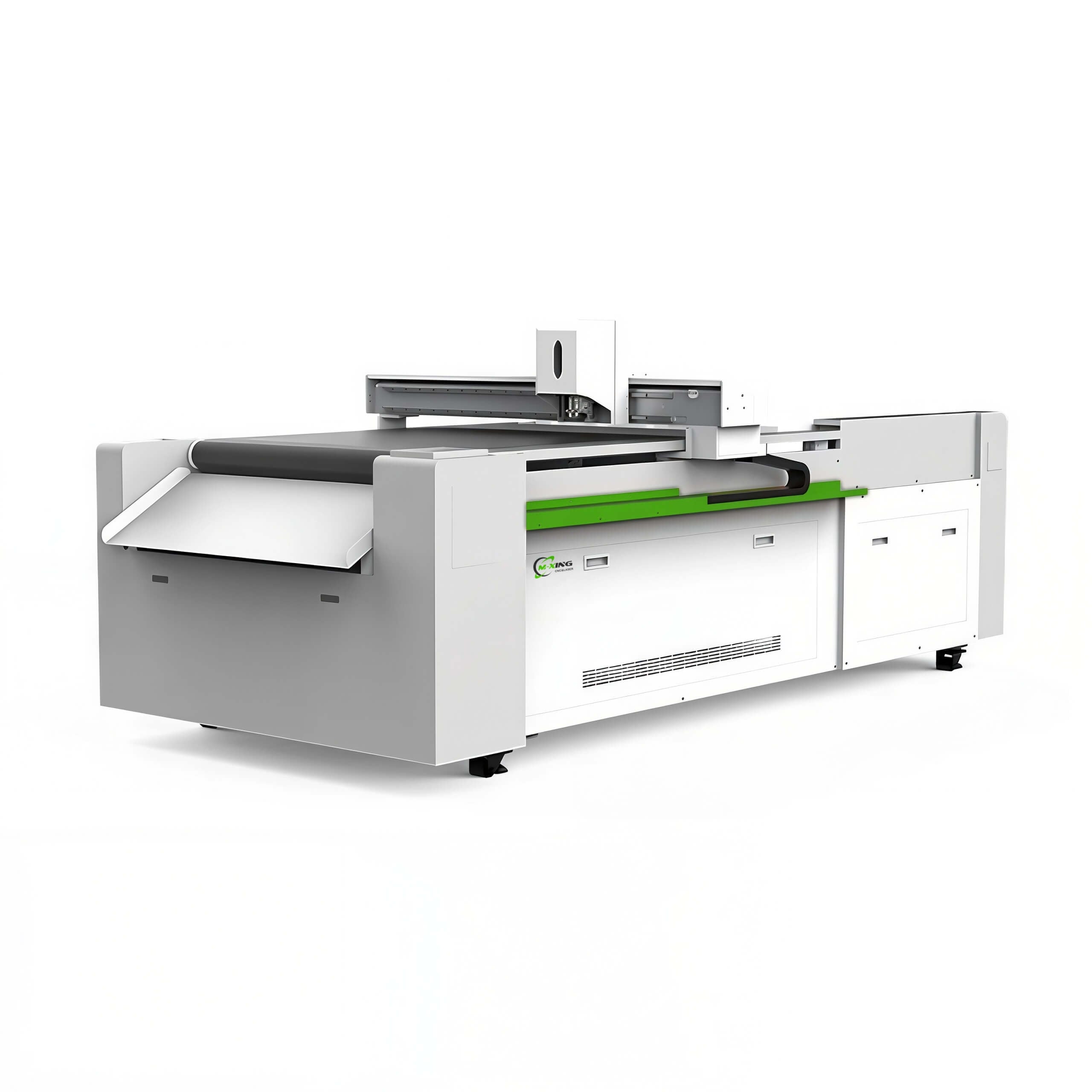
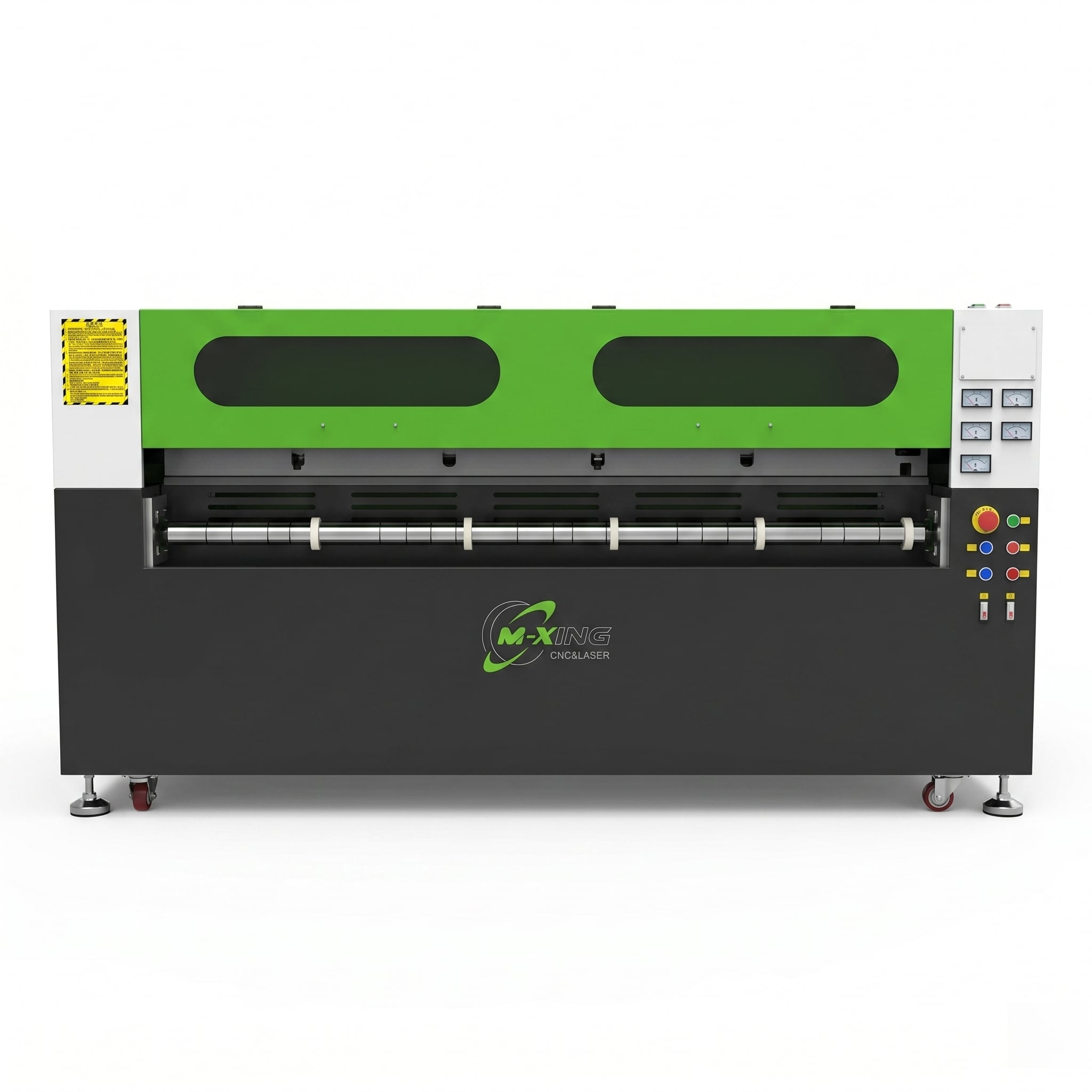
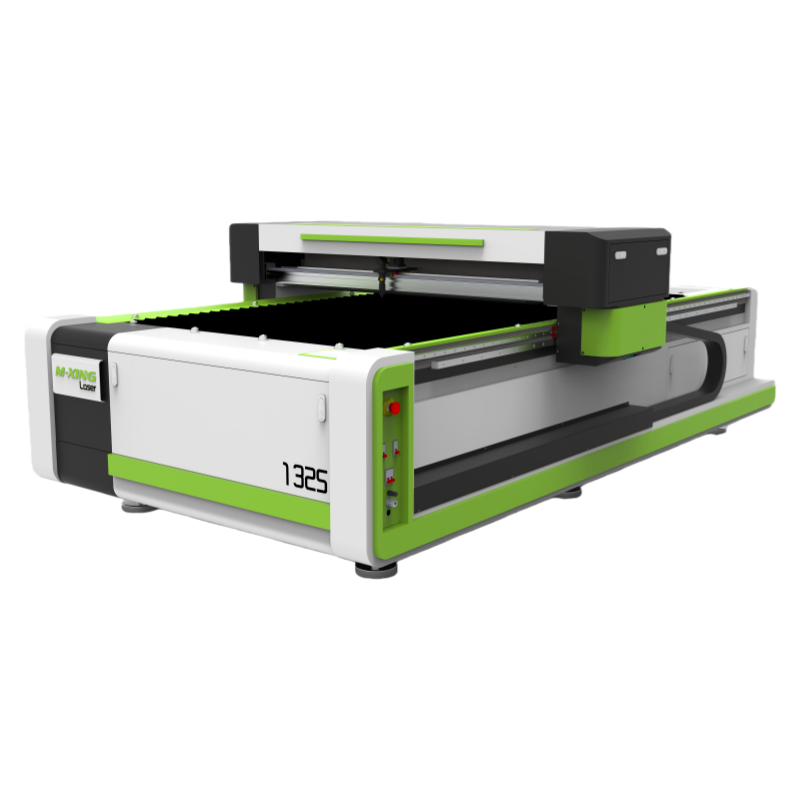
Mingxing Laser's CO2 range covers these formats across the 6090, 1390, 1610 and 1325 sizes, with camera positioning, dual-head and auto-feeding options for production work — but the honest recommendation for a packaging business is to size the machine for sampling and short runs, and to keep a die cutting partner for volume. That combination wins more work than a machine bought on the promise of replacing a die cutter.
Packaging rewards a laser where the job is fluid: structures under revision, inserts that change with every product, runs too small to tool, and brands that want their name cut into the board rather than printed on a label.
It does not reward a laser where the job is frozen and the volume is high. A crease is compressed board, and no beam can compress. Knowing that boundary is what separates a packaging shop that uses a laser well from one that has promised a carton it cannot deliver.
Used inside that boundary, the machine does something no die cutter can: it makes the first version cheap, which means more versions get tried, which means the packaging that finally goes to production is better than the one that would have been approved out of fatigue.
 Hot News
2026-02-05
2026-02-03
2025-12-01

Mingxing Laser is a leading China-based laser machine manufacturer offering CO2 laser cutters, fiber laser cutting machines, CNC routers, laser welders & marking machines. OEM/ODM custom solutions available. Get a quote today!
- Company Headquarters: Room 1303, Building 4, UnitedFortune Plaza, High-tech Zone, Jinan City, Shandong Province, China
- Manufacturing Plant: No. 18, Yinhe Road, Jibei Street, Jiyang District, Jinan City, Shandong Province, China
Copyright © 2026 Century Mingxing (jinan) Intelligent Technology Co., Ltd. All rights reserved. Privacy Policy

 EN