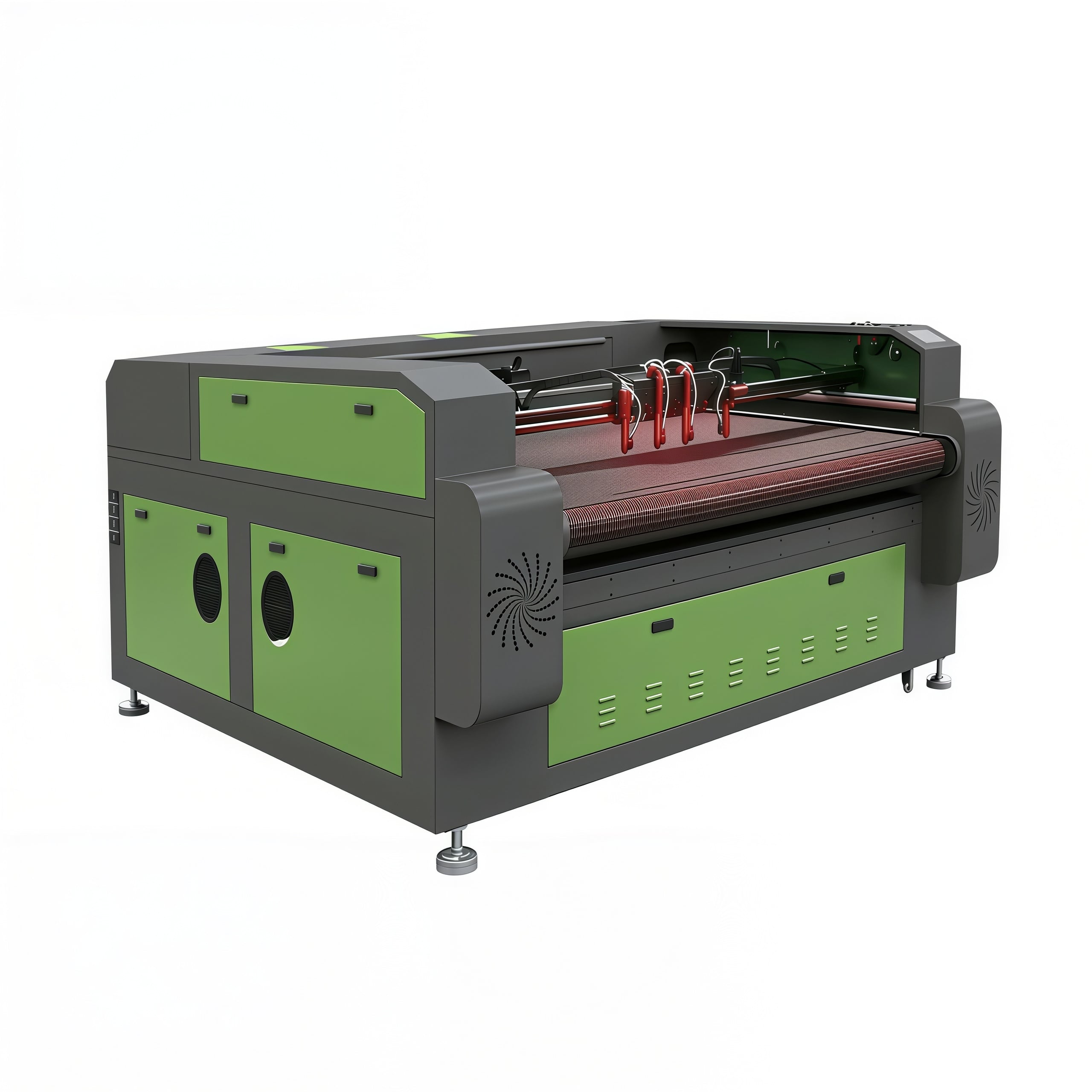
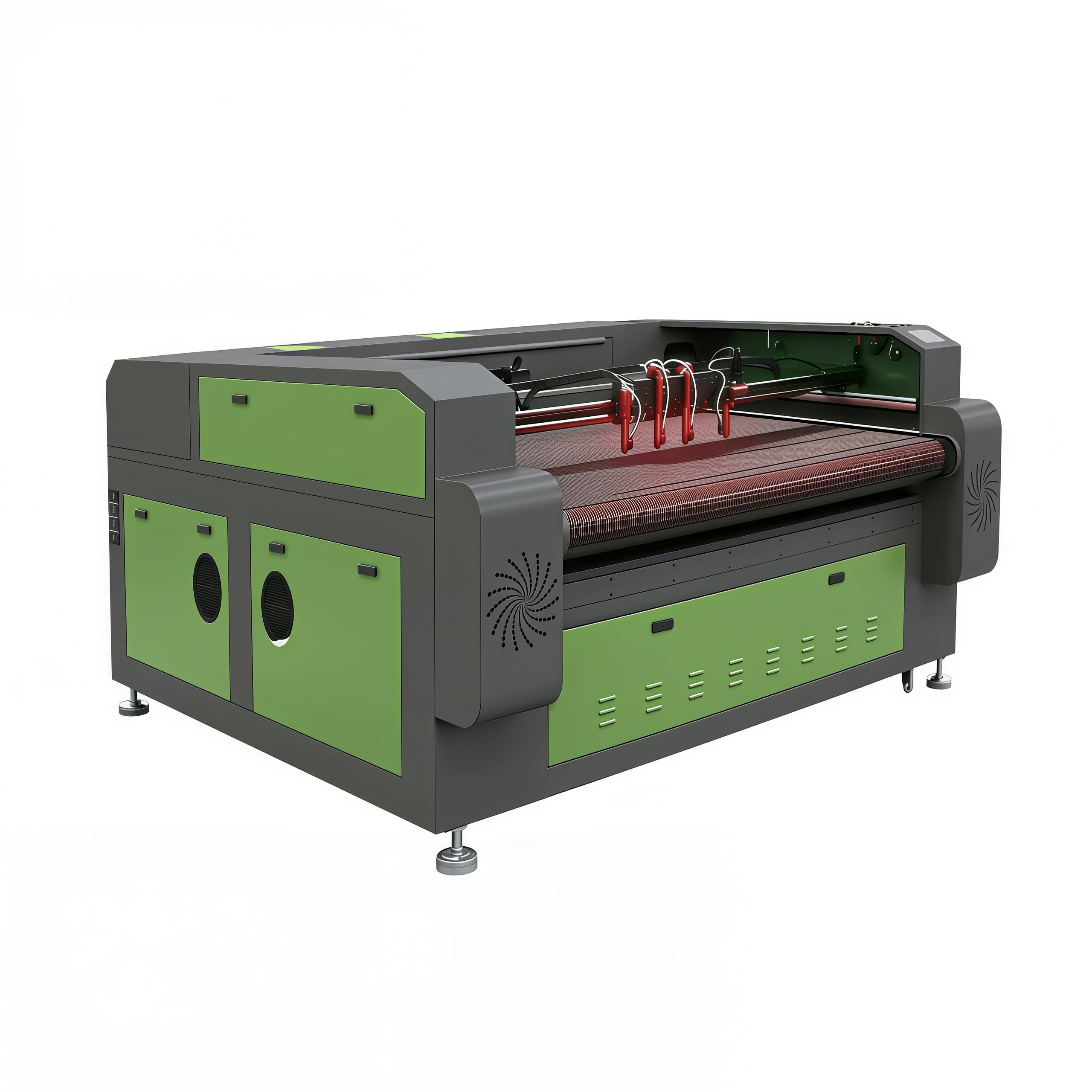
Furniture factories that buy a laser expecting it to replace their panel saw are usually disappointed within a month. On straight-line cuts in melamine-faced board, a beam saw is faster, gives a cleaner edge, and produces a square cut that edge-bands predictably. A nesting router has the same advantage on shaped parts once the volume justifies the tooling time.
So the honest question is not "can a laser cut furniture panels" — it obviously can — but which parts of a furniture product should a laser cut.
The answer is narrower than most sales conversations suggest, and more profitable than most factories expect:
A factory that reads this table correctly stops trying to win straight cuts with a laser and starts quoting work it previously refused: shaped components in small batches, engraved feature panels, curved elements, and quick prototypes for customers who cannot wait for tooling.
A curved furniture component is a tooling problem for every other process. A shaped chair back, an organic shelf profile, a curved apron: on a router it needs a template or a nested program; on a saw it needs a jig; on a die it needs a die.
On a laser it needs a vector. That single fact changes the economics of shaped work, and it changes the sales conversation — a factory can offer five variations of a shaped component without five tooling orders, and can revise a curve the same afternoon the designer changes it.
Three practical notes on shaped work:
Nesting discipline decides the yield. Curved parts waste more sheet than rectangular ones, and the waste is where the margin goes. Nesting shaped parts across the full sheet, including into the offcuts of previous jobs, is the difference between a profitable shaped component and a decorative loss.
Curve quality is a drawing issue before it is a machine issue. Small radii, tight internal corners and long shallow arcs all behave differently — a corner that is drawn as a sharp internal angle becomes a slightly rounded one after kerf, and a design that relies on a crisp point will show it. Draw the radius the process can produce.
Grain and face direction still apply. A curved part with the grain running the wrong way will be weak where it is loaded and will finish unevenly. The laser reproduces the file; the file has to carry the material knowledge.
This is the single most important thing a furniture factory needs to know before putting a laser into production, and it is almost never mentioned in a machine quotation.
A laser-cut edge on MDF or particleboard is charred. It has a thin layer of carbonised material along the cut face. That layer causes three separate problems downstream.
Adhesive does not bond to char. Edge banding glue bonds to wood fibre, not to carbon. A banded laser-cut edge is measurably weaker than a banded saw-cut edge, and the failure appears later — at the customer's site, as a lifting band.
A dark line shows through thin banding. With a thin ABS or melamine band, the char line behind it reads as a dark stripe along every edge. On a light-coloured board this is immediately visible, and it is the defect customers photograph.
The edge has to be prepared before banding. In practice this means sanding or scraping the cut edge back to clean fibre before the edge bander runs — an extra operation, and one that can disturb the panel outline if it is done by hand.
The strategic conclusion is not that lasers are unsuitable for furniture. It is that the laser should own the parts whose edges are visible, engraved, or shaped — and the beam saw or router should own the parts that get banded. A factory that allocates work along that line gets clean banding and shapely components; one that does not spends its savings on rework.
Kerf bending is the practice of cutting a series of closely spaced slots part-way through a panel so it can bend into a curve. The slots remove stiffness on one face while leaving the other intact, and the result is a curved panel made from flat stock with no press, no steam and no mould.
This is one of the few furniture processes where a laser is not merely competitive but the natural tool, because the slot pattern, depth and spacing are exactly the variables a laser controls precisely.
Four things determine whether a kerf-bent part is sellable.
The skin must survive. Kerf bending works by leaving an intact outer skin. Cut too deep and that skin fails at the bend, usually as a visible crack on the face the customer looks at.
The inside of the curve needs support. A kerf-bent panel is strong along the bend and weak in the other direction; furniture that loads the curve needs ribs, a frame, or a laminated backing.
Finishing is the hard part. Slots on the inside of the curve are visible unless capped. Most production kerf-bent furniture either laminates over the slots, fills them, or designs them as a visible feature.
It is a prototyping and short-run technique that can become a product. The same property that makes it useful for a one-off also makes it a genuine product family — curved shelving, seating shells, acoustic forms — which is worth knowing when quoting.
Furniture engraving is not decoration added at the end; it is a way to make a standard product into a differentiated one without new tooling.
Feature panels. An engraved pattern on a wardrobe door, a headboard or a table top turns a commodity panel into a design item. The limitation is the exposure of the material: engraving into melamine cuts through the decor layer and reveals the core, which is why engraving is normally done on veneer, solid timber, painted MDF or through to a contrasting inlay.
Inlay recesses. Cutting a pocket to accept a contrasting material — a different wood, a metal strip, a resin fill — is where the laser's consistent depth pays. A recess that varies in depth produces an inlay that sits proud in one place and sinks in another, and it cannot be fixed after glue-up.
Edge detailing. Small engraved or cut details on edges, legs and handles add perceived value at almost no material cost, and they are the kind of work that is impossible to quote competitively if it has to be done by hand.
The commercial point is that engraved and inlaid furniture sells at a premium that is not proportional to the machine time. That is the opposite of the straight-cut panel business, where the price is set by the board.
Knock-down furniture runs on holes: dowels, cam fittings, shelf pins, hinge cups. It is tempting to assume the laser can cut a hole as easily as it cuts an outline. It cannot do it well, and the reason is geometric rather than a matter of settings.
A laser hole is tapered and charred. The beam converges, so a cut hole is slightly wider at the top than at the bottom, and the wall is carbonised. A dowel needs a parallel, clean bore to hold; a cam fitting needs a precise depth and a flat floor.
Deep holes are worse than shallow ones. As depth increases, the beam defocuses inside the hole and the cut quality falls away. Blind holes — which is what furniture fittings need — are the hardest case of all.
The tolerance that matters is stack-up. A cabinet is assembled from panels whose holes must align across a joint. A few tenths of error in each panel accumulates, and the furniture does not go together. A boring machine is built for exactly this problem.
The practical division of labour is clean: the laser cuts outlines, shapes, engraving and inlay pockets; a boring machine or CNC drill makes the fitting holes. A factory that tries to consolidate both onto the laser will lose more time to rework than it saves on handling.
There is one exception worth noting: through-holes for decorative or ventilation purposes, where a slightly tapered, charred hole is acceptable or even desirable. Those are not fittings, and they cut perfectly well.
The last row is the furniture-specific version of a general discipline: a repeat order should run from a frozen nest and a frozen file. A factory that re-nests each batch for yield will eventually deliver two batches that do not assemble together.
Most furniture factories adding a laser are not replacing anything; they are filling a gap that used to be outsourced or refused.
The last row is underrated. Factories that keep files for everything they have made can serve replacement requests in a way competitors cannot — and in contract furniture, that service is often what wins the next project.
Furniture work is panel work with a high proportion of shaped and engraved parts, so the priorities differ from both signage and general fabrication.
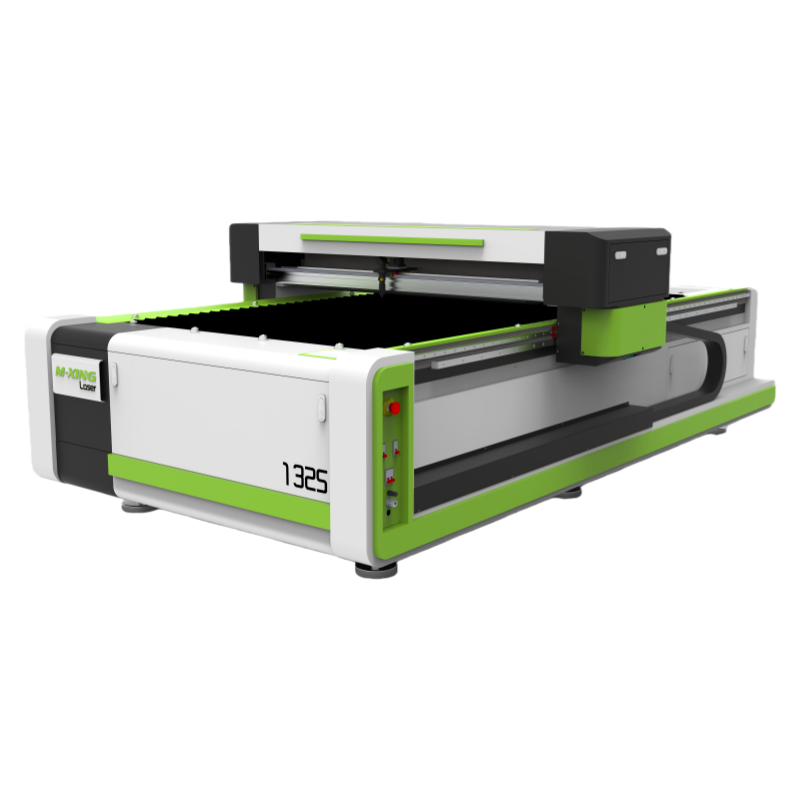
Bed size should take the board the supplier delivers. Standard furniture board sizes are the unit of costing; a bed that takes a full sheet without pre-cutting keeps yield and handling in the factory's favour. The 1325 format covers full sheets; 1390 and 1610 suit component and door work; 6090 suits samples, inlays and small decorative parts.
Power should follow the thickest routine component. Kerf bending and thick decorative parts need more capacity than door panels. A machine sized only for thin board will either refuse the kerf-bending work or produce an edge that needs heavy finishing.
Extraction has to handle the adhesives, not just the wood. Melamine, veneer glue lines and MDF binder all load a filter differently from solid timber, and a furniture shop runs mixed materials all day.
Camera positioning is worth considering if inlays or printed overlays are in the plan. Aligning a pocket to a printed or veneered pattern is the one furniture task where registration earns its cost.
Dual heads and auto-feeding suit decorative panel batches — repeated identical engravings, identical shaped components. For bespoke one-offs they add little.
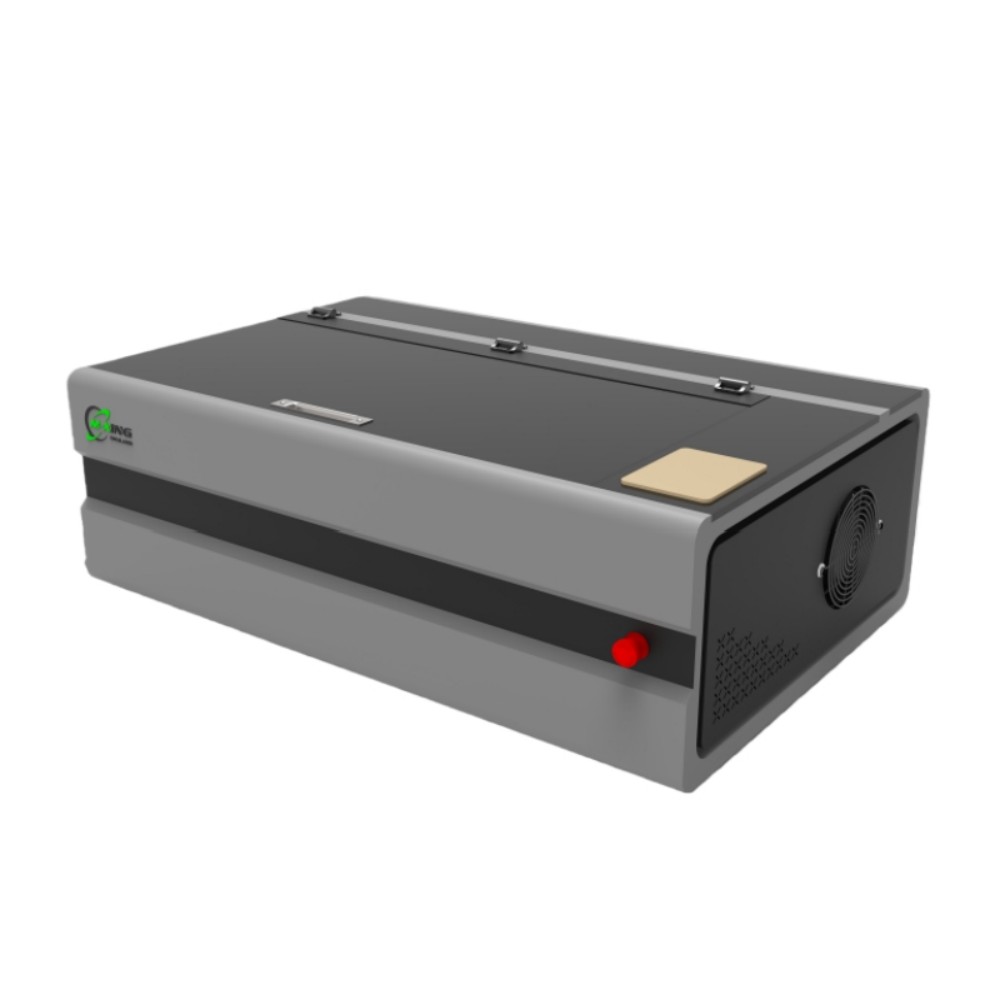
Mingxing Laser's CO2 range covers these formats with camera, dual-head and auto-feeding options. The advice for a furniture factory is more specific than for other industries: buy the machine for the shaped, engraved and curved work that you currently outsource or refuse, and leave the straight banded panels on the saw. Configured that way, it pays back on work that did not previously exist in the order book.
Furniture is one of the industries where a laser's value is most often misjudged in both directions — dismissed by factories that only see it as a slow saw, and oversold to factories that expect it to band edges and bore fittings.
The realistic picture is this. The laser owns curves, shapes, engraving, inlays, kerf-bent components, templates and prototypes. It does not own straight banded panels, and it does not own fitting holes. Factories that draw that line get the margin from the first group without paying for rework in the second.
And the first group is where furniture differentiation now lives: a market that has commoditised the rectangular cabinet rewards the factory that can produce a shape, a pattern or a curve without a tooling order.
 Hot News
2026-02-05
2026-02-03
2025-12-01

Mingxing Laser is a leading China-based laser machine manufacturer offering CO2 laser cutters, fiber laser cutting machines, CNC routers, laser welders & marking machines. OEM/ODM custom solutions available. Get a quote today!
- Company Headquarters: Room 1303, Building 4, UnitedFortune Plaza, High-tech Zone, Jinan City, Shandong Province, China
- Manufacturing Plant: No. 18, Yinhe Road, Jibei Street, Jiyang District, Jinan City, Shandong Province, China
Copyright © 2026 Century Mingxing (jinan) Intelligent Technology Co., Ltd. All rights reserved. Privacy Policy

 EN