In sheet metal fabrication, every minute lost to manual loading, nesting, and job changeovers affects delivery, cost, and project control. Laser automation helps project managers reduce labor dependency, shorten setup time, and keep production schedules more predictable. This article explores where automation creates the biggest gains in laser cutting workflows and how shops can improve throughput without sacrificing quality or flexibility.
For project managers, the practical question is rarely whether automation looks impressive on the shop floor. It is whether it removes specific bottlenecks that keep jobs from moving on time. In many sheet metal shops, the cutting speed of the laser is no longer the main constraint. The real losses happen before and after the beam turns on: waiting for an operator, loading sheets with a forklift, sorting mixed parts, changing programs between small batches, or clearing skeletons so the next job can start.
That is why laser automation deserves attention as an operational tool rather than a technology trend. In a project-driven environment, the value comes from stabilizing flow, reducing schedule risk, and making output less dependent on a few experienced operators.
Many production teams underestimate how much direct and indirect labor surrounds a laser cutting cell. They focus on machine runtime, but project delays often come from support tasks that are harder to see in OEE dashboards.
Common labor drains include:
In high-mix, low- to medium-volume shops, these issues compound quickly. A laser may be technically available, yet still underperform from a planning perspective because every changeover depends on operator intervention. For project leaders managing deadlines across cutting, bending, welding, and assembly, this creates unstable downstream handoffs.
Laser automation has the strongest effect when it addresses these non-cutting losses. That is where labor hours and setup time are usually hidden.
Automatic loading and unloading: the fastest route to lower manual dependency
Among all automation layers, automatic loading and unloading typically deliver the clearest operational benefit. They reduce forklift interaction, improve safety around sheet handling, and allow the machine to continue running with less interruption.
For project managers, the value is not just labor reduction in headcount terms. It is the removal of waiting time. A machine that can automatically pick, place, and unload material is less likely to sit idle between nests, especially on second shifts, overnight windows, or during labor shortages.
This matters even more where order patterns are uneven. Shops serving HVAC, enclosures, agricultural equipment, electrical cabinets, or contract fabrication often face a mix of urgent small jobs and scheduled production runs. Automatic loading helps absorb this variability because jobs can be queued more consistently, with fewer manual interventions between them.
Still, not every shop gets the same result. The gain depends on material mix and job structure. If the shop processes highly variable sheet sizes, sensitive surfaces, or frequent remnants, the automation system must handle that complexity well. Otherwise, the machine may still require too much operator correction to deliver the expected labor savings.
Project teams are often drawn to equipment comparisons based on maximum cutting speed. In reality, for many sheet metal operations, setup and changeover time have a greater impact on weekly output than peak cutting performance.
Laser automation improves this in several ways:
For project managers, the key benefit is schedule compression. If a shop runs many short jobs, shaving a few minutes from every setup can recover more productive capacity than chasing marginal gains in feed rate. This becomes especially important when the laser is upstream of constrained operations such as press braking or welding cells. A more predictable cutting cell means downstream departments receive work in a steadier rhythm, which reduces firefighting across the whole project.
That predictability is often more valuable than raw machine utilization because it improves due-date performance.
Nesting software is often discussed as a material-saving tool, but from a project execution standpoint, its labor and setup impact can be just as important. Better nesting reduces the number of sheet changes, improves job grouping, and can support unattended or lightly attended production windows.
However, this is where many shops make a planning mistake: they optimize the nest but not the workflow around it.
A highly efficient nest on paper may create problems if it mixes urgent and non-urgent parts, complicates sorting, or sends the wrong sequence to downstream operations. In some cases, a slightly less material-efficient nest produces better project outcomes because it simplifies part identification, shortens handoff time, and supports the actual build schedule.
Laser automation works best when nesting is tied to MES, ERP, or at least a disciplined production planning system. Without that connection, automation can speed up the wrong priorities. For project managers, this is a critical distinction. The objective is not automated motion by itself. The objective is controlled flow aligned with delivery commitments.
Many shops improve sheet loading yet still lose time at unloading and sorting. This is common in high-mix environments where nests contain multiple part numbers, different customers, or staged kits for assembly.
If operators spend too much time identifying, separating, and moving parts after cutting, some of the labor advantage from automated loading disappears. That is why part sorting deserves more attention in automation planning.
Depending on production scale, the right solution may range from simple conveyor-based removal to more advanced robotic picking and stacking. The sophistication needed depends on part size, thickness range, cut quality requirements, and whether parts are skeleton-free or micro-tabbed. Small, intricate components are harder to automate cleanly than large repeat parts, so the business case varies by application.
For project leaders, the question should be simple: where does cut material wait the longest before the next value-added step? If the answer is “on or near the laser,” then unloading and sorting are likely limiting throughput more than cutting speed itself.
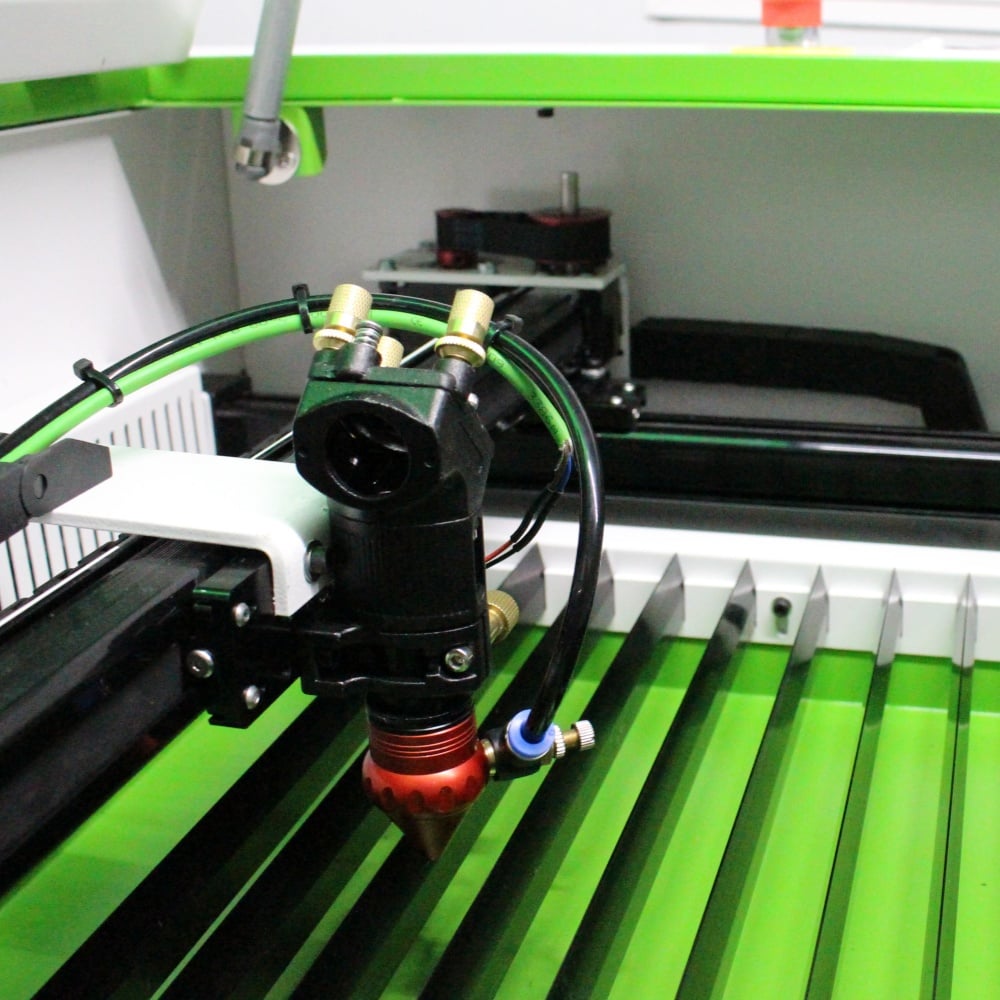
What automation changes in staffing and shop-floor risk
It is tempting to frame laser automation as a direct labor elimination tool. In practice, the more realistic benefit is labor reallocation and risk reduction.
Most sheet metal shops still need skilled people around automated systems. The difference is that their time shifts from repetitive handling toward supervision, exception management, quality checks, and schedule coordination. That matters in a labor market where experienced machine operators are hard to recruit and retain.
For project managers, this shift reduces several execution risks:
But automation also introduces new management demands. Maintenance discipline becomes more important. Material staging must be more accurate. Program data errors can affect more output in less time. If the shop lacks process control, automation may magnify organizational weaknesses rather than solve them.
Not every fabrication shop should automate to the same degree. The strongest returns usually appear in environments with a combination of the following conditions:
By contrast, the case can be weaker where jobs are extremely customized, material flow is poorly organized, or downstream bottlenecks dominate overall lead time. If bending capacity, welding queues, or inspection delays are the real constraints, automating the laser alone may not improve total project throughput as much as expected.
This is a common capital planning mistake. Teams invest in the most visible upstream technology without checking whether it addresses the true point of schedule loss.
From a project execution standpoint, the installation of laser automation is not just a machine purchase. It is a workflow redesign. The technical fit of the system matters, but so do layout, material logistics, software integration, and training.
Before moving forward, project managers usually need clear answers to a few operational questions:
These questions are often more decisive than brochure specifications. Shops that succeed with automation usually prepare the process around the machine. Shops that struggle often expect the equipment to compensate for weak planning discipline.
For project managers, the most reliable evaluation method is to map time loss across one complete production cycle rather than estimate savings from labor alone. Look at actual minutes spent waiting for material, loading, changing jobs, unloading parts, clearing scrap, and correcting scheduling mistakes. Then identify which of those losses automation can remove consistently.
A realistic business case should include:
This approach leads to better decisions than broad claims about smart manufacturing. In sheet metal fabrication, laser automation creates the biggest value where it removes repetitive interruptions and protects schedule reliability. That is especially relevant for project-driven operations, where one delayed cutting queue can ripple across procurement, fabrication, assembly, and shipment.
The shops seeing the best results are not always the ones with the most advanced automation. They are usually the ones that match automation level to job mix, labor realities, and project delivery pressure. In that context, laser automation is less about replacing people and more about building a cutting process that behaves predictably under real production conditions.
 Hot News
2026-02-05
2026-02-03
2025-12-01

Mingxing Laser is a leading China-based laser machine manufacturer offering CO2 laser cutters, fiber laser cutting machines, CNC routers, laser welders & marking machines. OEM/ODM custom solutions available. Get a quote today!
- Company Headquarters: Room 1303, Building 4, UnitedFortune Plaza, High-tech Zone, Jinan City, Shandong Province, China
- Manufacturing Plant: No. 18, Yinhe Road, Jibei Street, Jiyang District, Jinan City, Shandong Province, China
Copyright © 2026 Century Mingxing (jinan) Intelligent Technology Co., Ltd. All rights reserved. Privacy Policy

 EN
EN