
 EN
EN
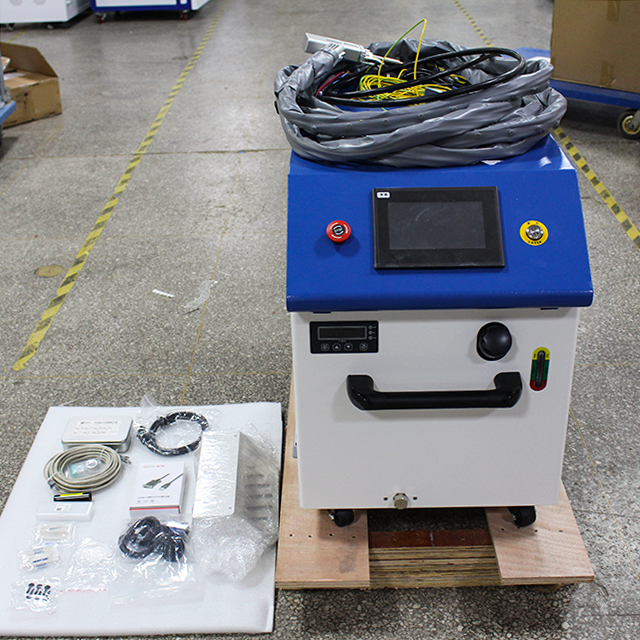
Selecting the right laser welder for your project is a critical decision that directly impacts productivity, quality, and long-term operational costs. The laser welder market offers multiple technologies, each with distinct capabilities, advantages, and limitations. Understanding which laser welder type aligns with your specific manufacturing requirements prevents costly mistakes and ensures you invest in equipment that delivers measurable returns. The choice between fiber laser welders, CO2 laser welders, and other specialized variants depends on material compatibility, production volume, precision demands, and budget constraints.
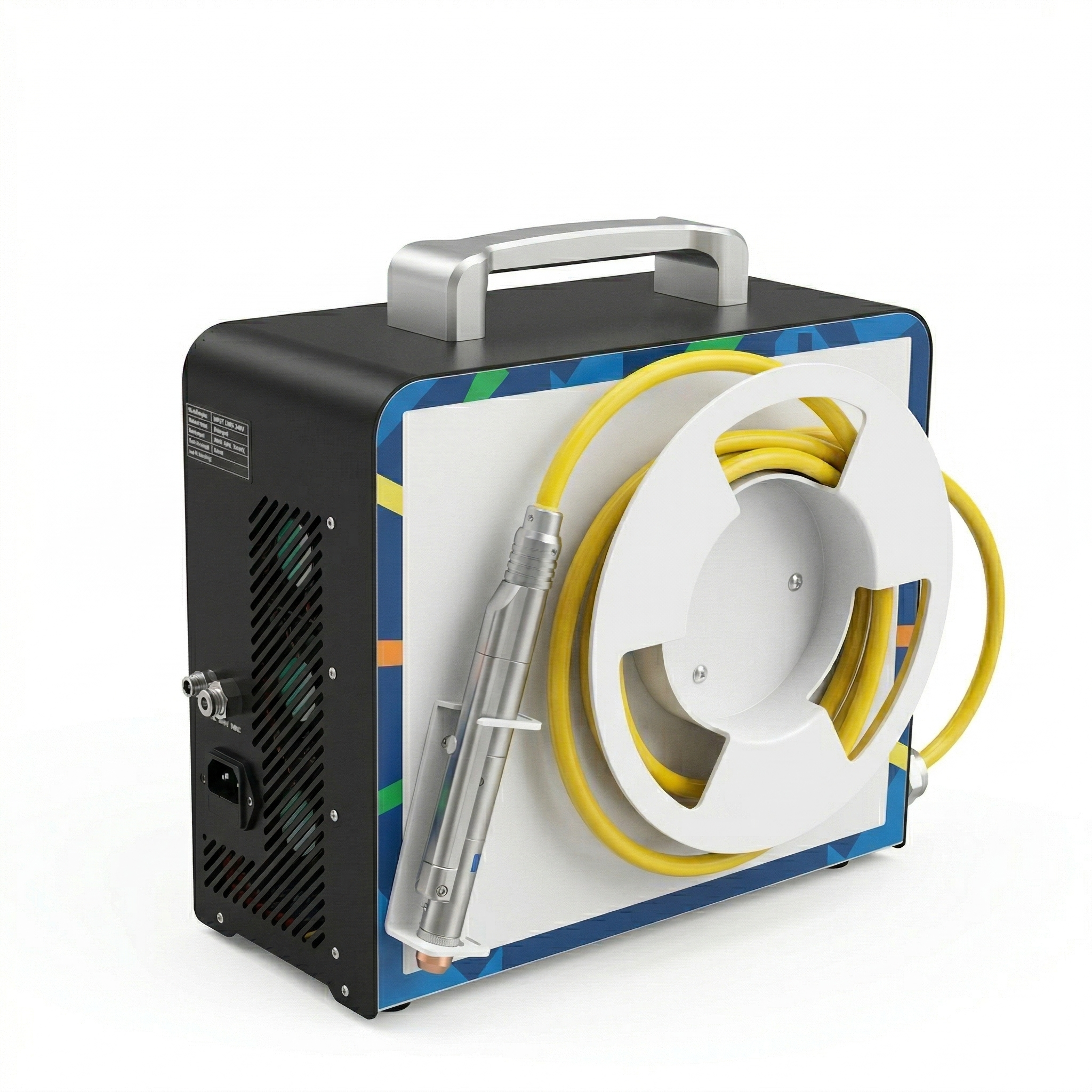
Every laser welder operates through fundamentally different mechanisms, absorbing and delivering energy to metals in distinct ways. Fiber laser welders, for example, excel at processing reflective metals like aluminum and copper, while CO2 laser welders dominate in cutting and engraving applications on organic materials. A laser welder's performance is not inherently superior or inferior—rather, its value depends entirely on whether it matches your material specifications, production speed requirements, and quality tolerances. This guide walks through the primary laser welder technologies, their operational characteristics, and the decision framework you need to confidently select the right laser welder for your industrial operation.
Understanding Core Laser Welder Technologies
Fiber Laser Welder Capabilities and Applications
A fiber laser welder generates coherent light through fiber-optic cables doped with rare-earth elements, typically erbium or ytterbium. This laser welder produces wavelengths between 1.06 and 1.1 micrometers, which metals absorb extremely efficiently. The fiber laser welder design offers exceptional beam quality, rapid pulse capabilities, and compact footprints compared to larger industrial systems. Industries including automotive, electronics, jewelry, and medical device manufacturing rely heavily on fiber laser welders for precision tasks that demand minimal heat distortion and superior edge quality. The fiber laser welder can process stainless steel, titanium, gold, silver, and other reflective metals with speeds that traditional methods cannot match.
CO2 Laser Welder Performance Characteristics
CO2 laser welders operate at wavelengths around 10.6 micrometers, making them ideal for non-metallic materials and certain steel applications. The CO2 laser welder uses a gas mixture of carbon dioxide, nitrogen, and helium to generate the laser beam. While the CO2 laser welder excels in cutting, engraving, and marking applications, its use in metal welding is more specialized than fiber systems. However, when specifically configured, a CO2 laser welder can deliver strong results on carbon steel and mild steel, particularly for thicker material applications. The CO2 laser welder infrastructure remains well-established in many industrial facilities, making maintenance and spare parts readily available across most manufacturing regions worldwide.
Material Compatibility and Selection Factors
Matching Laser Welder Type to Your Materials
Material selection fundamentally determines which laser welder will perform optimally in your operation. If your production focuses on aluminum, copper, brass, or other highly reflective metals, a laser welder with fiber technology will deliver superior results with minimal material loss and thermal damage. Conversely, if your primary materials are carbon steel or stainless steel with moderate thickness, CO2 laser welders provide proven reliability and cost effectiveness. The laser welder you select must absorb energy efficiently at the wavelength it produces; otherwise, energy reflects away, creating inefficiency and heat damage to surrounding components. Many manufacturers operate multiple laser welder types simultaneously, positioning each system for the materials where it performs best.
Production Volume and Speed Requirements
Production volume directly influences which laser welder technology justifies the investment and delivers competitive advantage. High-speed production environments favor fiber laser welders because they execute rapid pulse sequences with consistent quality across thousands of cycles. A fiber laser welder can complete micro-welding tasks on smartphone components, circuit boards, and precision instruments in seconds, while alternative technologies require substantially longer cycle times. Conversely, lower-volume custom work or batch production may find adequate performance from CO2 laser welders or specialty laser welder systems operating at more modest speeds. The laser welder's throughput capability must align with your annual production targets; oversizing creates capital waste, while undersizing creates bottlenecks.
Precision, Quality, and Operational Considerations
Achieving Precision Welds and Minimizing Defects
Precision welding demands a laser welder with tight beam focus and reliable power modulation. Fiber laser welders offer beam diameters as small as 10-50 micrometers, enabling intricate welds on delicate assemblies without affecting surrounding materials. The laser welder's ability to generate clean welds with minimal spatter reduces post-processing labor and improves first-pass quality rates significantly. Heat-affected zones determine whether components remain usable after the laser welder completes its work; fiber laser welders create exceptionally small heat-affected zones, preserving material properties in thermally sensitive applications. For industries where weld quality directly impacts product safety—such as medical devices, aerospace, or automotive—investing in a laser welder with superior precision justifies premium pricing.
Maintenance Requirements and Total Cost of Ownership
Beyond purchase price, the laser welder's maintenance demands and operational expenses determine true financial impact. Fiber laser welders require periodic fiber alignment checks and optical cleaning but operate with minimal consumables and high efficiency rates exceeding 25%. CO2 laser welders demand regular gas cylinder replacements, mirror realignment, and cooling system maintenance, potentially increasing operational costs over time. The laser welder selection must account for regional service availability, spare parts inventory, and technician training requirements. Many industrial facilities discover that a seemingly less expensive laser welder generates higher total-cost-of-ownership due to frequent maintenance, energy consumption inefficiency, or downtime. Reliable vendors provide transparent cost-of-ownership calculations that extend across five-to-ten-year operational timeframes.
FAQ
What is the main difference between a fiber laser welder and a CO2 laser welder?
The primary difference lies in wavelength generation and material absorption. A fiber laser welder produces wavelengths around 1.06 micrometers, which metals absorb extremely well, making it ideal for reflective metals like aluminum and copper. A CO2 laser welder produces wavelengths at 10.6 micrometers, which metals absorb poorly but organic materials absorb well. This fundamental physics determines which laser welder suits specific applications and materials.
Can a laser welder handle all types of metals equally well?
No. Different laser welder types excel with different metals. Fiber laser welders work exceptionally well with aluminum, copper, stainless steel, and titanium. CO2 laser welders perform better on carbon steel and mild steel applications. Selecting the right laser welder requires matching its wavelength characteristics to your material composition for optimal efficiency and weld quality.
How do I determine the appropriate laser welder power for my project?
Power requirements depend on material thickness, desired welding speed, and application precision. Thicker materials and faster production speeds demand higher laser welder power output, typically ranging from 100W for precision micro-welding to 10kW or higher for industrial cutting applications. Consulting with laser welder manufacturers about your specific material specifications and production targets will guide power selection for your operational needs.
