In apparel, fabric is the dominant cost, and the cutting room's job is to get the most garment out of the least cloth. That is what a marker is: the arrangement of pattern pieces on the lay, optimised for yield.
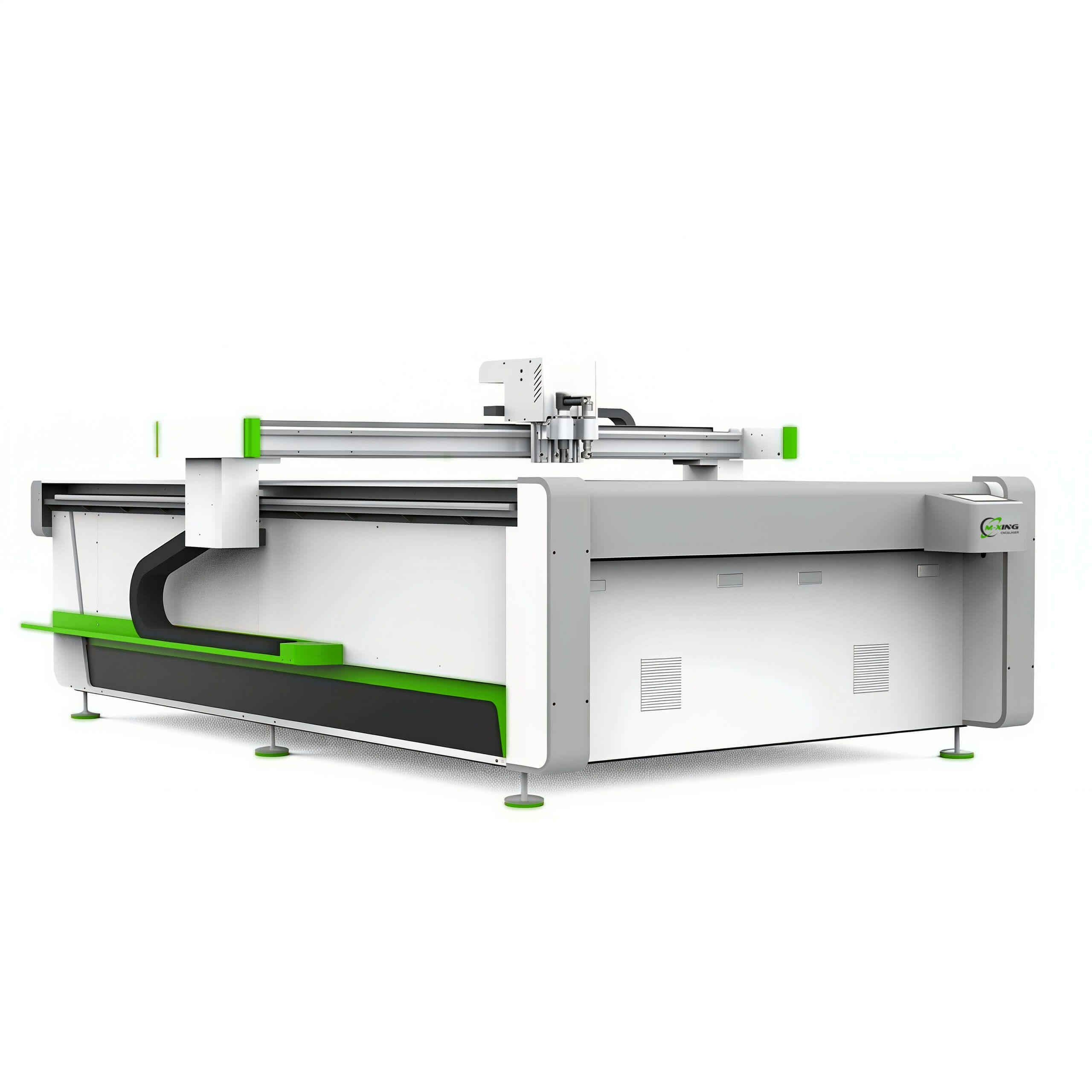
Seen from that angle, a laser is not competing with a straight knife on a hundred-ply lay. It cannot: a knife cuts through a stack, a beam cuts one layer at a time. Any comparison that ignores this is a sales argument, not an engineering one.
Where the laser does compete is in the parts of the business the knife handles badly — and in apparel and footwear those parts have grown, not shrunk:
Legendo tabulam totam, aliquid utile dicitur: laser est sala exemplorum, instrumentum pro curta cursu et impressione digitali , non instrumentum pro sectione massiva. Officinae quae hoc intellegunt habent facultatem celerem et sine instrumentis; officinae quae emunt ut cultellum substituant, intra hebdomadam deficiunt.
Causa maxima cur lasers in vestibus iam norma facti sunt est impressio digitalis.
Sublimatio et impressio directa in textili permittunt ut designum imprimitur, deinde ad exactam suam contornationem secetur — nulla repetitio, nullae cribra, nullae formae. Hoc modus operandi solum valet si sectio tam flexibilis est quam impressio. Una forma pro uno designo finem eius tollit; sectio manu facta volumen aut tolerantiam sequi non potest.
Hoc est problema sectio-ad-impressum, et laser est solutio naturalis:
Impressio movetur; sectio sequi debet. Textilis durante impressione tractanda distenditur, ideoque positio artis per tabulam differt. Notae registrationis una cum camera permittunt ut via instrumenti sequatur veram positionem impressam, non positionem nominalem.
Distortio impressonis et distortiones sectionis errores diversi sunt. A print that is slightly scaled will not match a cut that is geometrically correct — so the two have to be reconciled at the design stage, usually with a bleed and a designed tolerance, not by attempting perfect alignment.
Heat is the hidden variable. Printing and heat-setting change how a fabric behaves under the beam: a panel printed and cured may cut differently from the same greige fabric. Test on printed stock, not on the roll.
For sportswear, swimwear, cycling kit, teamwear and soft signage, this workflow is now the norm rather than the exception — and it is the application where a CO2 laser earns its place in a textile business fastest.
Synthetic fabrics melt at the cut. On a polyester or nylon, a laser cut produces a fused edge that will not fray — which for no-sew construction, mesh panels, webbing and technical textiles is a genuine functional advantage, not a cosmetic one.
In naturalibus fibris idem comportamentum fit problema. Cotōn, līnum, lāna et viscōsa carbonizantur et discolorantur ad marginem, et discoloratio in vestīmentō finītō vidētur ubicumque margo expositus est.
Two rules follow. Match the fibre to the edge you want — fused edges for synthetics, enclosed edges for natural fibres. And never assume a "polyester" from one supplier behaves like another's; coatings, finishes and recycling content all change the cut.
Footwear is a different cutting problem from apparel. Components are small, shapes are complex, and ventilation, stitching and branding are all features that a laser can produce without a die.
Four footwear jobs stand out:
Partes superiores et strata externa. Contorni complexi cum foraminibus internis, in parvis numeris magnitudinum et colorum. Unus cuneus pro una magnitudine et uno colore est pretiosus; unum fasciculum pro una magnitudine non est.
Perforatio et ventilatio. Ordines foraminum figurati qui debent esse constantes in uno paro et per totam seriem magnitudinum. Hoc est fortitudo laseris: figura semper identica est, et margines foraminum in materialibus syntheticis sunt obsignati.
Plantaria et mediasoles. Tonsio spumae et EVA, ubi laser dedit marginem mundum et nullum pretium cunei. Haec operatio coniungitur cum opere insertorum protectivorum descripto in indice imballagii, et eadem ratio applicatur: proba aptationem in ipso componente.
Notatio. Notae magnitudinis, numeri partis et notae ad coniungendum paria incidunt directe in componente, loco adhaesivi qui in camera formandi tolleretur aut decidisset.
Unum tantum monitum de materia in calciamentis dominat: corium syntheticum est aut polyurethanum aut PVC, et haec duo inter se non sunt intermutabilia in laser. PU cuts acceptably; PVC releases hydrogen chloride, which corrodes the machine and harms the operator. Footwear supply chains routinely substitute one for the other under the same trade name, so the material data sheet — not the sample's appearance — has to be the reference. Genuine leather behaves differently again, and is covered in the leather guide: it cuts, but the char and the smell are part of the process.
In a normal cutting room, cut pieces are bundled with a ticket, and the ticket is how the sewer knows what the piece is and which garment it belongs to. Tickets get lost, mixed up and mis-read.
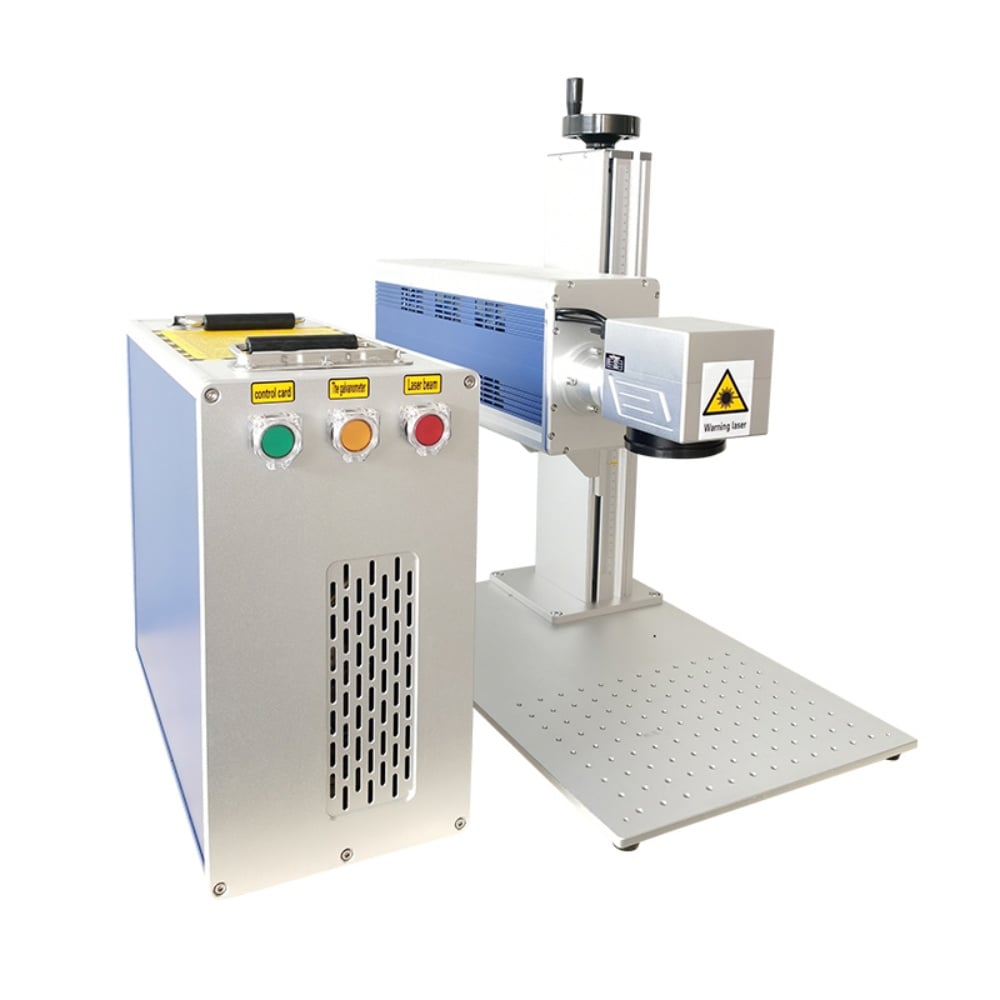
A laser can engrave the information directly onto the piece — size, style, part name, bundle number, even a small alignment mark for a pocket or a seam allowance reference. It costs nothing extra in machine time on a piece that is already on the bed, and it removes an entire class of production error.
There are three limits worth stating honestly.
The mark is permanent and visible. On a piece whose inside will be seen — an unlined jacket, an open shoe — a scorched number is a defect. It belongs on a face that gets covered.
Only some materials take a legible mark. Synthetics, coated fabrics and leather mark well; loose knits and very light wovens do not, and the mark can weaken the area.
It does not replace traceability systems. Engraving a bundle number onto a piece is a production aid, not a compliance record. Where a customer requires a documented chain, the paperwork still has to exist.
Still, for sampling rooms and short-run production, direct marking is one of the most under-used advantages of having the machine — because it solves a problem the cutting room has accepted as normal for a century.
A cut piece is only useful if it can be sewn accurately. That means notches, drill marks and balance points — small features that locate one piece against another.
The laser cuts notches as part of the same file, at the same accuracy as the outline. For short runs this replaces a hand notch or a punch, and it removes the drift that appears when notches are added after cutting.
Ultima series requirit cautelam: linea sutoria incisa in facie visibili est defectus, et in quibusdam telis infirmat suturem. Utere ut auxilium internum in faciebus occultis, aut omitte.
Textile est applicatio ubi tractatio tantum valet quantum sectio.
Laser secans superficiem planam et immobilem. Textilis in rotulo advenit, flaccida est, in orlo se involvit, et non manet ubi ponitur. Quicquid in textili secando male evenit, plerumque problema est tenendi, non secandi.
Quocumque modo utatur, duo res eventum decernunt: textilis non movetur dum secatur , et debet esse planum intra profunditatem focus a single layer of soft knit that lifts by a millimetre is already out of focus, and no power setting recovers the edge.
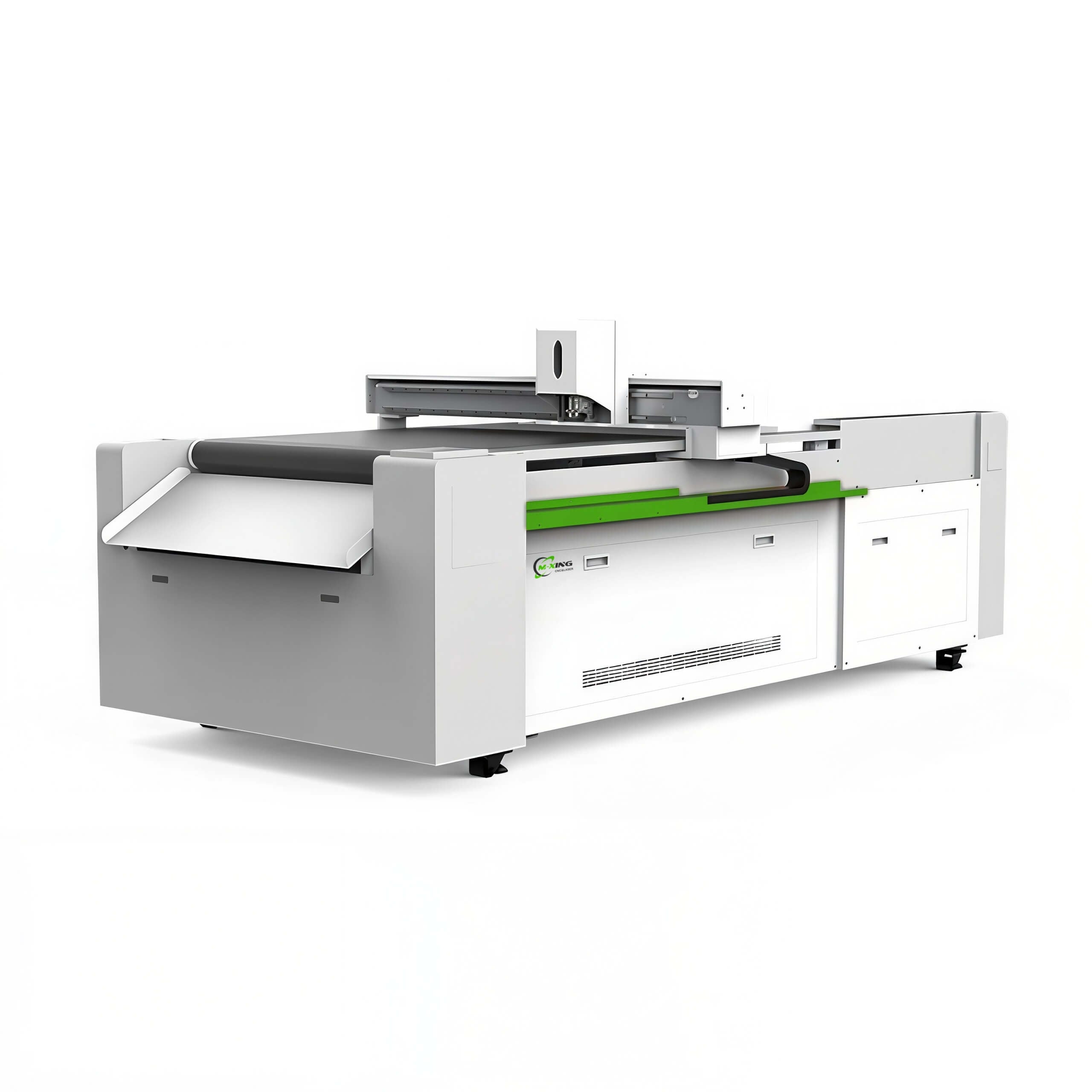
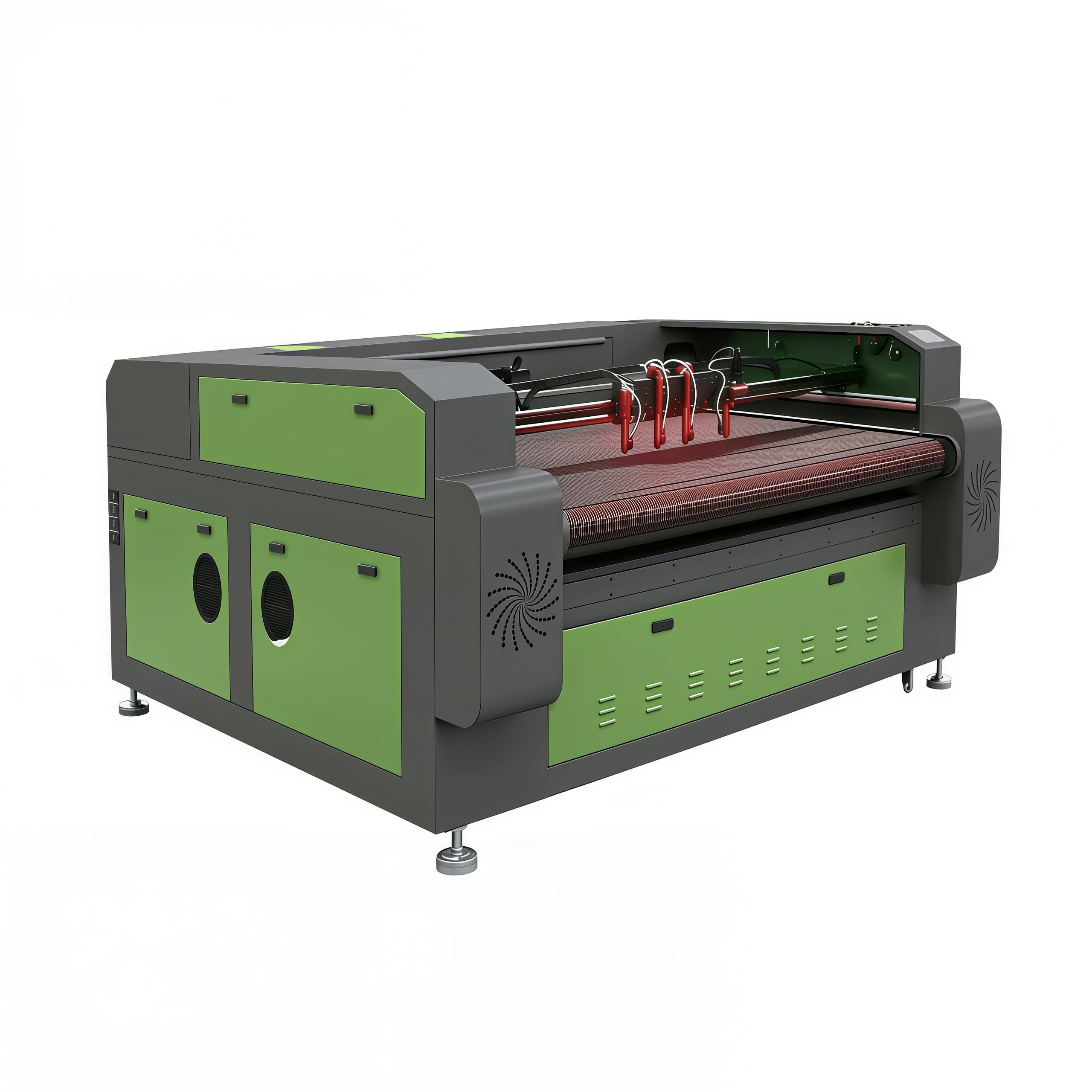
For shops cutting rolls, a conveyor or auto-feeding arrangement is the practical answer, because it removes the stop-start handling that consumes the operator's time. For a sample room cutting single pieces, a vacuum table and careful placement is enough.
Duae horum emphasi dignae sunt. Rugae suture in margine laseris est quaestio communis et parum discussa: margines fusus est rigidior quam sectus, et sartor expectans marginem mollem rugabit suturam. In vestimentis ubi sutura prominet, fortasse necesse est marginem recidere aut constructionem mutare. Depositum fumi in syntheticis albis est versio textilis problematis odoris in impacatione — invisibilis in banco, manifestus in producto perfecto sub lumine claro.
Textile work is light, fast and detail-heavy, which puts different demands on a machine than panel work.
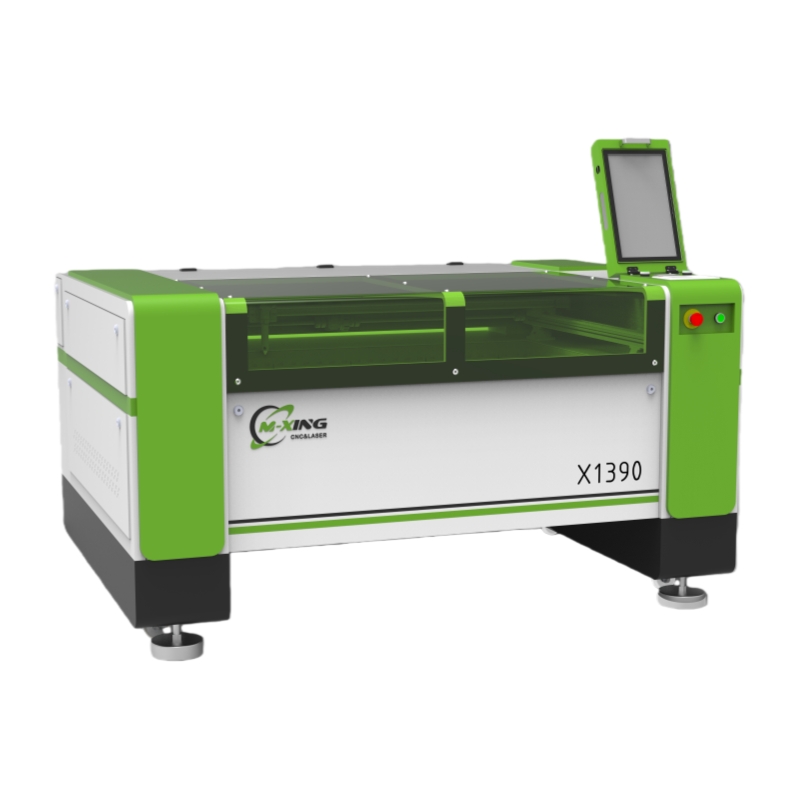
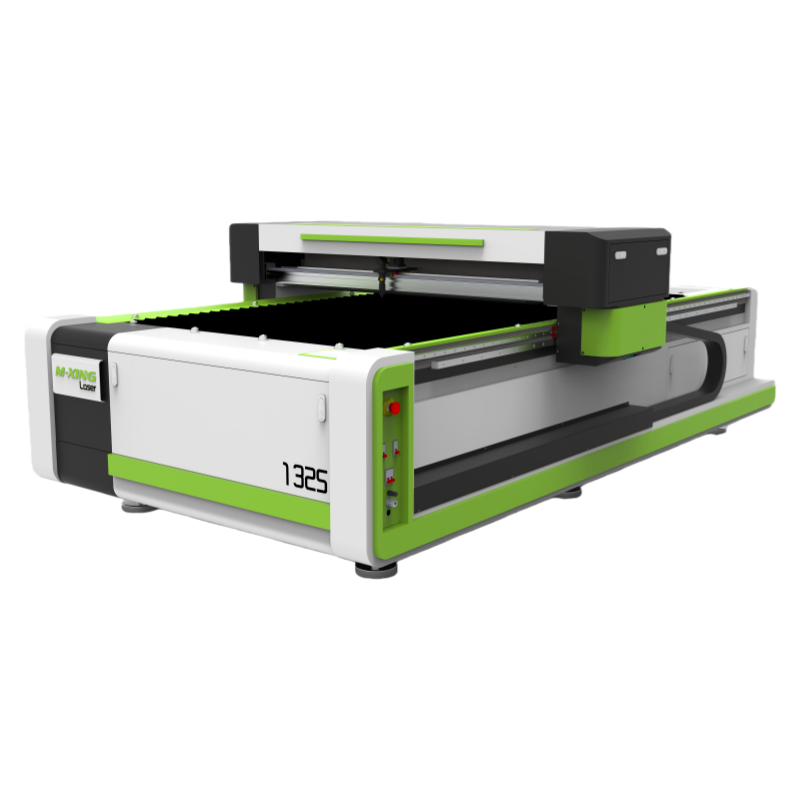
Bed size follows the pieces, not the roll. Garment panels and footwear components are small; a bed that comfortably takes a marker for a short run is more useful than a very large one, and the 6090 and 1390 formats cover most sample-room and short-run work. Larger formats suit soft signage, home textiles and long components.
A camera is the single most valuable option if digital print is part of the plan. Without registration, cut-to-print becomes a skilled manual job; with it, it becomes routine. This is the same logic as in the signage article, applied to fabric.
Conveyor or auto-feeding matters for roll goods , and only for roll goods. A shop cutting discrete pieces gains little from it.
Extraction has to suit the material, not the machine. Synthetic fume, coating vapour, and natural-fibre smoke are distinct loads; textile shops switch among them hourly. A filtration setup sized for cotton cannot handle coated synthetics, and the difference appears first as residue on the product—not as a machine fault.
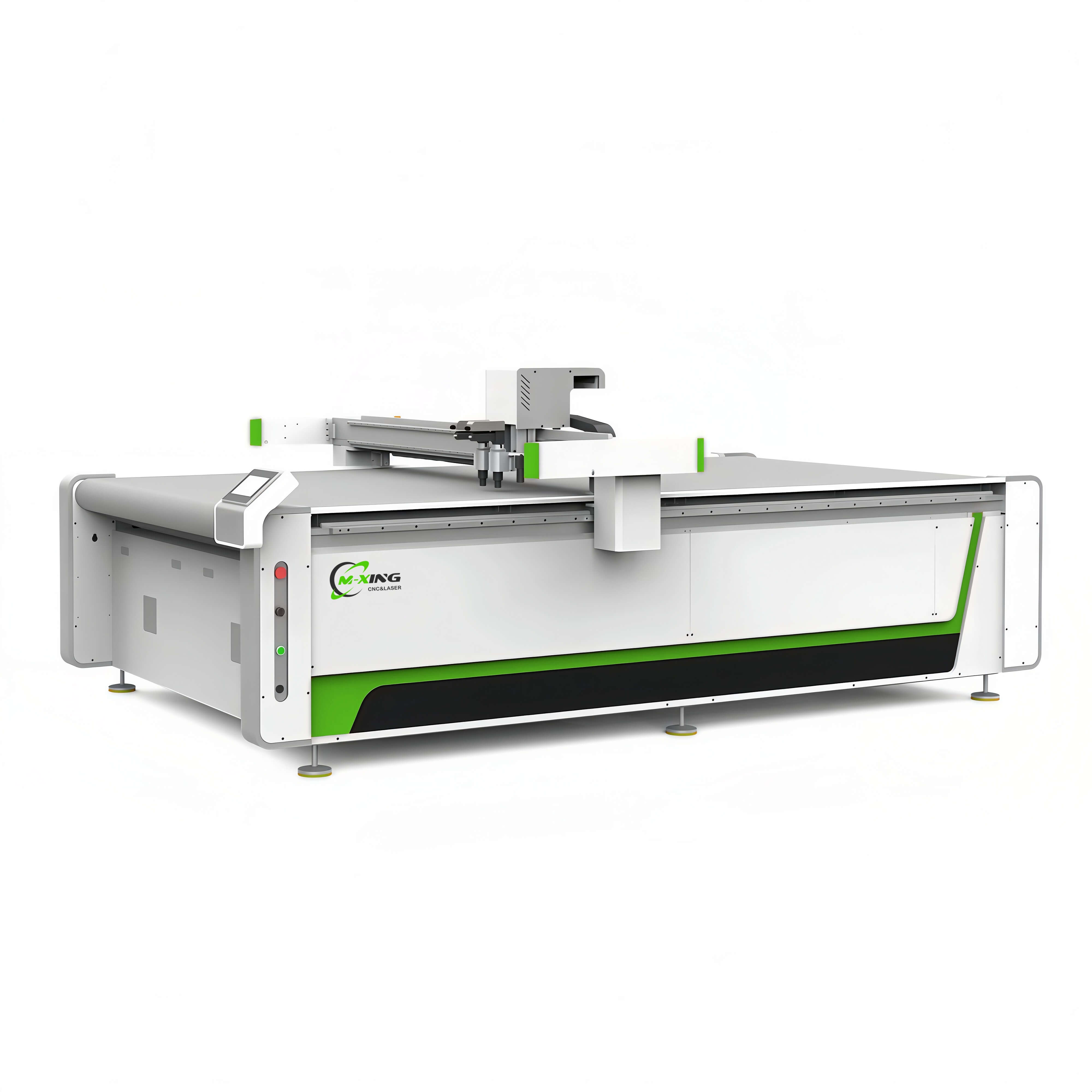
Mingxing Laser's CO2 range covers the 6090, 1390, 1610, and 1325 formats, with camera, dual-head, and auto-feeding options. For a textile or footwear business, the useful question is narrower than for other industries: what share of the order book consists of digital-print cut-to-shape work, sampling, or short-run jobs that a knife cannot handle economically? It is that share—not total production volume—against which a laser should be selected.
Apparel and footwear benefit most from lasers in the fastest-growing parts of the business: digitally printed designs cut to shape, rapid sampling, small runs that cannot justify a die, footwear detail work, and marking pieces to prevent mix-ups.
Ili non retribuunt illud in sectione massiva, ubi cultellus super stratum semper vincit. Officina quae emit laserem ut locum cameræ sectionis occupet, instrumentum erratum emit; officina quae emit eum ut breves series et opera impressa reddit economica, facultatem emit quam aemuli sui sine instrumentis imitari non possunt.
Hoc discrimen aperte enuntiandum est cuique cliente: laser non facit vestimenta viliora. Facit autem parvas quantitates vestimentorum complicatorum possibiles.
 Nuntii Calidi
2026-02-05
2026-02-03
2025-12-01

Mingxing Laser est praecipuus fabricator machinarum laser e Sinis, qui offert incisores laser CO₂, machinas laser ad secandum fibrosas, machinas CNC, machinas laser ad soldandum et ad notandum. Solutiones ad usum specialem (OEM/ODM) paratae sunt. Petite hodie consilium!
- Company Headquarters: Room 1303, Building 4, UnitedFortune Plaza, High-tech Zone, Jinan City, Shandong Province, China
- Manufacturing Plant: No. 18, Yinhe Road, Jibei Street, Jiyang District, Jinan City, Shandong Province, China
Copyright © 2026 Century Mingxing (jinan) Intelligent Technology Co., Ltd. All rights reserved. POLITICA PRIVATATIS

 EN