Home > News/Blogs > News
Promotional products are the opposite of everything a production line is designed for. An order is typically a few hundred pieces at most, often fewer, and the value per piece is low. Spending a day setting up a job that earns a few hundred dollars is not a business.
That single fact explains the entire structure of the industry: anything that eliminates setup wins, and anything that adds setup loses. It is why screen printing survived where it did, why pad printing exists, and why a laser — which has no tooling, no screens and no plates — has become the default cutting tool for the sector's shaped and personalised work.
Read the last row carefully, because it is the commercial heart of this industry: every unit can be different. A name, a number, a company logo, a date — cut or engraved into individual pieces within one run, at no additional setup. No other cutting process does this as cheaply.
In most manufacturing, variation is a cost. In promotional products, variation is the value being sold.
Consider what a customer is actually buying: a gift that says a specific person's name, an award that says a specific achievement, a set of items that all carry a specific logo. The personalisation is not an upsell — it is the reason the order exists.
This changes how a job should be built:
The variable is data, not geometry. A run of two hundred name-engraved items is one geometry and two hundred text strings. The file structure has to treat it that way — one template, a data source, and a naming convention that makes a reprint possible months later.
Proofing is the risk point, not cutting. A misspelled name on two hundred pieces is a total loss. A proof sheet, a rendered preview, or a single first-article cut before the run is not bureaucracy; it is the cheapest insurance in the shop.
Reorders are the profit. A corporate client who orders again next year wants the identical item with new names. A shop that kept the file, the material record and the settings can repeat in minutes. A shop that did not starts from scratch and often quotes too high to win the repeat.
Small variations justify the machine. Different colours, different sizes, different materials, one unit each — a laser handles all of it without a setup, which is exactly the profile of a promotional catalogue.
Almost every promotional product made of a non-metallic sheet is a laser job, and the material list in this sector is unusually broad.
Two rows deserve a warning. Cork and slate are sold as engraving substrates and are terrible to cut: cork crumbles and smoulders, slate is stone and will not cut at all on a CO2 machine. They are engraving materials, and a quotation that assumes otherwise will lose money.
Metal is the boundary of the whole sector. Badges, pins, metal keyrings, medals and metal-tag products are stamped, cast or fibre-laser marked — not cut on a CO2 machine. A promotional shop that accepts a metal job because it has "a laser" has accepted a job it cannot do. Some coated and anodised metals can be marked by a CO2 beam, but marking is not cutting and the distinction needs to be explicit in any quotation.
The same shops, and often the same machine, also serve the electronics side of promotional work — and the requirements there are tighter than anything in giftware.
Membrane switch overlays. A printed polyester or polycarbonate overlay with windows for displays and cut-outs for indicators. The cut must register to the print, the edge must be clean and burr-free, and the window edge is visible on the finished product.
Display windows and light guides. Acrylic windows cut to an aperture, with an edge that has to be clear rather than frosted — the same edge-quality question as in signage, at a smaller scale.
Gaskets and spacers. Foam, PET and adhesive-backed spacers that sit between a panel and a housing. Dimensions are small, quantities are moderate, and the fit is unforgiving.
Insulation and shielding parts cut from film and laminate, where a burr or a loose fibre is a functional defect rather than a cosmetic one.
The practical difference from giftware is registration and edge quality. A coaster that is a millimetre off is invisible; an overlay window that is a millimetre off is a reject, because the display behind it will not be centred and the customer will see it every time they use the product.
Adhesive laminates are the reason the promotional and electronics sides of this industry share a machine, and the technique that makes them work is kiss-cutting.
The idea is simple and the execution is not: cut through the top layer of a laminate — the overlay or the graphic — while leaving the backing liner intact. The result is a part that stays on its carrier sheet, protected, until it is applied.
Kiss-cutting depends on two things more than on power: consistent focal position, because the depth window is the thickness of one thin layer, and a flat, well-held sheet, because any lift changes the effective depth. It is the least forgiving operation in this article, and it is worth testing on the actual laminate rather than on a similar one — liner thickness varies between suppliers of what looks like the same product.
The last row is the one that closes businesses rather than jobs. In a sector built on repeat orders, losing the record of how a job was made means quoting every repeat from zero — and losing it to a competitor who kept theirs.
Promotional work is small, varied and constant; panel work is small, precise and documented. Both point to the same machine profile, with a few differences.
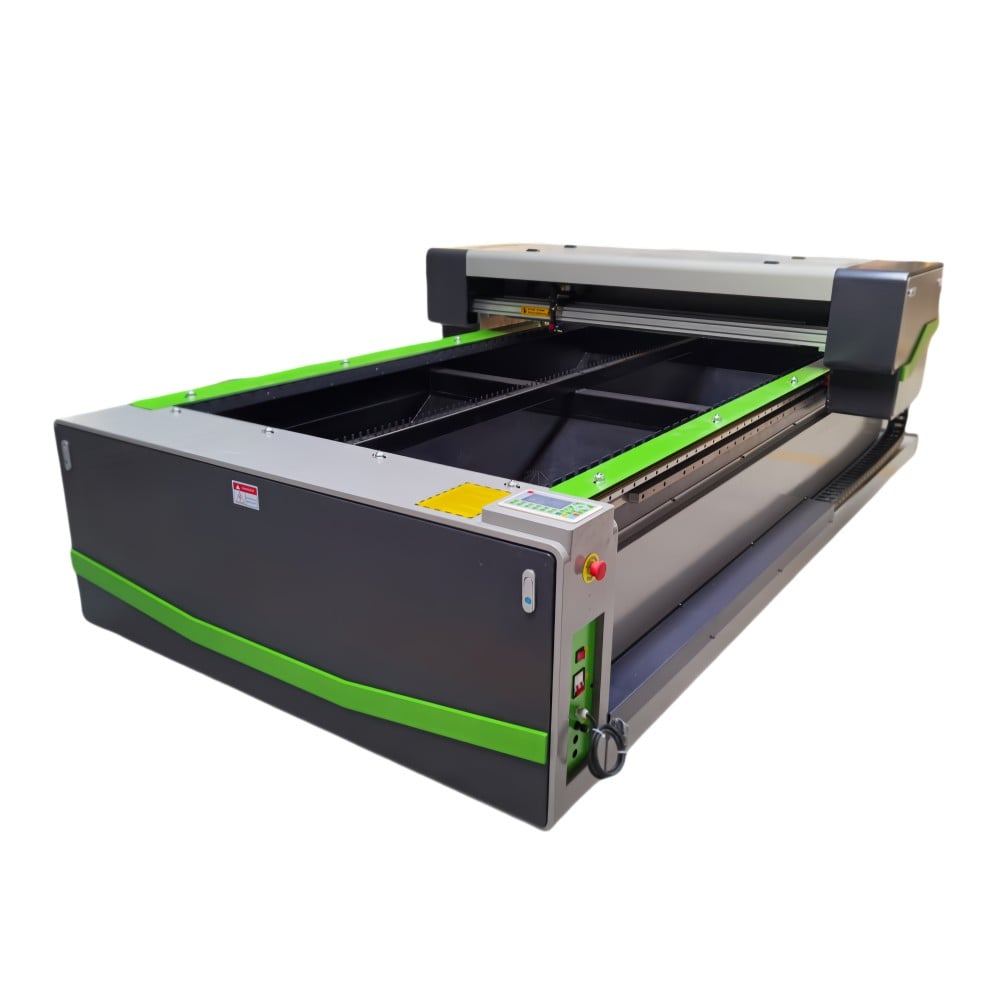
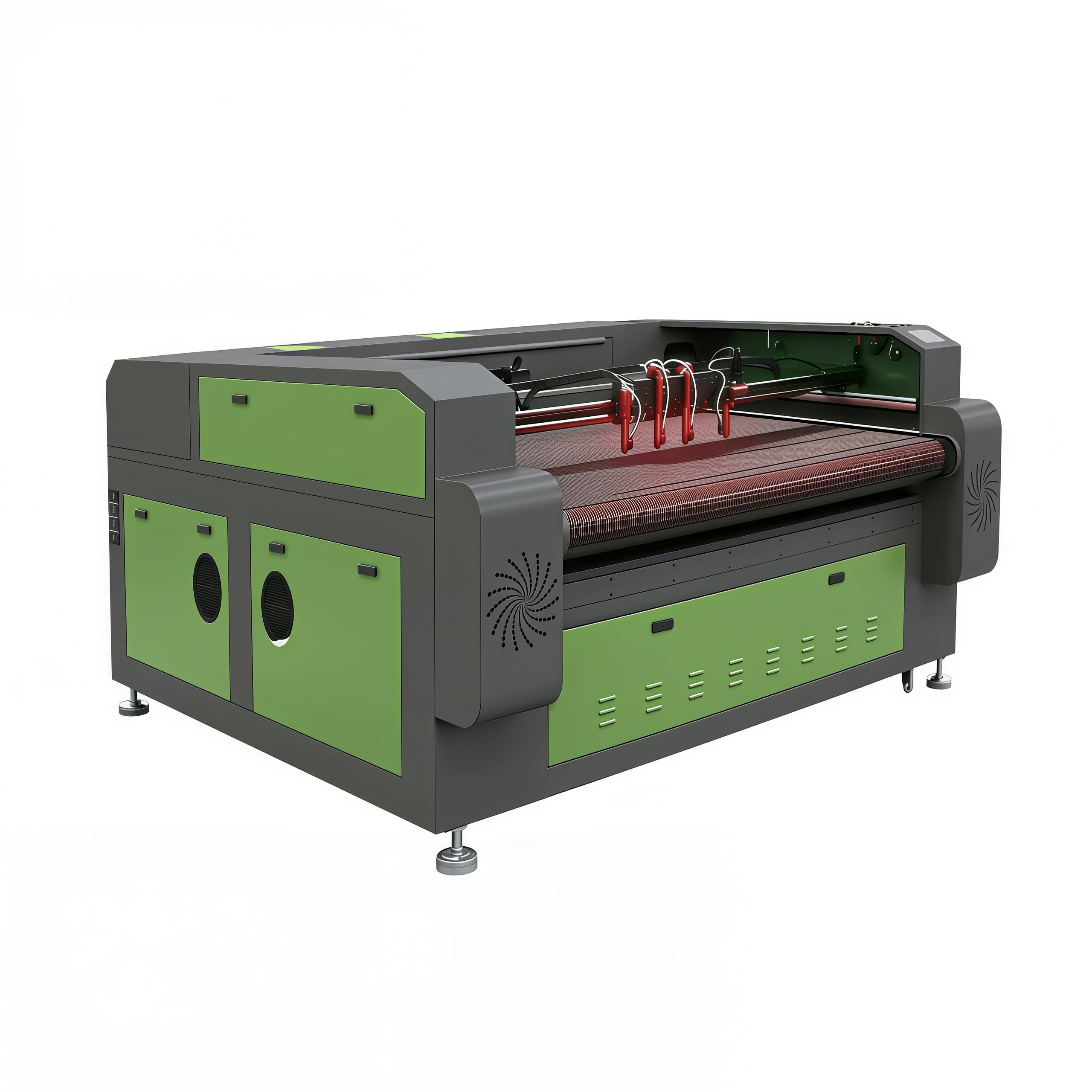
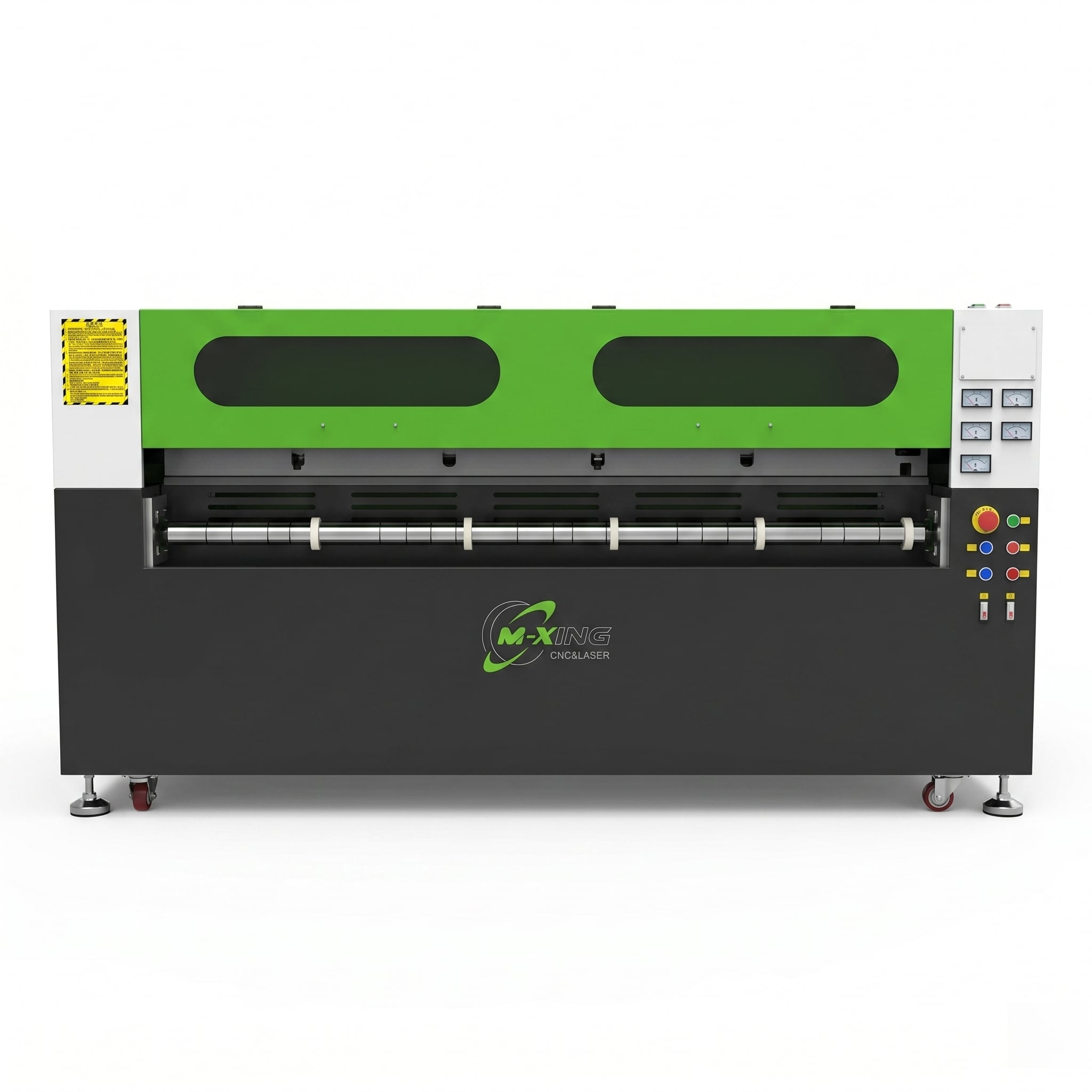
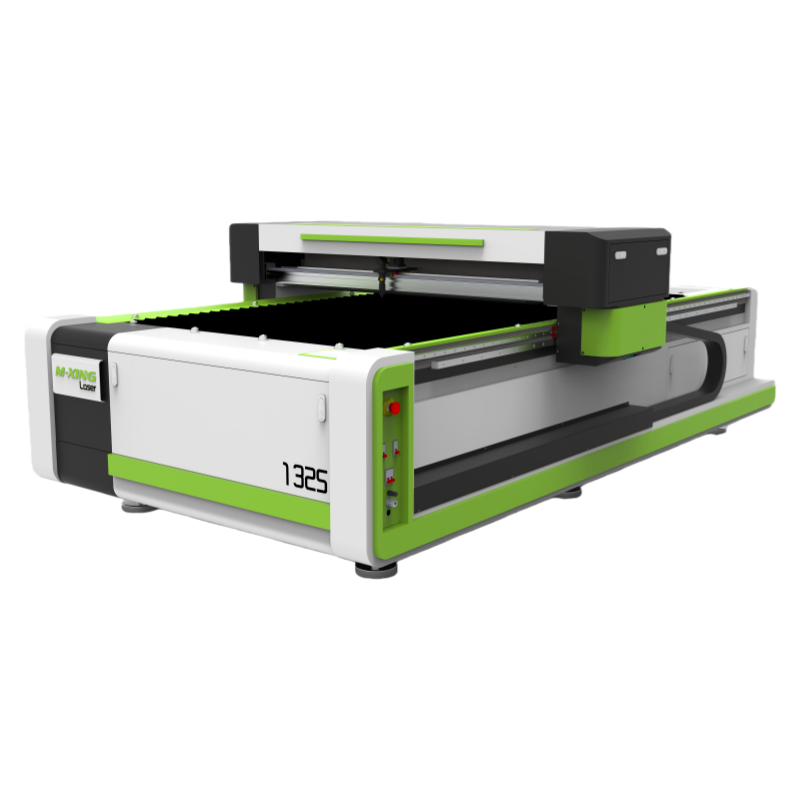
A modest bed with good access is more useful than a large one. Most promotional parts are small, and a bed that lets an operator load and unload quickly beats a format that requires walking around it. The 6090 suits giftware and small panels; the 1390 covers larger awards, display work and multi-up nesting.
Nesting discipline multiplies throughput. On small parts the constraint is rarely cut speed — it is how many parts fit on a sheet and how fast they can be handled. Consistent spacing, common toolpaths and a repeatable layout matter more than any single parameter.
A camera pays for itself on printed overlays and on registration work, and less so on plain giftware where a jig is enough.
A rotary attachment extends the range to cylindrical giftware — pens, tumblers, small tubes — and is worth having if that product line is planned. Confirm the specific configuration with the supplier rather than assuming it fits every format.
Dual-head configurations suit long runs of identical small parts, which is common in this sector at the volume end — but only when the parts are simple enough that two heads stay in agreement across the bed.
One honest note for shops considering this market: the promotional business is won on turnaround and repeatability, not on the machine's specification sheet. A shop that can turn a hundred personalised items around in a day, and reproduce them exactly a year later, will beat a shop with a faster machine and no records.
Promotional products and electronics panels look like different industries, and they share a machine for a good reason: both are low-value, high-mix, small-part work where setup time, not unit cost, decides profitability — and both are served by a tool with no tooling.
The sector rewards a shop that treats personalisation as data, proofs before it cuts, keeps its records so reorders are cheap, and stays honest about the two boundaries: metal is not a CO2 job, and cork and slate are engraving materials rather than cutting ones.
Everything between those lines — giftware, awards, tags, inserts, overlays, windows, spacers, kiss-cut laminates — is exactly the kind of work this equipment was built for, provided the shop understands that the product being sold is a hundred different things, made once each.
 Hot News
2026-11-16
2026-11-12
2026-11-10
2026-11-09
2026-11-06
2026-11-05

Mingxing Laser is a leading China-based laser machine manufacturer offering CO2 laser cutters, fiber laser cutting machines, CNC routers, laser welders & marking machines. OEM/ODM custom solutions available. Get a quote today!
- Company Headquarters: Room 1303, Building 4, UnitedFortune Plaza, High-tech Zone, Jinan City, Shandong Province, China
- Manufacturing Plant: No. 18, Yinhe Road, Jibei Street, Jiyang District, Jinan City, Shandong Province, China
Copyright © 2026 Century Mingxing (jinan) Intelligent Technology Co., Ltd. All rights reserved. Privacy Policy

 EN