The first thing to get right about construction is where the machine belongs. It does not belong on site.
A site is dusty, wet, unheated and full of steel. Optical components do not survive that, and a machine that needs a clean lens cannot be scheduled around a concrete pour. Every construction application in this article happens in a workshop, a joinery, or a contractor's own fabrication shop — and the finished part travels to site.
That sounds like a limitation. It is actually what makes the applications work: the parts being cut are temporary works and one-off fabrications, not production components. They are made in small numbers, to a drawing that changed last week, and they are needed fast. That is precisely the profile a laser serves well.
The last row is the boundary that matters most, and it is not a technicality. A laser cuts a 2D profile; it does not grade timber, does not certify a connection, and does not make a cut member structural. Anyone using this equipment near structural work needs that line drawn clearly.
Fair-faced concrete — concrete left exposed as the finished surface — is the application where laser cutting earns the most in construction, because the surface quality is the product.
The pattern in the concrete comes from a formliner: a sheet fixed inside the formwork, into which the concrete is cast. The liner's pattern, its depth, and its joints all transfer to the concrete. Get the liner right and the wall needs no finish; get it wrong and the defect is permanent, in public, at full scale.
Three liner approaches dominate, and the laser serves two of them:
Cut-through liners. The pattern is cut through a sheet — plywood, hardboard or plastic — and the sheet is fixed to the form face. Concrete fills the openings and stands proud of the surface. Simple, and the laser's most direct contribution.
Engraved or recessed liners. The pattern is cut part-depth, leaving a relief. This needs controlled depth, which is harder to hold consistently over a large sheet than a through-cut, and the result depends on the liner material's density.
Moulded elastomeric liners. For deep relief and fine detail, a rubber or PU liner is cast from a master. The laser's role is upstream: cutting the master pattern, not the liner itself.
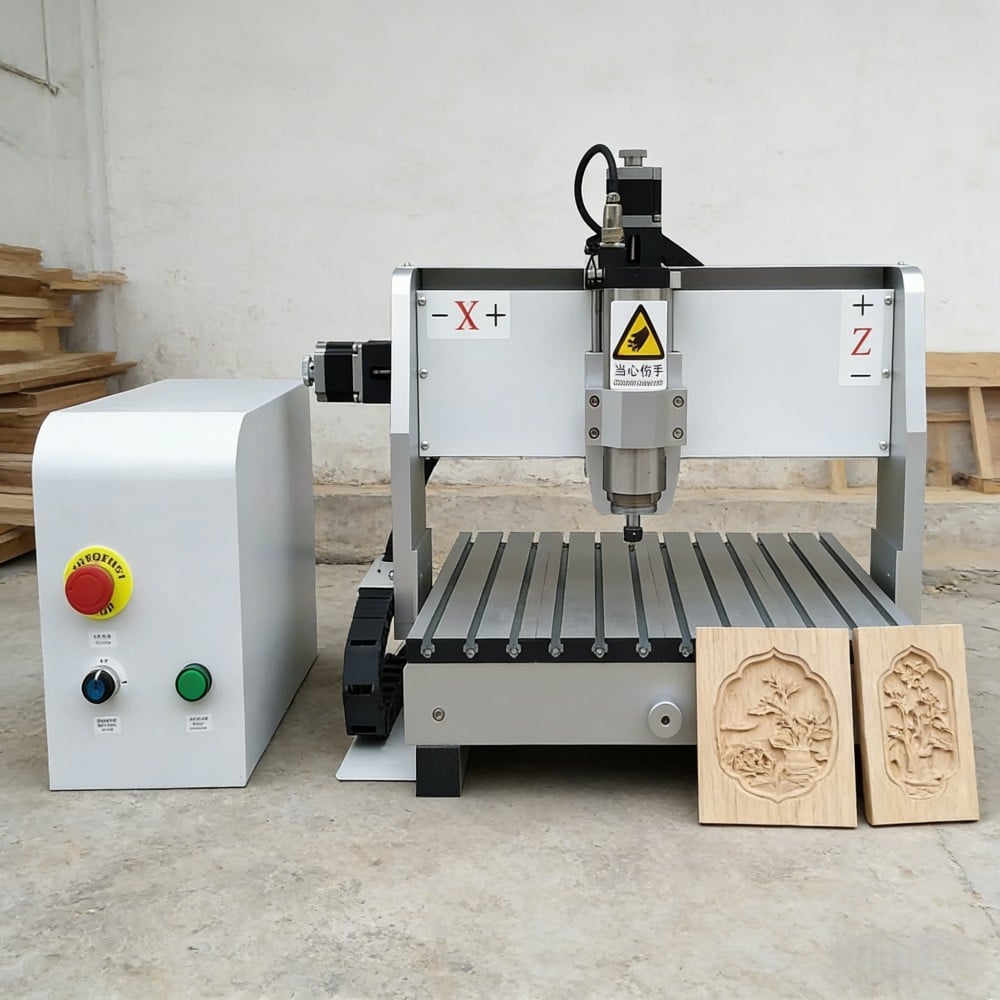
The honest comparison is with CNC routing, not with hand work. A router cuts the same patterns, in thicker material, with a cut edge that is square rather than tapered, and it does not char. Where a router wins: thick liners, deep relief, and any pattern with large open areas that would be quicker to clear with a cutter than to trace with a beam.
Where the laser wins is fine detail at speed, thin sheet, and the iteration loop — a designer changing a pattern three times in a week, with each version cut the same afternoon. That iteration speed is the real commercial argument, and it is the same argument as in packaging: the tool pays for itself in revisions, not in production volume.
Every formliner decision is a repeat-count decision, and the arithmetic is the same as in packaging.
The pattern that emerges: the laser owns the low-repeat, high-complexity end, and moulding owns the high-repeat end. A contractor who buys a laser expecting to make liners for a 40-storey repetition is buying the wrong tool; a contractor who needs a signature wall, a lobby feature, or a series of prototypes for a client presentation is buying exactly the right one.
This is the practical detail that decides whether a laser-cut liner survives its first pour, and it is rarely discussed.
A laser cut through plywood or MDF leaves a charred, open edge. Char is hygroscopic: it absorbs water readily, and concrete is wet. Three consequences follow, in order of how quickly they appear.
The edge swells. Water enters the char and the exposed fibres, the cut edge swells, and the pattern's dimensions change between the first and second pour. A liner that was accurate when cut is no longer accurate when re-used.
The char transfers. Char and loose carbon can lift onto the concrete surface, leaving dark staining exactly where the pattern edge is. On a fair-faced wall, that staining is a defect that cannot be cleaned off.
Release agent behaves differently on char. Mould release is designed for a form face, not for a carbonised edge; the liner can bond to the concrete at the pattern edges and tear on striking.
The countermeasures are straightforward and worth building into the method statement:
Plastic sheet sidesteps most of this, at a higher material cost. For a small number of pours on a high-visibility feature, that trade is usually worth making.
Architectural models are the quiet, reliable construction application for a laser, and they are underrated commercially because they are cheap per job and frequent.
A model shop cutting by hand cannot iterate at the speed a design team revises. A laser in-house means a revised massing model in the same day, and it means a contractor can produce a mock-up of a junction or a facade detail to show a client before committing to the real thing.
The practical point for a contractor or an architect's practice: a model laser is not a production machine, and a small format is often enough. The benefit is not speed per part but the ability to cut a new version within the design conversation.
On site, accuracy is carried by templates — a plywood or plastic sheet with the holes and edges already in the right place. Made badly, every fixing inherits the error.
A laser-cut template gives the site a reference that is accurate to the drawing, and repeatable when you need several. Typical uses:
Drilling and anchor templates for a row of fixings, so spacing is set by the template rather than by a tape measure.
Profiles for non-standard openings — a curved reveal, a raking head, a shape that a carpenter would otherwise mark out by eye.
Setting-out boards marked with centrelines, grid references and penetration positions, carried to site as a single sheet.
Protection and cover templates for services, where openings must match a mechanical drawing.
Two practical cautions. Templates get abused on site, so edge durability matters more than elegance — and a template that is trusted but slightly wrong is worse than no template, which means the file has to be checked against the actual setting-out, not just against the design intent.
Exterior work is where construction differs most from interior fit-out, and the difference is weather. The interior article covers joints, pattern continuity and finishing; for exterior work the questions are durability and movement.
Laser-cut timber exteriors are a finishing problem first. An open, charred edge on an exterior panel will take on water, stain and grow. If a laser-cut pattern is going outside, the edges must be sealed, and the design should assume the material will move.
Thermal movement is larger than fabrication tolerance. A panel that fits in the workshop may not fit in summer. Design the joint to absorb movement rather than sizing it tight.
Pattern continuity across a facade is a setting-out problem, not a cutting problem. The same rule as for interior walls applies at larger scale: sequence the panels to the elevation, not to the sheet yield.
For genuinely exterior-grade work, many contractors use the laser only for the pattern master or the template, and have the production panels cut or pressed by a specialist. That is a sound division, and worth stating to a customer rather than overselling the machine's role.
The PVC row deserves emphasis for construction specifically, because PVC sheet and PVC foam appear in site products under many names, and a shop cutting "plastic sheet" without checking the grade can damage its machine and expose operators. The material data sheet decides, not the colour.
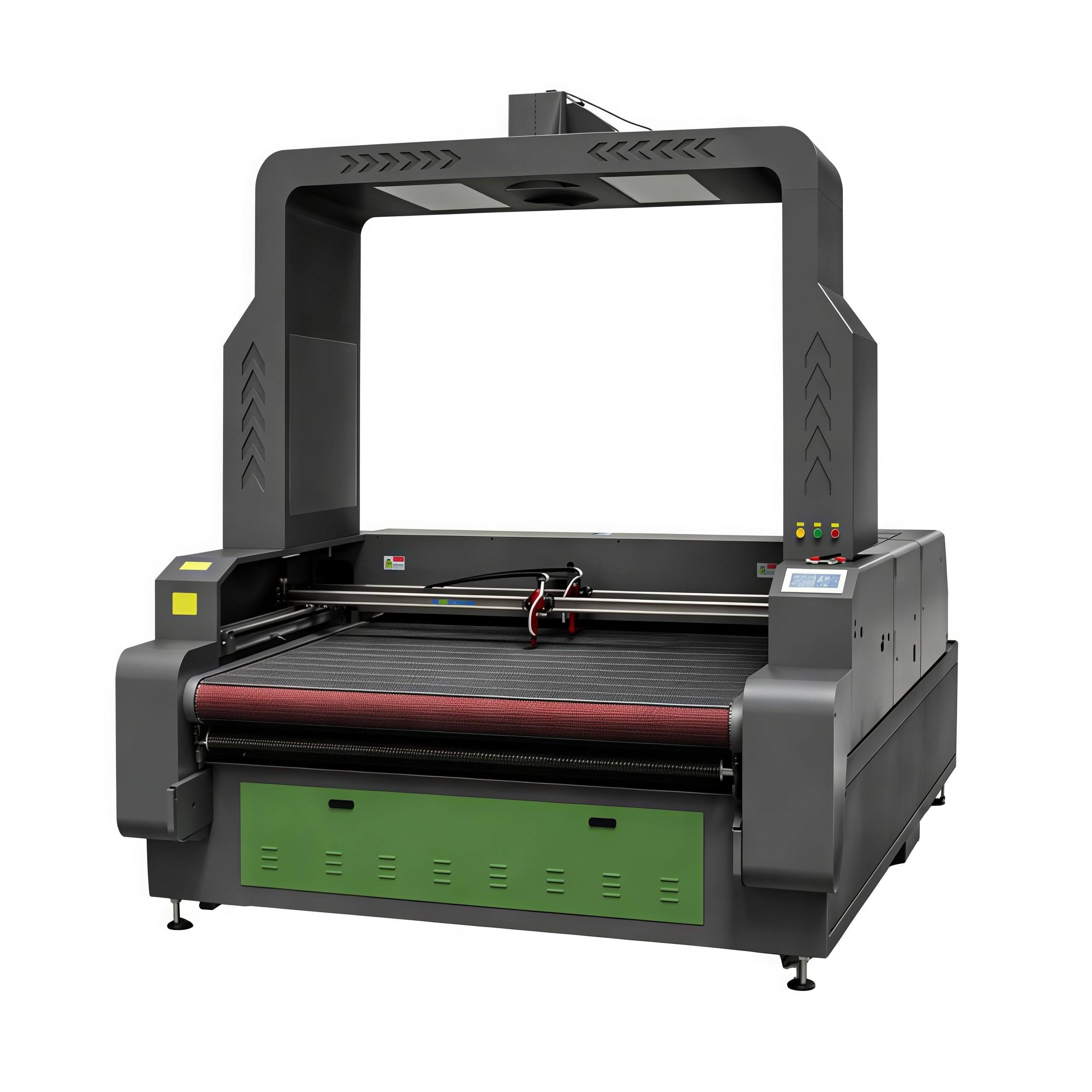
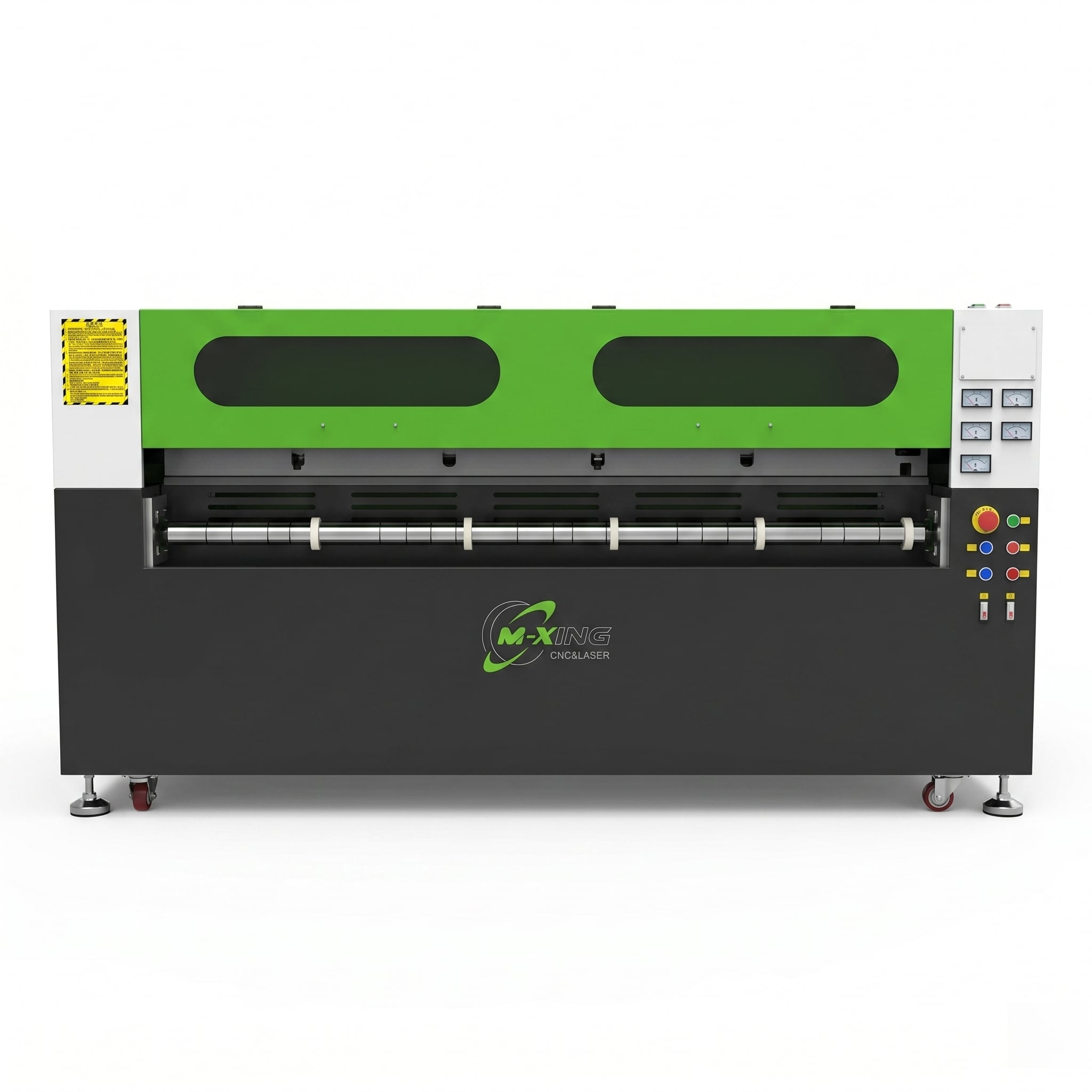
Construction work is sheet-based, frequently large, and always against a deadline — which points to a specific machine profile.
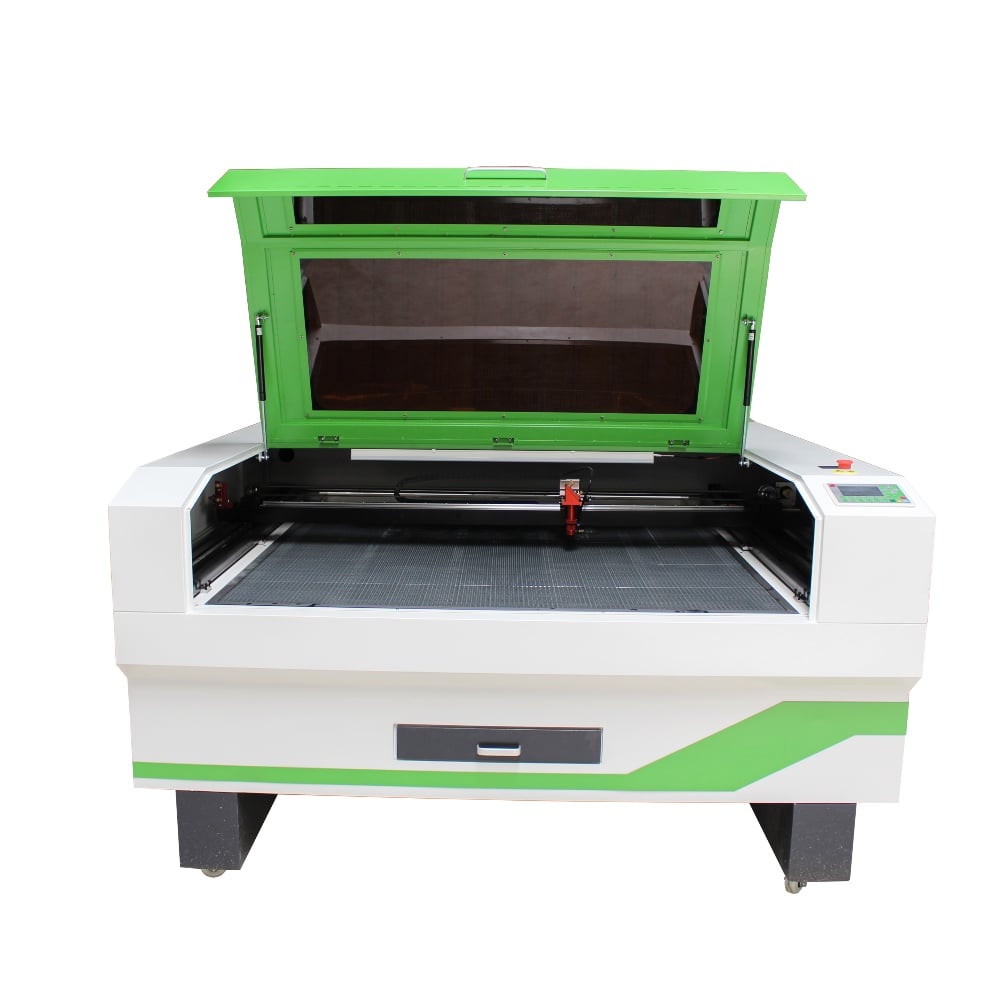
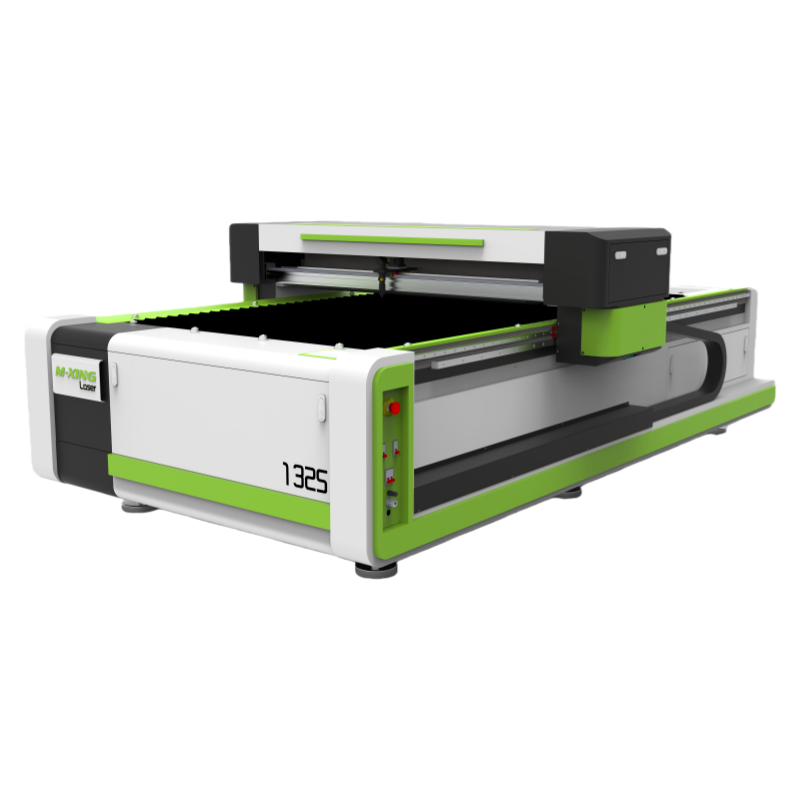
Bed size is the dominant decision. Liners and templates are cut from full sheets, and a bed that takes a whole sheet without pre-cutting keeps the yield and the handling in the shop. The 1325 format is the natural fit for full-sheet work; the 1610 and 1390 suit smaller liners, models and templates.
Depth control matters more than raw power if engraved liners are planned. Through-cutting ply and plastic is undemanding; holding a consistent part-depth relief across a large sheet is where a machine's motion stability shows.
Dust and fume handling is not optional. Ply, MDF, OSB and foam all produce heavy particulate or fume loads, and a shop cutting them daily needs extraction sized for continuous operation rather than occasional use.
A camera is useful for printed liners and for registering patterns to a printed reference, though it is less central here than in signage or printed textiles.
One boundary worth repeating at the point of sale: Mingxing Laser's CO2 range is built for non-metallic sheet. Construction also involves steel, aluminium and concrete — none of which this equipment cuts. Contractors who need those cut are looking at a different machine class, and being clear about that early saves a wasted quotation.
Construction rewards a laser in the workshop, not on site, and in temporary works rather than production: formliners for exposed concrete, templates that carry accuracy to the fixings, models that let a design change in a day, and void formers cut cleanly and consistently.
It rewards it least where the industry's volumes are: repetitive liners, thick sections, deep relief and anything structural. A contractor who understands the split gets a fast, tooling-free fabrication capability for the awkward, one-off, high-visibility parts that are always the ones holding up a programme. A contractor who buys expecting to replace a router, a saw or a mould will be disappointed — and, on the structural side, would be taking a risk that no machine feature can justify.
 Hot News
2026-02-05
2026-02-03
2025-12-01

Mingxing Laser is a leading China-based laser machine manufacturer offering CO2 laser cutters, fiber laser cutting machines, CNC routers, laser welders & marking machines. OEM/ODM custom solutions available. Get a quote today!
- Company Headquarters: Room 1303, Building 4, UnitedFortune Plaza, High-tech Zone, Jinan City, Shandong Province, China
- Manufacturing Plant: No. 18, Yinhe Road, Jibei Street, Jiyang District, Jinan City, Shandong Province, China
Copyright © 2026 Century Mingxing (jinan) Intelligent Technology Co., Ltd. All rights reserved. Privacy Policy

 EN