
 EN
EN
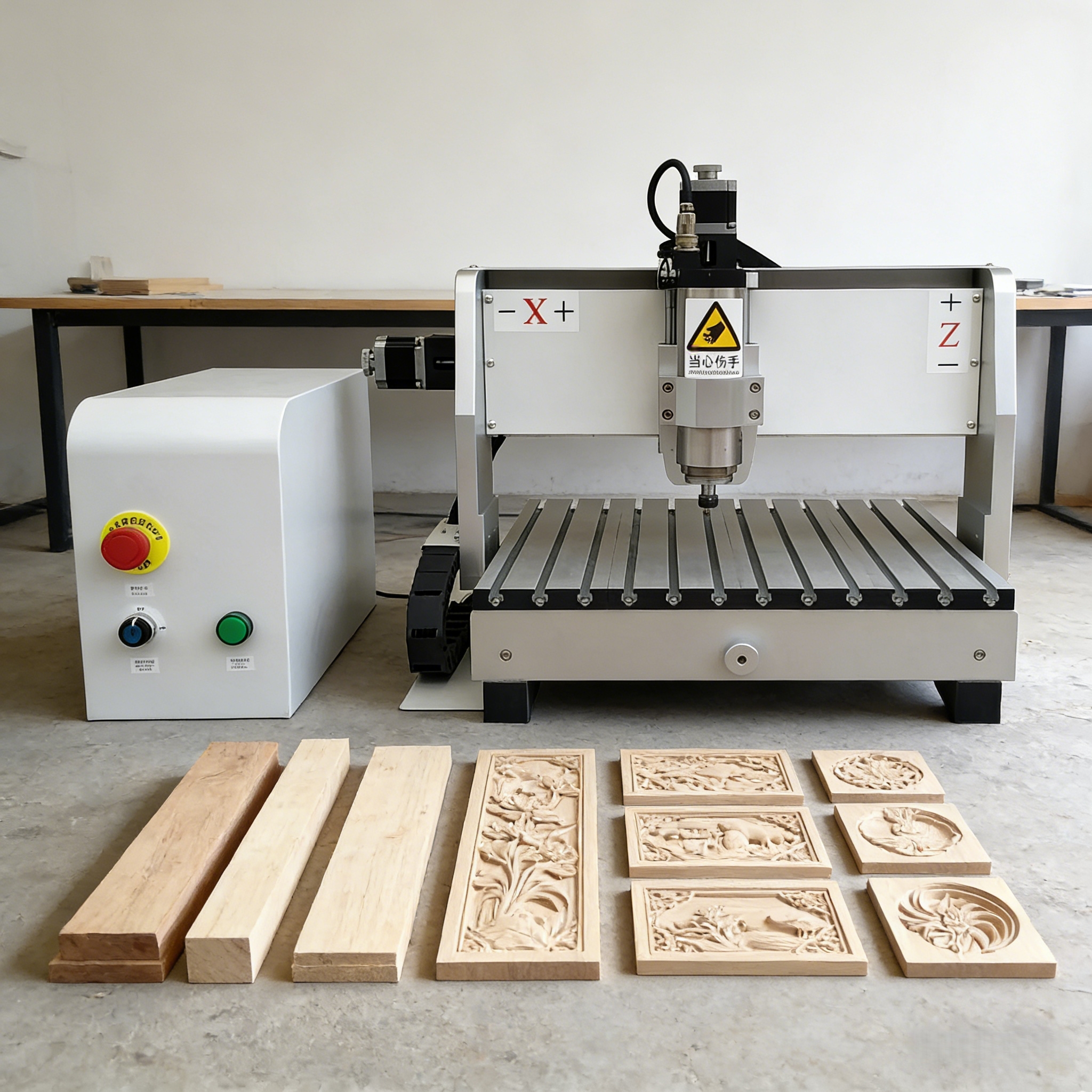
Few technologies have reshaped the economics and capabilities of production manufacturing as thoroughly as the CNC router. What began as a specialized tool for high-end woodworking and aerospace component production has become a mainstream production asset across dozens of industries — from furniture manufacturing and architectural fabrication to signage, packaging, and composite panel processing. In 2026, the CNC router is not simply a faster way to do what was previously done by hand. It has fundamentally changed what is possible, what is economical, and what level of quality is achievable at production scale. This article examines how and why.
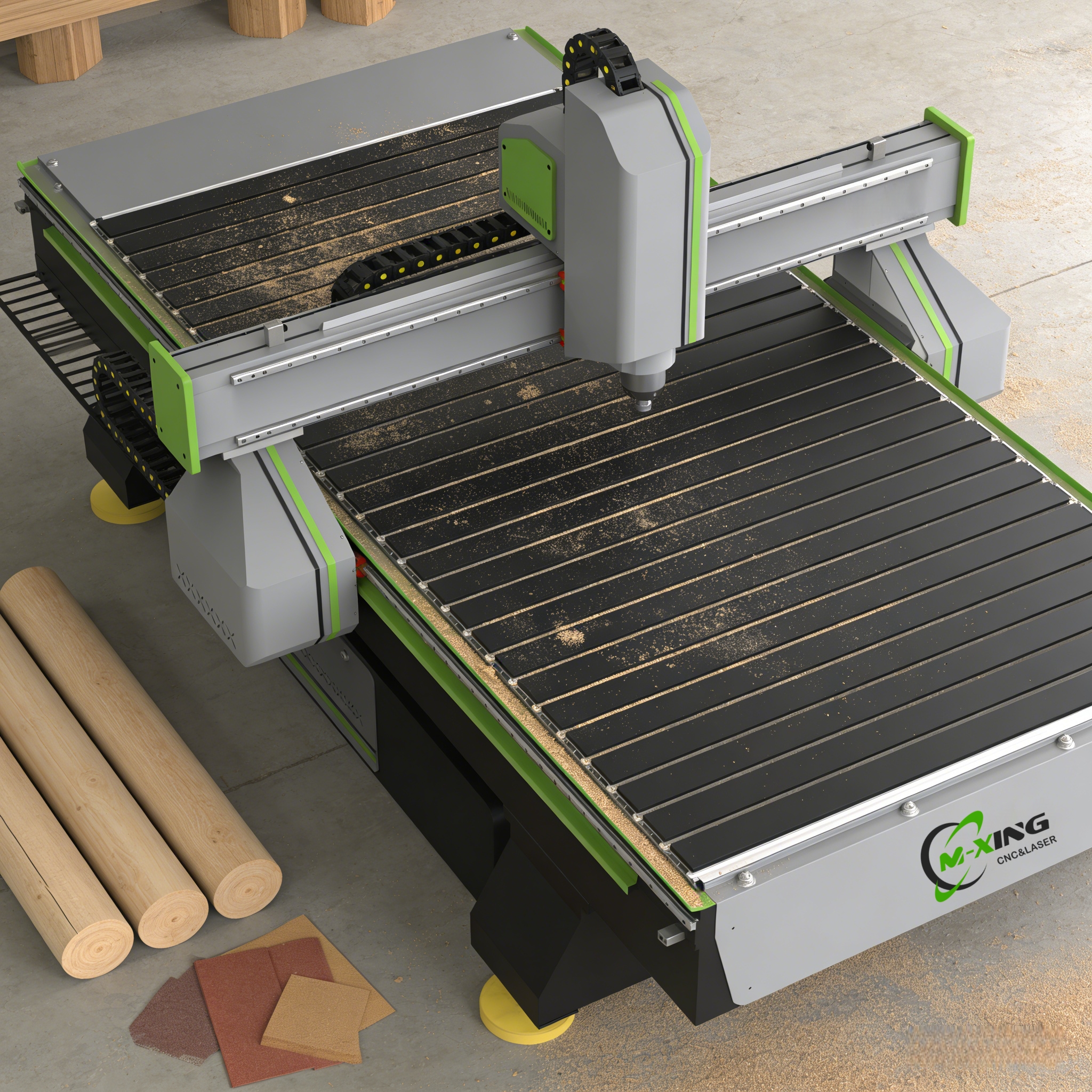
Precision at Scale: Eliminating the Human Variable
The most transformative contribution of CNC router technology to modern manufacturing is the removal of human variation from the cutting and carving process. In traditional woodworking and panel fabrication, the quality of every cut depended on the skill, concentration, and physical consistency of the operator. Fatigue, distraction, and natural variation between workers all introduced dimensional inconsistency into finished parts — inconsistency that accumulated across batches and created downstream problems in assembly, fit, and finish.
A CNC router executes every cut from the same digital program, with the same toolpath geometry, at the same feed rate and depth, regardless of whether it is the first part of the morning or the two hundredth part of the afternoon. The positional accuracy of a production-grade machine — typically within fractions of a millimeter — is sustained continuously across the working day without degradation. For manufacturers producing furniture components, architectural panels, or signage elements that must fit together precisely, this consistency is not a marginal improvement over manual methods. It is a structural change in what quality control means on the production floor.
Enabling Complex Geometry That Manual Methods Cannot Produce
Beyond consistency, the CNC router has expanded the geometric complexity that manufacturers can produce at reasonable cost. Curved profiles, three-dimensional relief carvings, intricate fretwork patterns, interlocking joinery, and multi-axis surface work are all operations that would require exceptional craft skill and significant time when executed manually. On a CNC router, they are simply a matter of programming — the machine executes complex geometry at the same speed it executes a straight cut, with no premium for complexity.
This capability has had a profound effect on product design across manufacturing sectors. Furniture designers can specify organic curved forms and complex surface textures knowing they can be reproduced accurately and repeatedly. Architectural fabricators can produce decorative screen panels and cladding with intricate geometric patterns at production volume. Sign makers can cut dimensional lettering and layered display elements with consistent quality across an entire project. In each case, the CNC router has raised the ceiling of what is commercially feasible by decoupling geometric complexity from production cost in a way that manual manufacturing never could.
Industry Applications and Material Capabilities
| Industry | Primary Materials | Typical CNC Router Operations | Production Benefit |
|---|---|---|---|
| Furniture & Cabinetry | MDF, plywood, solid wood | Panel cutting, dado routing, shaping, drilling | Consistent components, reduced assembly error |
| Signage & Advertising | MDF, acrylic, PVC board, foam | Profile cutting, dimensional lettering, surface routing | Fine detail at volume, design flexibility |
| Architectural Fabrication | Composite panels, MDF, aluminum | Decorative screens, cladding profiles, millwork | Complex geometry at scale |
| Packaging & Display | Foam, corrugated board, card | Custom insert shaping, die-cut profiles | Precise fit, fast changeover between designs |
| Woodworking & Crafts | Solid wood, bamboo, MDF | 3D carving, engraving, profiling | Intricate detail without manual skill premium |
| Engineering & Prototyping | Aluminum, ABS, acrylic | Light milling, drilling, enclosure profiling | Rapid iteration, accurate test parts |
| Theater & Set Design | Foam, MDF, plywood | Large-format 3D shaping, structural cutting | Complex props and set elements at speed |
Material Efficiency and Waste Reduction
Manufacturing waste is both a cost and an increasingly important sustainability consideration, and the CNC router addresses it more effectively than manual cutting methods on both fronts. The precision of CNC toolpaths means that material is removed exactly where the program specifies — no overcuts, no irregular edges, no material lost to correction attempts. This alone reduces scrap on every sheet processed compared to manual equivalents.
The greater efficiency gain, however, comes from nesting software that integrates directly with CNC router workflows. Nesting algorithms compute the optimal arrangement of all required parts on each sheet before cutting begins, minimizing the gaps between parts and maximizing the usable yield from every sheet of MDF, plywood, acrylic, or composite panel. Across a production run of any meaningful size, the reduction in sheet consumption that nesting delivers translates into direct material cost savings that compound over time.
For manufacturers working with expensive materials — solid hardwood, thick acrylic, or engineered composites — the material efficiency advantage of CNC routing over manual methods can represent a significant portion of the total cost justification for the equipment investment.
Workflow Integration and Digital Manufacturing
The CNC router does not operate as an isolated machine in a modern manufacturing environment. It sits within a broader digital workflow that begins with CAD design and flows through CAM toolpath generation to machine execution — and increasingly, to production monitoring and quality tracking systems. This integration is what makes CNC routing a component of digital manufacturing rather than simply an automated cutting tool.
Design changes made in the CAD environment propagate directly to the cutting program without requiring physical retooling or manual reconfiguration of the machine. A furniture manufacturer updating a cabinet design can implement the change across the entire production run by modifying the CAD file and regenerating the toolpath — a process that takes minutes rather than the hours or days a manual retooling would require. For businesses serving custom order markets or managing short production runs across many different designs, this digital agility is a competitive advantage that directly affects responsiveness and delivery time.
Modern CNC router controllers support offline job loading, multi-language interfaces, and in many cases automatic tool length measurement, which further reduces setup time between jobs and minimizes the risk of operator error during configuration.
FAQ
What materials can a CNC router not process effectively? CNC routers are designed for mechanically machinable materials and are not suitable for processes that require thermal cutting. They do not perform well on hardened steel or other very hard metals that exceed the cutting capacity of standard carbide tooling. Brittle materials like glass and ceramic can be profiled with specialized tooling but require careful parameter management. For materials that respond better to heat-based cutting — such as thin fabric, fine paper, or non-metallic sheet materials requiring very narrow kerfs — a laser cutting system is typically more appropriate.
How does a CNC router improve furniture manufacturing specifically? In furniture and cabinetry manufacturing, a CNC router delivers consistent panel dimensions across entire production runs, which directly reduces assembly time and error. It enables CNC-cut joinery such as dowel holes, cam fitting recesses, and dado grooves to be machined in a single setup rather than across multiple manual operations. Decorative routing, profiled edges, and surface textures can be incorporated into the same program as basic panel cutting, consolidating multiple production steps into one machine pass.
What is the difference between a CNC router and a CNC milling machine? Both use rotating cutting tools to remove material, but they are optimized for different applications. CNC milling machines are built for high rigidity and precision on hard metals, with heavy frames, slower feed rates, and aggressive chip-clearing systems. CNC routers are optimized for larger working areas, higher traverse speeds, and the lighter cutting forces associated with wood, MDF, plastics, and soft metals. A CNC router handles full sheets of panel material that a milling machine could not accommodate, while a milling machine handles hard metal work that would destroy a standard router spindle and tooling.
How much floor space does a production CNC router require? A standard 1325-format CNC router — with a 1,300 × 2,500mm working area — requires a dedicated floor area of approximately 3 × 5 meters to accommodate the machine footprint, operator workspace, and material handling clearance on the loading and unloading sides. Larger format machines require proportionally more space. Dust collection equipment, which is an essential companion to any production CNC router, adds further space and infrastructure requirements that should be planned before installation.
Can a small business justify investing in a CNC router? For small businesses with consistent production volume and a defined material and product range, a CNC router investment is frequently justified within 12 to 24 months through reduced outsourcing costs, lower labor input per unit of output, and the ability to take on work that was previously declined due to precision or complexity requirements. The key is matching the machine format and specification to actual production needs rather than purchasing excess capacity. Entry and mid-range CNC router platforms in 2026 offer production-grade capability at price points accessible to small fabrication businesses, custom furniture makers, and signage studios.
The CNC router has shaped modern manufacturing not by replacing human skill entirely, but by channeling it where it adds the most value — in design, programming, quality oversight, and customer relationships — while automating the physical execution of cutting and carving with a consistency and efficiency that manual methods cannot match. As software integration deepens and machine intelligence continues to advance, its role at the center of digital manufacturing workflows will only become more central.
