
 EN
EN
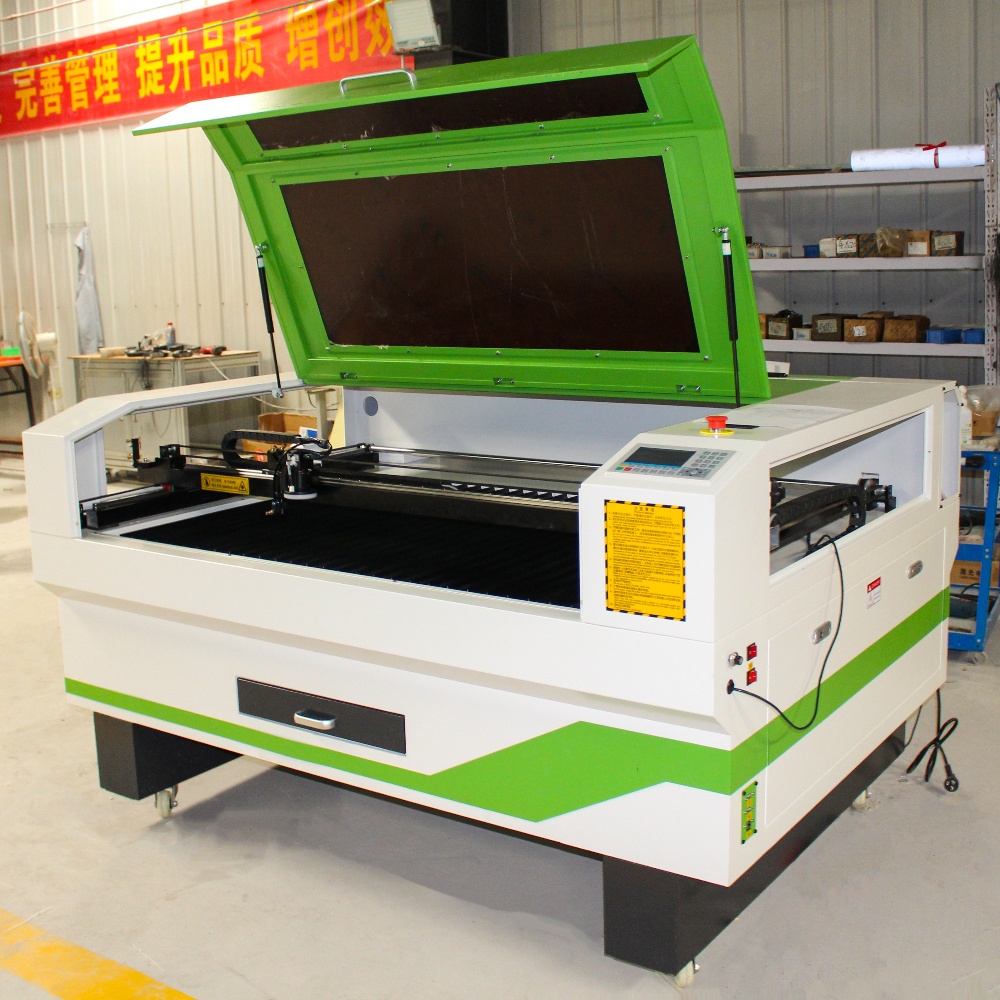
The decision to invest in a laser cutting machine is rarely made in a single moment. For most business owners and production managers, it follows a period of growing frustration with existing processes — outsourced cutting that takes too long, manual methods that introduce too much variation, or a product line that has outgrown the tools currently available. In 2026, the question isn't whether laser cutting technology is mature and reliable enough to justify the investment. It clearly is. The real question is whether your business has reached the point where buying makes more commercial sense than waiting.
Your Outsourcing Costs Have Become a Recurring Pain Point
For many small and mid-size businesses, the path to owning a laser cutting machine begins with outsourcing. You send files to a cutting service, wait for turnaround, pay per job, and absorb the lead time into your production schedule. In the early stages of a business, this model makes sense — you're not producing enough volume to justify the capital expenditure of your own equipment.
The calculation changes when outsourcing costs become a consistent, significant line item in your monthly expenses. If you're paying a cutting service regularly for work that could be produced in-house, the monthly outsourcing spend becomes the most direct benchmark for evaluating a machine purchase. Divide the cost of a suitable laser cutting machine by your average monthly outsourcing expenditure and you have a rough payback period in months. When that number falls below 18 to 24 months, the financial case for buying becomes difficult to argue against.
Beyond the pure cost calculation, in-house cutting also eliminates turnaround dependency. You control the schedule, you can accommodate last-minute changes, and you can offer faster delivery to your own customers — a competitive advantage that doesn't show up in a simple cost comparison but is real nonetheless.
Your Current Cutting Method Is Limiting Product Quality or Range
Manual cutting, die cutting, or basic mechanical methods all impose limits on what you can produce. If you're regularly declining orders because your current process can't achieve the required precision or complexity, or if you're producing acceptable but not excellent results on intricate designs, a laser cutting machine addresses those limitations at the root.
CO2 laser systems, for example, cut acrylic, wood, MDF, leather, fabric, and paper with a level of edge quality and dimensional accuracy that manual methods cannot replicate consistently. More importantly, they do so across complex geometries — curves, fine text, interlocking patterns, and detailed illustrations — without any increase in cycle time compared to simple straight cuts. The machine follows the programmed path regardless of complexity.
If product quality is the driver rather than cost, the timing question becomes: how much business are you losing, or how much of your reputation is at risk, because your current process isn't capable enough? That's a harder number to quantify but often a more urgent one.
Business Readiness Checklist Before Buying
| Readiness Factor | Not Ready | Getting There | Ready to Buy |
|---|---|---|---|
| Monthly outsourcing spend | Under $300 | $300 – $800 | Consistently above $800 |
| Order volume trend | Declining or flat | Gradual growth | Strong, sustained growth |
| Production space available | No dedicated space | Limited space | Dedicated machine area available |
| Electrical supply | Unverified | Needs upgrade | Adequate supply confirmed |
| Operator availability | No trained staff | Training possible | Operator identified |
| Material consistency | Highly varied | Mostly consistent | Defined primary materials |
| Design file readiness | No CAD/CAM workflow | Partial capability | CAD/CAM workflow in place |
This table is not a rigid scoring system — it's a framework for identifying where the gaps are. A business that scores "ready" across most factors but lacks a trained operator is a training program away from being prepared. A business with no dedicated space or unverified electrical supply has more foundational work to do before a machine purchase makes practical sense.
The Right Machine Type Depends on What You Make
Timing a purchase well also requires clarity on which type of laser cutting machine fits your production needs, because buying the wrong technology — even at the right time — creates its own problems.
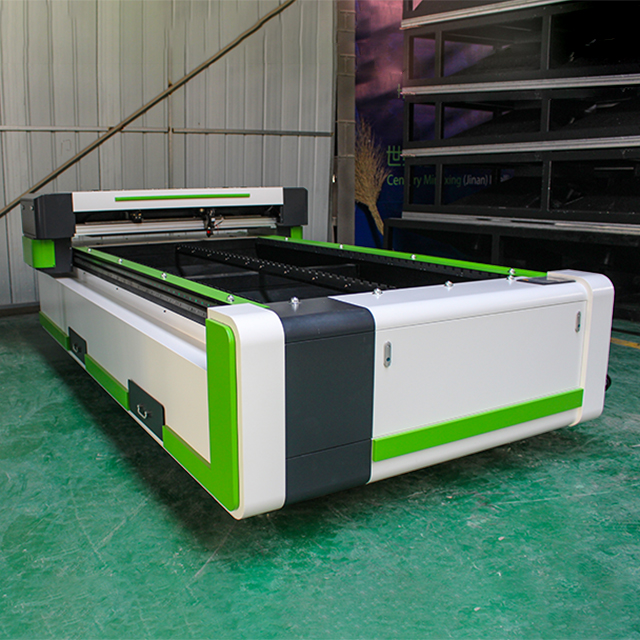
CO2 laser cutting machines are the right choice for businesses working primarily with non-metallic materials: acrylic, wood, MDF, leather, fabric, paper, and similar substrates. They are the dominant format in signage and advertising, furniture and interior decoration, craft and gift manufacturing, packaging, and architectural modeling. The 1325 format — with its 1,300 × 2,500mm working area — is particularly well suited to businesses that process full sheets of acrylic or MDF, as it eliminates the need to cut material down before loading.
Fiber laser cutting machines suit metal fabrication businesses working with steel, aluminum, copper, and brass. If your production is metal-focused, a CO2 system is not the appropriate tool regardless of how favorable the timing appears.
Buying the right technology at the right time compounds the return. Buying the wrong technology — even with excellent financial timing — creates an asset that doesn't serve your actual workflow.
2026 Market Conditions and What They Mean for Buyers
The laser cutting machine market in 2026 is characterized by strong competition among manufacturers, which has continued to push prices down on mid-range CO2 and fiber systems while feature sets have improved. DSP and PC-based controllers that were considered premium specifications a few years ago are now standard on most production-grade machines. Intelligent auto-focus cutting heads, dual worktable configurations, and multilingual software interfaces ship as standard rather than optional extras on many platforms.
For buyers, this means the value available at a given price point is meaningfully better than it was three to five years ago. A mid-range CO2 laser cutting machine in 2026 offers working area, power options, and control system sophistication that would have placed it at the high end of the market not long ago. Waiting for further price drops or feature improvements is a diminishing-returns strategy at this stage of the technology's maturity.
Lead times from reputable manufacturers remain manageable, and after-sales support infrastructure — including remote technical assistance, online documentation, and consumables supply — is well established across most major suppliers.
FAQ
Is 2026 a good year to buy a laser cutting machine? For businesses that have reached genuine production readiness — consistent order volume, identified materials, available space, and a clear outsourcing cost to displace — yes. The technology is mature, prices are competitive, and machine feature sets at mid-range price points are stronger than they have been at any previous point. Waiting for further improvement offers diminishing returns compared to the production value of buying now.
How much space does a laser cutting machine require? This depends on the machine format. A desktop or small-format system may require as little as 1.5 × 1.5 meters of floor space. A 1325-format production machine with a 1,300 × 2,500mm working area typically requires a dedicated area of approximately 3 × 4 meters minimum, accounting for the machine footprint, operator workspace, and material handling clearance on at least two sides.
What electrical supply does a laser cutting machine need? Most production CO2 laser cutting machines require a single-phase or three-phase supply depending on power level, with higher-wattage systems typically requiring three-phase power. Water chillers, exhaust fans, and air assist compressors add to the total electrical load. Verifying your facility's supply capacity before purchasing is an essential pre-purchase step that is frequently overlooked.
Can a laser cutting machine pay for itself within a year? For businesses with sufficient production volume displacing meaningful outsourcing costs, a payback period of 12 to 18 months is realistic. The calculation depends heavily on monthly outsourcing spend, production volume, and whether the in-house capability enables new revenue from work that was previously declined or unavailable. Businesses with lower volumes will see longer payback periods of two to three years, which may still represent a sound investment depending on strategic priorities.
What ongoing costs should I budget for after buying a laser cutting machine? The main recurring costs are electricity, cooling water and chiller maintenance, laser tube replacement (CO2 systems), consumable optics such as protective lenses and nozzles, assist gas supply, and routine lubrication and mechanical maintenance. For CO2 systems, laser tube replacement is the largest periodic cost, typically arising every few years under normal production use. Factoring these into your total cost of ownership calculation gives a more accurate picture of long-term profitability than purchase price alone.
The best time to buy a laser cutting machine is when your production volume, material consistency, facility readiness, and financial position align — not simply when a good deal appears. In 2026, the technology and market conditions are favorable. Whether your business is ready is the question worth answering carefully before writing the purchase order.
