
 EN
EN
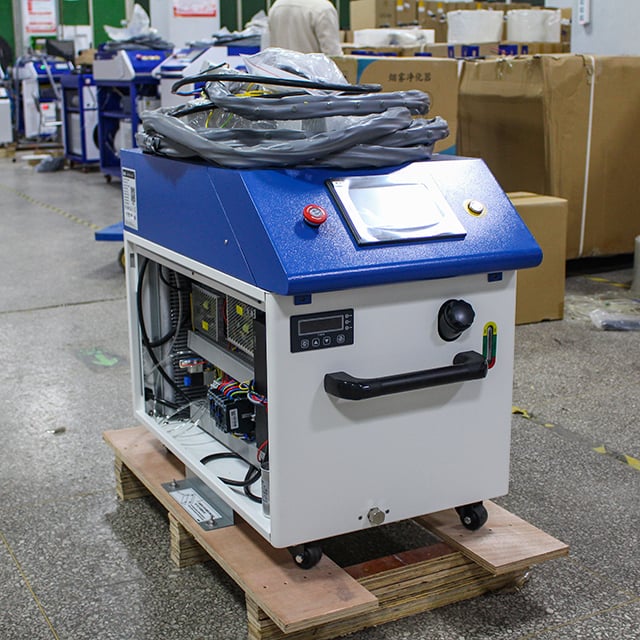
A laser welder represents a fundamental shift in how metal joining is approached across modern industries. Unlike conventional welding methods that rely on open flames, electrical arcs, or friction-based heat, a laser welder uses a focused beam of coherent light to melt and fuse materials with extraordinary precision. This difference in energy delivery is not merely technical — it changes the entire outcome of the welding process, from joint quality to operator safety.
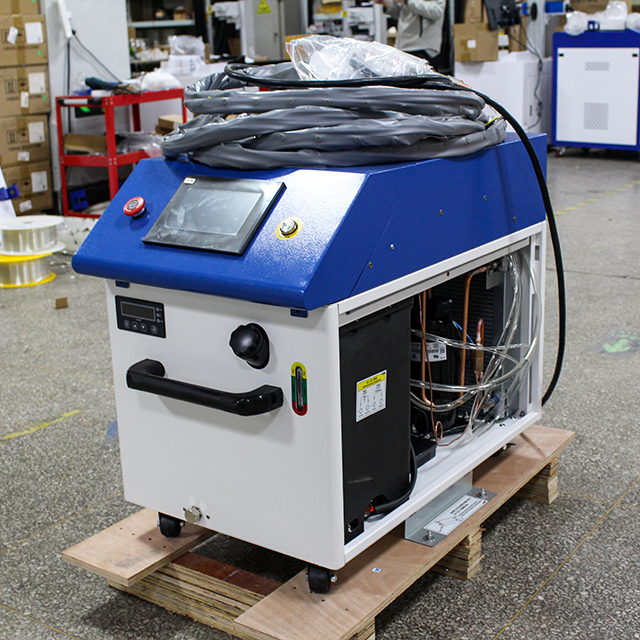
Understanding what sets a laser welder apart from traditional tools is essential for businesses making investment decisions about fabrication equipment. Whether you are working in automotive manufacturing, jewelry production, aerospace components, or precision electronics, choosing the right welding technology affects cost, throughput, and product quality. This article examines the core distinctions that make a laser welder a unique and increasingly preferred option in industrial and commercial settings.
The Core Technology Behind a Laser Welder
How Energy Is Delivered Differently
Traditional welding tools — such as MIG, TIG, and stick welders — generate heat through electrical arcs or combustion. This heat spreads across a relatively wide area, which can cause warping, oxidation, and significant heat-affected zones in the base material. A laser welder, by contrast, concentrates energy into an extremely small focal point, sometimes less than a millimeter in diameter. This tight energy delivery means the laser welder melts only the material it targets, leaving surrounding areas largely unaffected.
The laser welder achieves this through optical amplification, where a lasing medium — commonly fiber, CO2, or Nd:YAG — produces coherent light that can be directed with high accuracy. When the laser welder beam contacts the workpiece, energy absorption happens nearly instantaneously. The result is a cleaner, more controlled weld pool compared to anything a conventional arc-based tool can produce.
Power Density and Its Practical Impact
Power density is one of the most important metrics that distinguishes a laser welder from traditional equipment. A laser welder can deliver extremely high power per unit area, enabling what is known as keyhole welding — a mode where the material vaporizes slightly, creating a deep, narrow weld channel. Traditional tools rarely achieve this depth-to-width ratio without excessive heat input. For applications requiring deep penetration with minimal distortion, a laser welder consistently outperforms conventional alternatives.
Precision, Speed, and Heat Control Advantages
Superior Precision on Complex or Delicate Parts
One of the clearest advantages of a laser welder over traditional tools is the ability to weld small, delicate, or geometrically complex components without damaging adjacent areas. In jewelry manufacturing, for example, a laser welder can repair a stone-set ring without affecting the gemstone's setting. In electronics, a laser welder can join hairline conductors that would be instantly destroyed by arc welding. This level of control is simply not achievable with traditional welding tools operating on broader heat principles.
Traditional tools require skilled operators to manually manage arc length, travel speed, and filler wire simultaneously. A laser welder reduces much of this manual variability by automating energy delivery through programmable parameters. The laser welder does not eliminate skill entirely, but it standardizes the process in ways that reduce operator-to-operator inconsistency.
Speed and Throughput in Production Environments
A laser welder typically operates at higher travel speeds than TIG or MIG welding for equivalent joint configurations. Because the laser welder delivers energy so efficiently, less time is needed to build up adequate heat in the weld zone. This means faster cycle times per part, which directly translates to higher production throughput. For high-volume manufacturers, the speed advantage of a laser welder can offset its higher initial cost within a reasonable operational period.
Additionally, a laser welder produces welds that often require minimal post-processing. Traditional welds frequently need grinding, polishing, or spatter removal. The laser welder leaves a cleaner bead with less spatter and oxidation, reducing secondary labor and consumable costs significantly over time.
Application Fit and Operational Differences
Where a Laser Welder Excels Over Traditional Tools
A laser welder is particularly well-suited for thin materials, dissimilar metal joining, and applications where aesthetic finish quality matters. Stainless steel, aluminum, titanium, and copper alloys all respond well to laser welder processing. Traditional tools struggle with some of these materials due to conductivity issues, oxidation sensitivity, or thickness limitations. The laser welder handles these challenges more consistently by adjusting pulse duration, frequency, and power without changing physical setup.
In contrast, traditional tools still hold practical advantages in heavy structural welding where very deep, wide welds are needed on thick steel sections. For pipeline welding, shipbuilding, or heavy construction, large-scale arc welding equipment may still be more economical. A laser welder is not the universal replacement for all welding scenarios — it is a precision tool with specific strengths that traditional tools cannot match in their respective domains.
Safety and Environmental Considerations
A laser welder generates less fume, spatter, and ultraviolet radiation compared to traditional arc welding tools. This reduces demands on ventilation infrastructure and personal protective equipment in many settings. However, a laser welder introduces its own safety requirements, including protection against direct and reflected beam exposure. Operators must use appropriate laser safety eyewear and follow strict beam enclosure protocols. Traditional tools and a laser welder each carry distinct safety profiles that should inform facility planning.
FAQ
Is a laser welder suitable for beginners or only for trained professionals?
A laser welder is more accessible to beginners than traditional TIG welding because it automates much of the energy control. However, operating a laser welder still requires training in safety protocols, parameter setup, and material-specific settings. Most manufacturers provide guided setup interfaces that help new users operate a laser welder with reasonable confidence after a short learning period.
Can a laser welder replace a TIG welder in all situations?
A laser welder cannot fully replace a TIG welder in every situation. For very thick structural joints, high-deposition-rate work, or environments where laser safety infrastructure is not feasible, TIG welding remains practical. A laser welder excels in precision, thin-material, and high-cosmetic-quality applications where TIG welding would be slower or risk causing thermal damage.
What materials can a laser welder not process effectively?
A laser welder can struggle with highly reflective materials like bare copper or gold at certain wavelengths, as the beam may reflect rather than absorb into the surface. Very thick carbon steel sections may also be less efficient for a laser welder compared to conventional arc processes. Proper material assessment before selecting a laser welder ensures the technology aligns with your specific production requirements.
