
 EN
EN
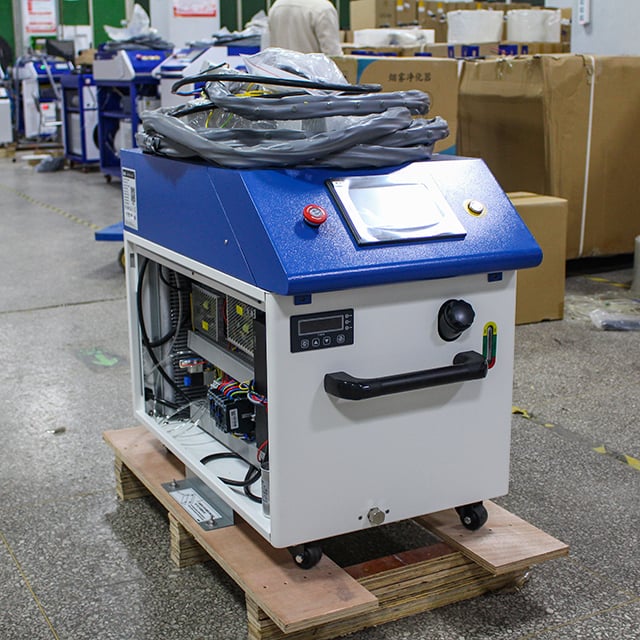
A laser welder is one of the most precise and efficient joining tools available in modern manufacturing. By concentrating a highly focused beam of light onto a workpiece, a laser welder generates intense localized heat that fuses materials together with minimal distortion. As production demands grow more complex and tolerances tighten across industries, understanding how a laser welder actually functions gives manufacturers a significant competitive edge.
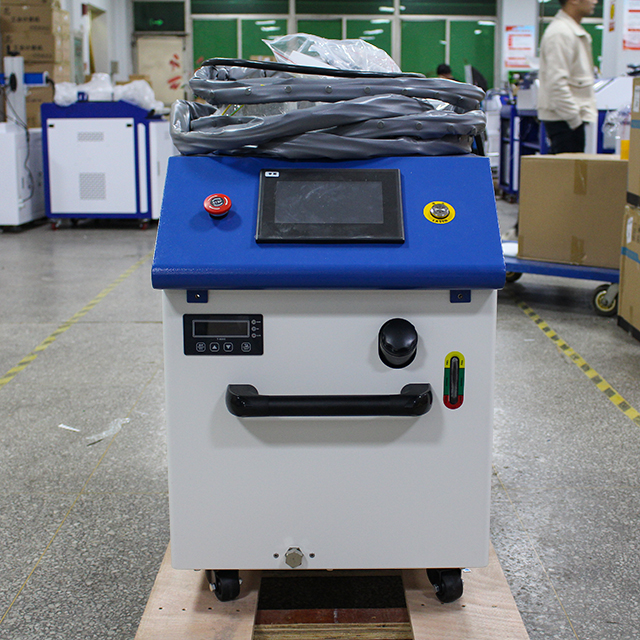
The operating principle of a laser welder differs fundamentally from traditional arc or MIG welding. Rather than relying on electrical arcs or filler-heavy consumables, a laser welder converts electrical energy into a concentrated photon beam that delivers energy with extreme accuracy. This core mechanism is why the laser welder has become a preferred solution in automotive, aerospace, electronics, and precision metalworking environments where quality and repeatability are non-negotiable.
The Core Working Mechanism of a Laser Welder
How a Laser Welder Generates and Focuses Energy
At the heart of every laser welder is a resonator or laser source that produces coherent, monochromatic light. In a fiber laser welder, this light is generated through rare-earth-doped optical fibers and then amplified to reach the power levels needed for metal fusion. The beam produced by a laser welder is guided through a series of optical components, including collimating lenses and focusing optics, until it reaches a spot size that can be smaller than one millimeter. That concentrated energy density is what makes the laser welder capable of melting steel, stainless steel, aluminum, copper, and other metals with exceptional speed.
Once the laser welder delivers energy to the surface, two primary modes can occur. In conduction mode, a laser welder heats the surface and creates a shallow, wide weld pool suitable for thin materials. In keyhole mode, a laser welder drives the beam deep into the material, vaporizing a column of metal and forming a narrow, deep weld with a high depth-to-width ratio. Manufacturing engineers select the appropriate mode based on joint geometry, material thickness, and required mechanical properties.
Beam Delivery and Motion Control in a Laser Welder
A laser welder does not work in isolation. It is integrated with a motion system, either a CNC gantry, robotic arm, or galvanometer scanner, that moves the beam precisely across the joint path. Modern laser welder systems can achieve positioning accuracy within fractions of a millimeter, allowing consistent welds on complex geometries including curved surfaces, corners, and fine seam joints. The combination of beam quality and motion control is what separates a laser welder from lower-precision welding alternatives in high-volume production.
Why Manufacturers Choose a Laser Welder
Speed, Precision, and Heat Management
The laser welder operates at significantly higher speeds than conventional welding methods. Because a laser welder concentrates energy into an extremely small zone, the surrounding material is exposed to far less heat. This narrow heat-affected zone produced by a laser welder reduces warping, discoloration, and residual stress in the finished part. For thin-gauge sheet metal, electronics housings, or precision components where dimensional stability is critical, the laser welder is often the only tool that meets quality standards without requiring extensive post-weld correction.
A laser welder also supports automation more effectively than manual arc welding. Because the laser welder process is consistent and programmable, it integrates seamlessly into robotic cells and production lines where human intervention must be minimized. Repeatability is one of the strongest arguments for adopting a laser welder in any high-throughput manufacturing facility.
Material Versatility of the Laser Welder
A laser welder handles a broad spectrum of metals that are difficult to join with traditional methods. Dissimilar metal joining, such as welding copper to stainless steel or aluminum to titanium, is achievable with a well-configured laser welder because the beam parameters can be tuned for different absorption characteristics. A laser welder also performs well on reflective metals like copper and brass when the correct wavelength and power settings are applied. This versatility makes the laser welder indispensable in industries ranging from battery manufacturing to medical device production.
Laser Welder Integration in a Manufacturing Environment
Setup, Parameters, and Process Optimization
Deploying a laser welder in a production environment requires careful parameter configuration. Key variables include laser power, pulse frequency, welding speed, focal position, and shielding gas selection. For each new application, the laser welder must be tested and optimized to deliver the required penetration depth, bead width, and surface finish. Engineers typically use sample test runs to establish a process window for the laser welder before committing it to full production. Software-controlled parameter storage means that a laser welder can switch between multiple product configurations quickly, supporting mixed-model manufacturing lines.
Shielding gas is another critical factor in laser welder operation. Argon, helium, or nitrogen is directed over the weld pool to prevent oxidation and maintain bead quality. The laser welder nozzle design and gas flow rate must be matched to the material type and joint configuration to achieve a clean, oxide-free weld surface. Poor shielding in a laser welder process leads to porosity and reduced joint strength, so this element is never overlooked in professional setups.
Safety and Maintenance Considerations for a Laser Welder
Operating a laser welder requires adherence to strict safety protocols. High-power laser welder systems emit radiation that can cause severe eye and skin injury if proper enclosures, interlocks, and protective eyewear are not used. Fume extraction is also essential in any laser welder installation because metal vapors and spatter particles generated during welding pose inhalation risks. Routine maintenance of a laser welder includes cleaning optical components, checking fiber integrity, verifying cooling system performance, and calibrating the beam path. A well-maintained laser welder delivers consistent output quality over a long operational lifespan.
FAQ
What materials can a laser welder join effectively?
A laser welder is effective on a wide range of metals including carbon steel, stainless steel, aluminum, titanium, copper, and brass. With proper parameter adjustment, a laser welder can also join dissimilar metals, which is particularly useful in battery assembly and electronics manufacturing where mixed-material joints are common.
How does a laser welder differ from TIG welding in manufacturing?
A laser welder differs from TIG welding primarily in speed, heat input, and automation compatibility. A laser welder produces a much narrower heat-affected zone and can operate at speeds several times faster than TIG. While TIG welding relies on a tungsten electrode and typically requires skilled manual operation, a laser welder is fully programmable and integrates directly into automated production lines without operator intervention.
Is a laser welder suitable for thin metal components?
Yes, a laser welder is particularly well-suited for thin metal components. The precise energy control of a laser welder minimizes heat distortion, which is a common problem with arc-based processes on thin gauges. A laser welder can process foils, thin sheet panels, and micro-components with high accuracy, making it a standard tool in electronics enclosure fabrication and precision instrument manufacturing.
