
 EN
EN
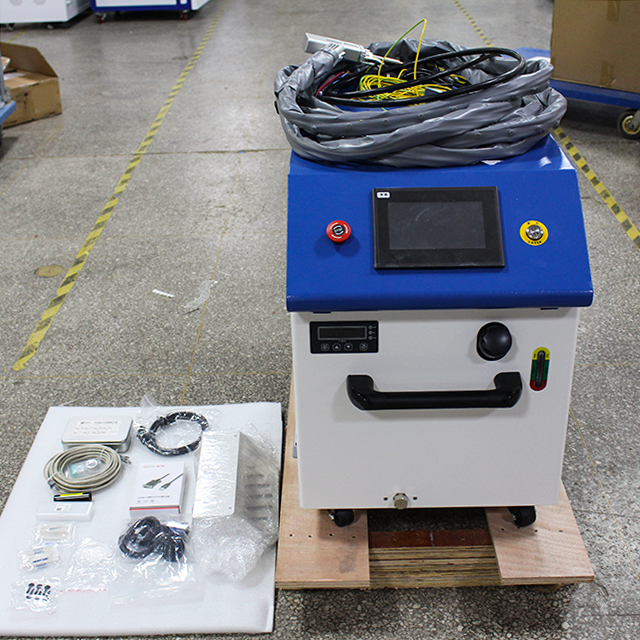
The decision to invest in a laser welder represents one of the most significant capital commitments modern manufacturing facilities face. Unlike traditional welding methods, a laser welder introduces advanced precision, speed, and automation capabilities that fundamentally transform production workflows. Understanding whether this technology justifies its initial cost requires examining both the tangible financial returns and the operational advantages that extend far beyond simple equipment comparison. For manufacturers evaluating technology upgrades, the laser welder emerges as a strategic investment that addresses multiple production challenges simultaneously.
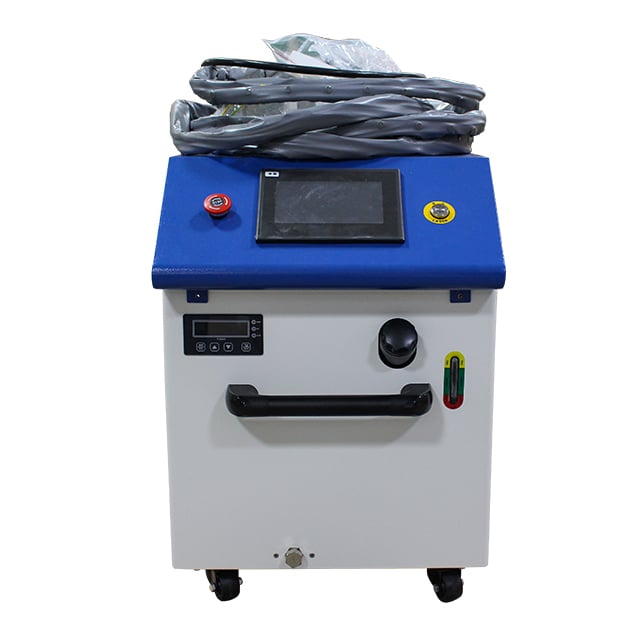
The fiber laser welder has become increasingly prevalent across automotive, aerospace, electronics, and metal fabrication sectors. This shift reflects growing recognition that advanced welding technology delivers measurable productivity improvements and quality enhancements. Organizations that deploy a laser welder typically experience faster payback periods than anticipated, thanks to cumulative gains in production speed, material efficiency, and reduced rework costs. The investment case for a laser welder depends on understanding how precision welding capabilities align with your specific production requirements and long-term manufacturing strategy.
Superior Welding Quality and Precision
Precision Control in Complex Applications
A laser welder delivers unmatched precision by focusing concentrated energy into an extremely small heat-affected zone. This precision becomes critical when joining dissimilar materials, thin sections, or components requiring cosmetic surface finishes. Traditional arc welding often creates wider heat zones that distort nearby structures or weaken adjacent materials. The laser welder minimizes thermal stress and metallurgical changes, preserving material properties in sensitive applications. For industries where weld quality directly impacts product safety or performance, this precision advantage translates directly into competitive differentiation and customer confidence.
Consistency and Repeatability
Manufacturing excellence demands consistent results across production runs. A laser welder executes identical weld parameters repeatedly without human fatigue or variability. CNC-controlled laser welding systems eliminate the operator skill dependency that characterizes traditional processes, ensuring every completed weld meets specification. This consistency reduces scrap rates, rework expenses, and quality inspection costs. For contract manufacturers or OEMs producing high volumes, the consistency delivered by a laser welder significantly improves margins and customer satisfaction metrics. The reduced variation also streamlines downstream processes and reduces tolerance stack-up problems.
Operational Efficiency and Cost Reduction
Faster Cycle Times and Throughput
The laser welder completes welds substantially faster than conventional methods, often reducing cycle time by 40% to 60% depending on application. This speed advantage accumulates across thousands of components, translating into higher daily throughput without additional floor space or capital equipment. Faster production cycles allow facilities to accept more orders, meet shorter lead times, and respond to market fluctuations with agility. A laser welder essentially multiplies productive output from existing floor space, delivering capacity expansion without building new manufacturing wings. For job shops and made-to-order manufacturers, this speed advantage directly increases revenue-generating capacity.
Material Efficiency and Minimal Waste
The concentrated energy distribution of a laser welder minimizes heat input and material distortion compared to broader heat sources used in traditional welding. Reduced heat means less material oxidation, fewer edge imperfections requiring rework, and lower scrap rates. A laser welder consumes less filler material per joint, stretching material inventory further. For operations processing expensive alloys, specialty steels, or exotic metals, this material efficiency creates substantial cost savings. Additionally, reduced spatter and surface contamination mean faster post-weld cleaning cycles, further lowering labor costs. The cumulative material and waste reduction becomes especially significant in high-volume or expensive-material applications.
Long-Term Return on Investment and Strategic Value
Payback Timelines and Financial Performance
A laser welder typically achieves positive ROI within 18 to 36 months for high-volume applications, though precise payback depends on production volume, material costs, and labor rates. Organizations experiencing rapid growth or managing chronic capacity constraints often see accelerated payback as the laser welder unlocks additional revenue. Beyond simple payback calculation, the laser welder contributes to continuous improvement programs by enabling tighter process control and data collection. CNC-integrated systems generate detailed welding records, supporting traceability requirements and quality initiatives. The financial case strengthens further when considering avoided costs from quality failures, customer returns, or warranty claims that precision welding prevents.
Automation Integration and Workforce Adaptation
A laser welder serves as the foundation for progressive automation, seamlessly integrating with robotic arms, positioning systems, and material handling equipment. This scalability means initial investment protects against future technological obsolescence. Workforce adaptation concerns are commonly overstated; companies find that a laser welder frees skilled welders from repetitive manual work, allowing them to focus on setup, process optimization, and complex manual tasks requiring judgment. Training costs for laser operation are modest compared to traditional welding apprenticeships. Organizations leveraging a laser welder strategically enhance workforce skills and job satisfaction while maintaining competitive labor utilization.
Strategic Alignment and Competitive Positioning
Market Differentiation Through Advanced Capability
Competitors operating with traditional welding technology cannot match the speed, precision, or material flexibility that a laser welder provides. This capability gap creates genuine competitive advantage in bidding for demanding contracts. Customers increasingly specify laser welding for quality-critical applications, effectively reserving those market segments for equipped manufacturers. A laser welder enables manufacturers to pursue higher-margin products that smaller competitors cannot produce reliably. This market positioning extends across industries where precision and speed command premium pricing.
Risk Mitigation and Future-Proofing
Manufacturing markets continuously evolve toward tighter tolerances, shorter lead times, and more complex material combinations. A laser welder positions organizations ahead of industry trends rather than chasing them reactively. Investment in advanced capability builds organizational flexibility to respond to emerging customer demands. Additionally, documented precision welding capabilities strengthen customer relationships by demonstrating commitment to quality standards and continuous improvement. For organizations competing in markets where technological capability influences customer selection, a laser welder becomes strategic infrastructure rather than merely tactical equipment. The long-term competitive position secured by this technology often outweighs the initial capital commitment.
FAQ
What initial production volume justifies investing in a laser welder?
Generally, a laser welder becomes financially attractive at annual production volumes exceeding 10,000 to 15,000 welds, depending on weld complexity, cycle time reduction, and material costs. Lower volumes can justify investment if material expenses are high, precision requirements are extreme, or custom applications command premium pricing. Many organizations find that evaluating specific applications rather than relying on generic volume thresholds yields more accurate ROI projections. Consulting with technology providers about your specific production mix provides better guidance than industry generalizations.
How does laser welder implementation affect existing workforce skills?
A laser welder requires different operator skills than traditional arc welding, but experienced welders typically transition successfully within weeks of focused training. The learning curve focuses on CNC programming, process parameters, and equipment maintenance rather than fundamental welding physics. Many organizations retain traditional welding capability for specialized applications while deploying a laser welder for high-volume standard work. This combined approach leverages both technologies strategically and preserves workforce flexibility during transition periods.
What materials and applications work best with fiber laser welder technology?
A laser welder excels on aluminum, stainless steel, titanium, copper alloys, and dissimilar material combinations where traditional methods create quality problems. Complex joints, thin-wall components, and precision assemblies particularly benefit from laser precision. However, very thick sections and carbon steel applications where deep penetration and high heat input are required sometimes remain better served by traditional methods. Evaluating your specific material mix and joint geometry with technology specialists ensures appropriate technology selection and realistic performance expectations.
