
 EN
EN
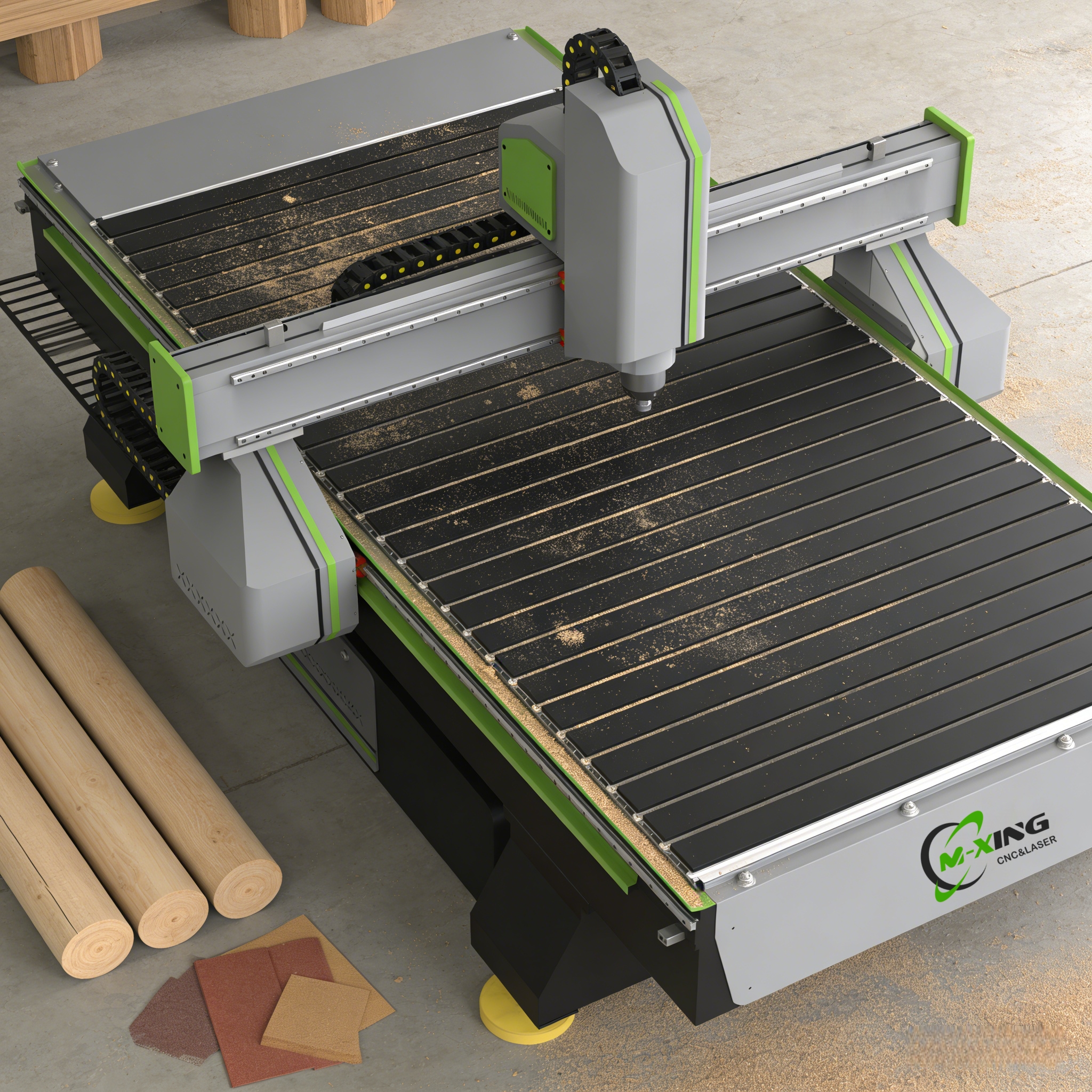
Modern manufacturing has been reshaped by automation, and few technologies have made a more tangible difference on the production floor than the CNC cutting machine. From small custom fabrication shops to large-scale industrial facilities, these systems have redefined what's possible in terms of precision, repeatability, and throughput. This article examines the core benefits that CNC cutting technology delivers to manufacturers — and why those benefits compound over time rather than diminish.

Precision and Repeatability That Manual Methods Cannot Match
The most fundamental advantage a CNC cutting machine brings to manufacturing is the elimination of human variation from the cutting process. When a toolpath is programmed and verified, every part produced from that program is cut to the same dimensions — whether it's the first piece of the day or the five hundredth. This level of repeatability is structurally impossible to sustain with manual cutting methods, where operator fatigue, attention, and physical consistency all introduce variability over time.
In practical terms, this means tighter tolerances across production batches, fewer rejected parts, and less material wasted on rework. For industries where components must fit together precisely — such as furniture manufacturing, architectural fabrication, signage production, and custom metalwork — this consistency is not a luxury but a baseline requirement. A CNC cutting machine programmed with accurate CAD/CAM data holds that standard continuously, across shifts and across operators.
Productivity Gains Through Continuous Operation
Manual cutting requires the operator to be actively present and engaged throughout every cut. CNC technology decouples the machine's operation from constant human attention. Once a job is loaded and running, a single operator can oversee multiple machines, perform material handling, or prepare the next job while the current one completes — a workflow model that is simply not available with manual processes.
The throughput advantage extends further when you consider that CNC cutting machines can operate across extended shifts without degradation in performance. Consistency at hour eight is identical to consistency at hour one. For manufacturers dealing with high-volume orders or tight delivery windows, this capacity for sustained output without quality drift is a significant competitive advantage.
Nesting software — which optimizes how parts are arranged on a sheet to minimize waste — integrates directly with CNC cutting systems and further increases effective productivity by reducing the number of sheet loads required per production run.
Material Versatility Across Manufacturing Sectors
One of the reasons CNC cutting machine technology has penetrated such a wide range of manufacturing sectors is its adaptability across cutting methods and materials. Different CNC cutting technologies — including laser, plasma, waterjet, and router-based systems — each cover a specific material range, and together they span almost every substrate used in modern production.
CO2 laser-based CNC systems handle non-metallic materials such as acrylic, wood, MDF, leather, fabric, and paper with high precision and clean edge quality — making them the standard tool in advertising, signage, furniture, and craft manufacturing. Plasma and fiber laser CNC systems address conductive metals including steel, aluminum, copper, and brass, serving fabrication, construction, and heavy manufacturing. Waterjet CNC systems extend cutting capability to heat-sensitive materials, composites, stone, and glass without introducing thermal distortion.
This breadth means manufacturers are not constrained to a single process. As product lines evolve or new materials are introduced, the appropriate CNC cutting platform can be integrated into the workflow without requiring a complete retooling of the production environment.
Manufacturing Benefits by Industry Sector
| Industry | Primary Material | CNC Cutting Technology | Key Benefit |
|---|---|---|---|
| Signage & Advertising | Acrylic, MDF, PVC | CO2 Laser | Fine detail, clean edges on display materials |
| Furniture & Woodworking | Wood, MDF, Plywood | CO2 Laser / Router | Full-sheet processing, consistent panel dimensions |
| Metal Fabrication | Steel, Aluminum, Copper | Plasma / Fiber Laser | High-speed cutting, tight tolerances on metal parts |
| Leather & Textile | Leather, Fabric, Felt | CO2 Laser | No-contact cutting, no fraying, intricate pattern work |
| Packaging & Print | Paper, Card, Foam | CO2 Laser / Router | Precise die-cut results, fast turnaround |
| Architecture & Modeling | Acrylic, Wood, Composite | CO2 Laser / Waterjet | Complex geometry, clean finish on presentation pieces |
| Crafts & Gifts | Bamboo, MDF, Acrylic | CO2 Laser | Engraving and cutting in a single setup |
Reduced Waste and Lower Long-Term Operating Costs
Material waste is one of the more significant hidden costs in manual cutting operations. Imprecise cuts, measurement errors, and suboptimal material layout all contribute to scrap that represents real cost. A CNC cutting machine addresses this on multiple fronts simultaneously.
Programmed toolpaths ensure that every cut follows the intended geometry exactly, eliminating the overcuts and irregular edges that result from manual operation. Nesting software maximizes material utilization by computing the most efficient arrangement of parts on each sheet before the first cut is made. Over a production run of any meaningful size, the reduction in scrap material translates directly into lower raw material costs per finished part.
Beyond material savings, CNC systems also reduce labor costs relative to output. A single trained operator managing a CNC cutting machine produces output that would require multiple manual cutters to match — and does so with greater consistency. The ongoing maintenance costs of CNC equipment, while real, are predictable and manageable, particularly on platforms designed with reliability as a priority.
Software Integration and Design Flexibility
Modern CNC cutting machines operate within a broader digital production ecosystem rather than in isolation. They accept files generated by standard CAD and graphic design software — including AutoCAD, CorelDRAW, Adobe Illustrator, and Fusion 360 — and process them through CAM software that generates the toolpaths the machine executes. This integration means that a design change made in the CAD environment flows directly to the cutting machine without requiring physical retooling or manual recalibration.
For manufacturers working with custom orders or short-run production, this digital flexibility is especially valuable. Switching between different part designs requires only a software change, not a physical setup change. This dramatically lowers the cost and time penalty of producing small batches or one-off custom pieces, which would be prohibitively expensive to produce manually at the same quality level.
FAQ
What types of businesses benefit most from a CNC cutting machine? Any business that produces cut components at volume or requires consistent precision benefits from CNC cutting technology. The industries with the strongest adoption include signage and advertising, furniture and woodworking, metal fabrication, leather goods, packaging, architectural modeling, and craft manufacturing. The common thread is a need for repeatable accuracy across multiple parts or designs.
How does a CNC cutting machine reduce production costs? Cost reduction comes from several directions simultaneously: lower material waste through optimized nesting and precise cutting, reduced labor input relative to output volume, fewer rejected parts from dimensional inconsistency, and faster cycle times that increase throughput within the same operating hours. Over a production run, these savings accumulate significantly.
Is CNC cutting technology suitable for small or custom production runs? Yes, and this is one of the areas where CNC technology has changed manufacturing most meaningfully. Because switching between designs requires only a software change rather than a physical retooling, small batch and custom production is economically viable on a CNC cutting machine in a way that it simply isn't with traditional tooling-based cutting methods.
What maintenance does a CNC cutting machine require? Maintenance requirements vary by cutting technology, but generally include regular cleaning of the cutting head or spindle, lubrication of linear guide rails and drive components, inspection of consumable parts such as nozzles or protective lenses, and periodic calibration checks. Most modern CNC systems are designed to minimize downtime, with consumable replacement being the most frequent maintenance task in normal operation.
How long does it take to learn to operate a CNC cutting machine? Basic operation — loading jobs, running programs, and performing standard material setup — can typically be learned within a few days on modern CNC platforms that use intuitive DSP or PC-based controllers with visual interfaces. Developing proficiency in CAM software and optimizing cutting parameters for different materials takes longer, but most manufacturers find their operators reach productive competence within a few weeks of regular use.
The benefits of CNC cutting machine technology are not limited to any single metric. Precision, productivity, material efficiency, and design flexibility all improve simultaneously, and those improvements reinforce each other across the entire production workflow. For manufacturers evaluating where to invest in process improvement, CNC cutting technology consistently delivers measurable returns across a wide range of production environments and scales.
