Cardboard is the cheapest material in the workshop and the fastest to cut, which is exactly why operators treat it casually. It is also the material that produces the ugliest failures, because almost nothing about it is stable.
Physically, cardboard is mostly air held in a paper structure. There is very little material to remove, so it cuts at low energy and high speed compared with wood or MDF. That is the good news. The problems come from three properties that no setting can change.
It absorbs moisture. Paperboard and corrugated board take up water from the air, so the same file and the same settings can cut cleanly on Monday and smoulder on Friday. A damp board needs more energy to cut through, and extra energy on a damp board produces char rather than a clean edge.
Its thickness is a structure, not a measurement. Tabula ondulata non est "papyrum crassa". Est enim sandwich ex duobus stratis (liner) et strato intermedio (flute), et cavitas flutuum mutat modum quo calor movetur, modum quo ordo (edge) apparet, et vim scatulae finitae. Secare transversim per flutes aliud est opus quam secare secundum flutes.
Manet ardens postquam radius iam movit. Cardboard est materia quae maxime probabile est manere lucens in ordo sectionis. Haec una proprietas est cur regulas de igne, quae subsequuntur in hoc articulo, non possint omitti.
Ambae venduntur ut "cardboard", sed ita diversimode se habent ut duae distinctae materiae tractandae sint.
Regula pro quolibet laminato, revecto aut folio obducto simplex est: si fornitor non potest dicere quid revestimentum sit, tabula non adhibetur in machina. Filmia chlorata gas corrosivum emittunt quod optica damnat et operarios laedit, et folium reflectens sectiones praedictas non facit.
In arboricultura aut in signis, ordo marginis secti est praesertim ornamentalis. In confectione pugillorum autem est functionalis: fit lamella ad colligendum, paries scissurae, linea plicaturae, aut superficies aptationis. Id mutat quid significet "bonum".
Communissimum problema proprium confectionis pugillorum est aptatio. Quaelibet sectio removet kerf, itaque tabula ad dimensionem nominalem secta minor evadit, et scissura maior. In tabula 3 mm, haec differentia sufficit ut pressio firma aptationis in articulum laxum convertatur, qui glutinum postulat. Ideo designa tabularum et scissurarum necessitant compensationem kerf in schemate ante dispositionem file, et quantitas mensuranda est in ipsa tabula, non assumenda ex opere priore.
Color of edge matters as much as fit. Too much energy produces a browned or blackened edge that marks hands, marks the product, and looks unacceptable on retail packaging. Too little energy leaves a fuzzy, fibrous edge that will not glue cleanly. For board, speed is the main control: a fast pass with modest energy gives a narrow, sealed edge, while a slow pass cooks the edge and spreads the browning.
Flute direction belongs in the nesting decision, not in the settings. A cut across the flutes opens the flute cavities along the edge, which weakens the wall and produces more dust; a cut along the flutes leaves a cleaner line. Where a design allows it, orienting parts so that the main cut runs along the flutes gives a better edge and a stronger box.
A laser is a cutting and marking tool. It is not a creasing tool, and confusing the two is the source of most failed packaging prototypes.
The last two rows are where laser earns its place in packaging. A printed mockup that matches the production artwork, cut on the same day it was designed, is worth more to a brand owner than a cheaper box that takes two weeks and a die.
Laser cutting removes tooling from the equation. That makes it the right choice when the design is still moving, when the order is small, when the shape has complex internal cutouts, or when a printed sheet needs to become a physical pack for approval. Change the file, cut again, and the iteration costs a sheet of board and a few minutes.
Die cutting wins on different ground. At volume, the cost per unit falls because the tooling cost is spread across thousands of pieces, the creasing is properly compressed rather than weakened, and the throughput of a die press is far higher than a laser head tracing every outline. For a folding carton that will run for months, a die is usually the correct production tool.
The practical answer for most converters is a hybrid: laser for the prototype and the customer approval, die cutting for the production run. It is worth noting that the two are not separate worlds. Die boards themselves are laser-cut, which is why die-making shops run laser machines alongside their presses.
Omnis materia in officina laseris ardescere potest. Cartonum est quod saepissime ardet, quia facile accenditur, in magno numero iuxta machinam reponitur, et eius orsa secta post transitum capitis manere potest lucens.
Tres mechanicae speciales momenti sunt.
Fumigatio orsa Un passus lente factus calorem in orlo corrugato relinquere potest, ut charta sine flamma adhuc carbonizetur. Aspectus est perfecti, et post viginti minuta linea fusca per cistulam diffunditur. Pars a lecto remota non incendium sistit; in cistula cum aliis fragmentis posita cistulam incendere potest.
Iniectio prunarum in extractionem. Auxilium aeris suum officium facit fumum repellendo, et prunas simul repellit. Pulvis corrugatus et minuta fragmenta quae in ductum ingrediuntur ibi sedere et in ductu vel in filtro accendi possunt. Systemata extractionis secundum programmam mundanda sunt, non cum aliquis meminit.
Onus combustibilis in lecto. Fragmenta, pulvis chartaceus et fragmenta cartonum sub favo accumulantur. Cum loco calido coniuncta, haec est classica incendii causa in machina laseris.
Regulae operationis sunt simplices sed efficaces: numquam relinquere opus ex cartone sine custodia, tenere auxilium aeris moderatum potius quam maximum, inspicere lectum et cistulam residuorum post singulum opus potius quam ad finem turni, tenere ductum et filtrum mundos, et observare partes finitas contra incendium per paucos minutos antequam in depositum ponantur.
Un test joint est l’habitude la plus précieuse de cette liste. Il demande une seule petite découpe, coûte un petit morceau de panneau, et détecte l’erreur de largeur de coupe avant que cent découpes ne soient erronées.
Le carton ne nécessite pas de puissance. Il exige de la vitesse, une grande surface plane, et un mouvement qui maintient la précision même à grande vitesse, car une découpe de boîte consiste surtout en un contour, et la tête passe plus de temps à se déplacer qu’à couper.
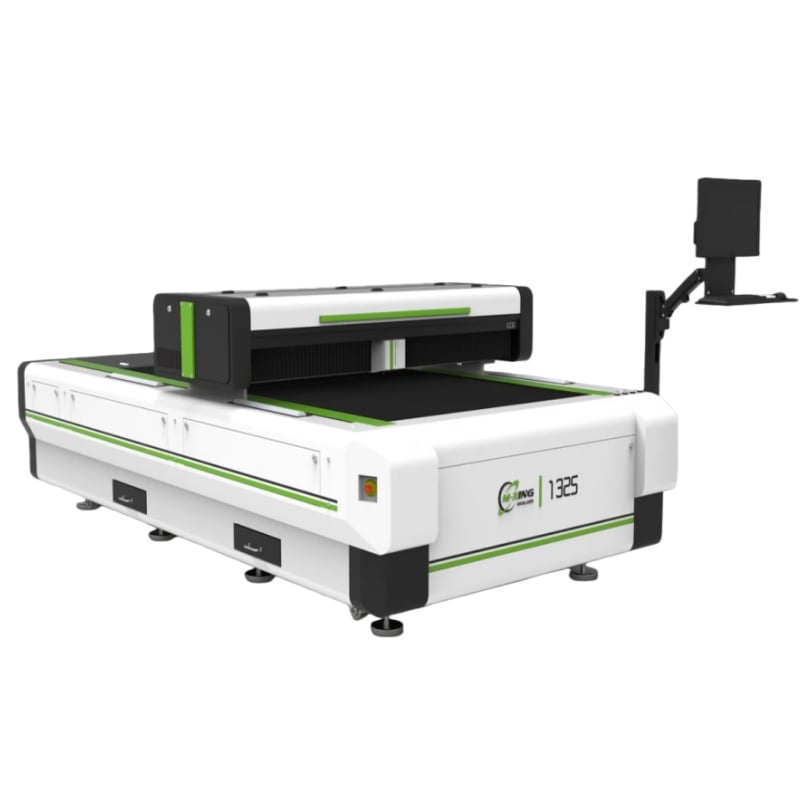
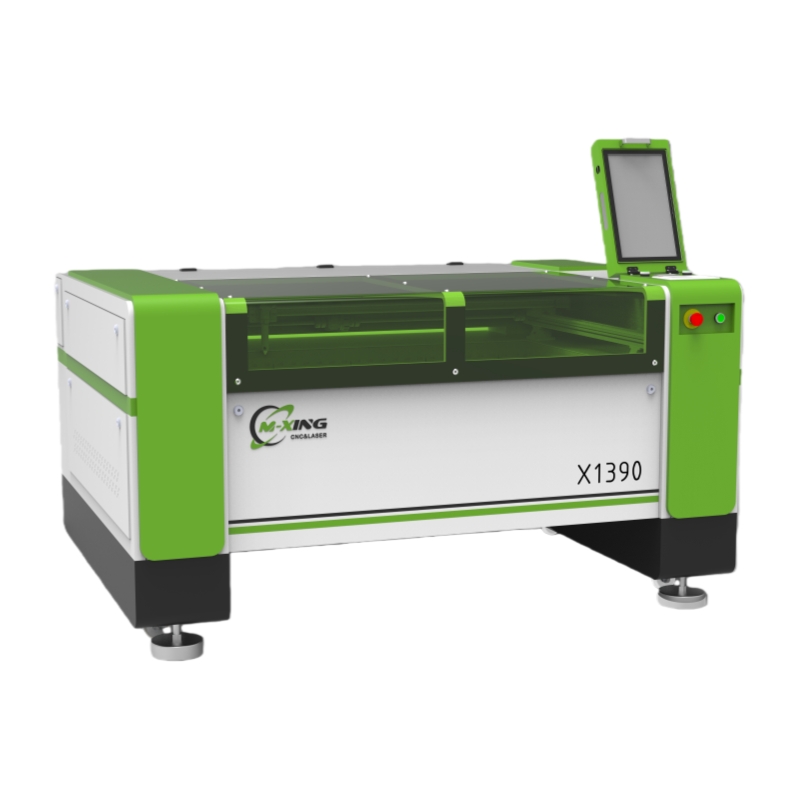
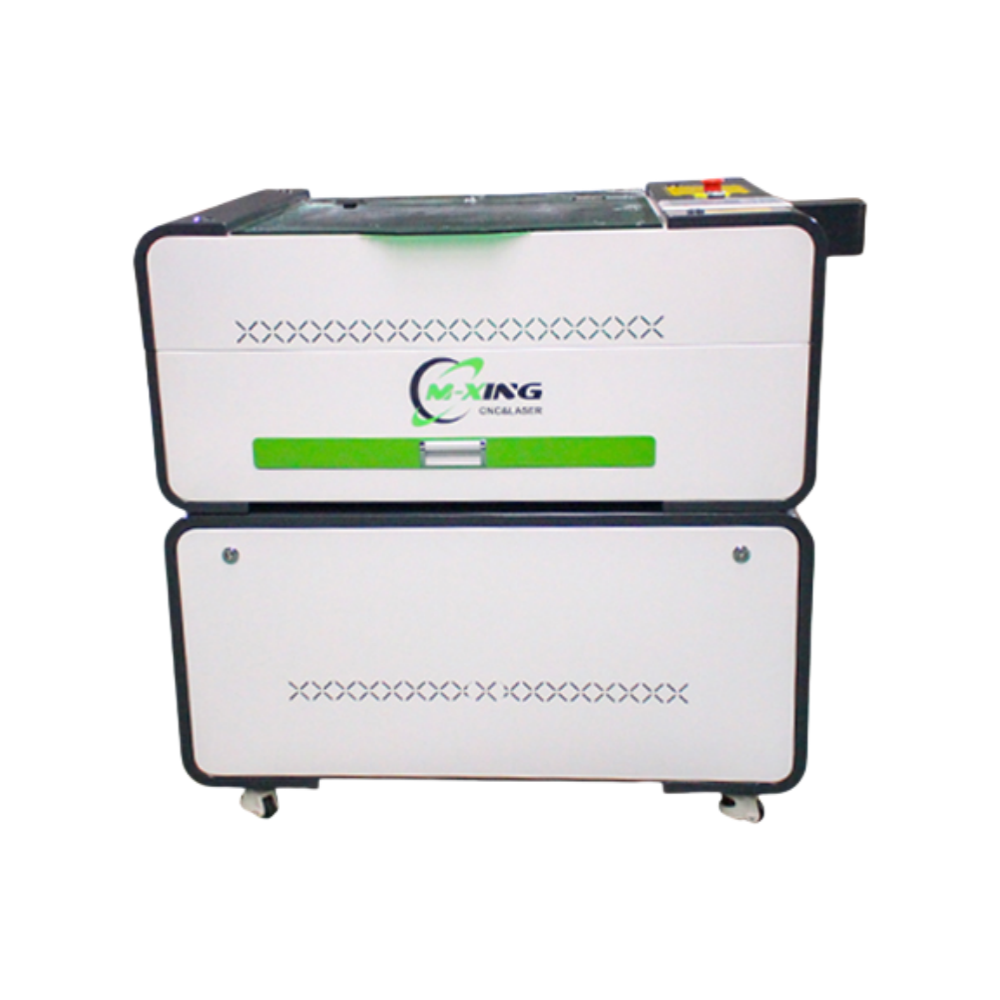
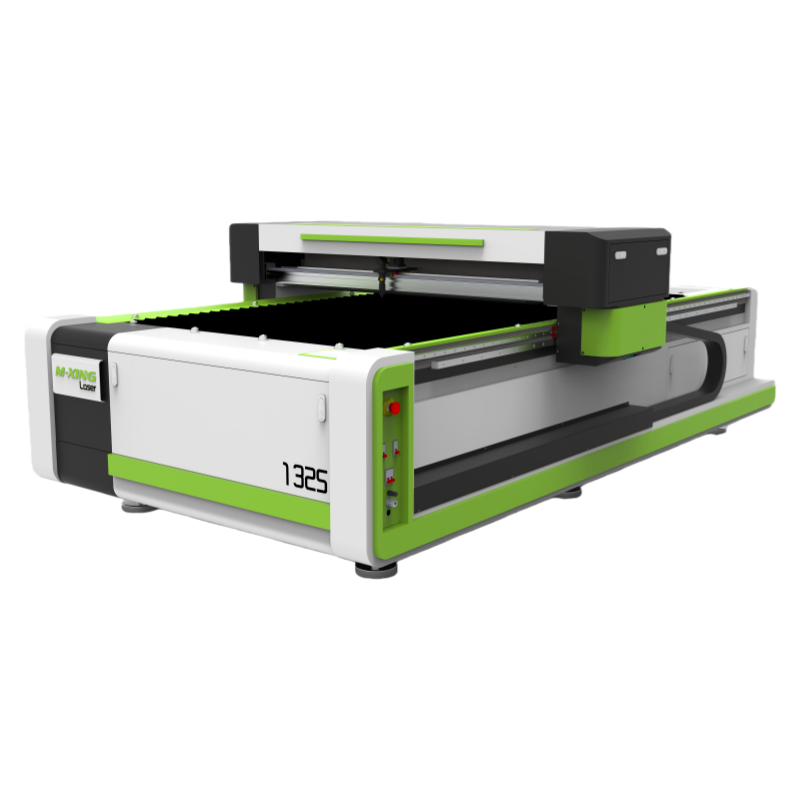
La taille de la surface de travail doit être choisie en fonction de la découpe la plus grande, et non de la moyenne des travaux. Une découpe de boîte d’expédition est grande et encombrante ; une surface de travail trop petite pour l’accueillir à plat oblige à diviser le design en panneaux assemblés par ruban adhésif. Les formats 1325 et 1610 conviennent aux découpes complètes de boîtes et aux emballages d’affichage ; le format 6090 convient aux cartons de vente au détail, aux inserts et aux travaux de prototype, où les pièces sont petites.
Duo optiones pro emballagio specialiter considerandae sunt. Positio camerae permittit viam secandi ad artificium impressum registrare, quod facit simulacrum impressum credibilem et quod emballagium impressum in serie brevi omnino possibilem reddit. Configuratio cum duobus capitis aucta efficiens est pro seriebus repetitis cartonum sine additione instrumentorum, quod est aequivalens emballagii pro parva serie matricis.
Configurationes potentiae in platformis 6090, 1390 et 1610 offeruntur in intervallo 100W usque ad 150W; et pro tabula hoc intervallum abunde sufficit. Limitatio in emballagio efficiens est mensa et systema motus, non tubus. Quod vero curae indiget est extractio dimensurata pro pulvere papiraceo et procedura operativa igni-sicura, quia haec duo determinant utrum machina possit tabulam tota die sine incidente agere.
Tabula cartonacea velocitatem praemiat et assumptionem puniet. Est materia celerrima in mensa et maxime probabile est ut ardeat viginti minuta post finem operis.
Regulae operativae breves sunt. Antequam tabulam in locum suum ponas, identifica tabulam et directionem flautae; mensura incisuram (kerf) in ipsa lamina et omnes proprietates aptationis compensa; energiam tene parvam et velocitatem magnam, ut ordo angustus et mundus maneat; confirmare omnem stratum antequam ad optica accedat; scissuram laseris ut instrumentum pro simulatione, non ut incisuram productionis, tracta; et numquam relinquere opus tabulae sine custodia.
Hoc modo usus, eadem machina quae acrylica, MDF et textilia secet, e file impresso diem eundem pachetum physicum efficiet, quod est exacte facultas pro qua operatio imbricationis brevis seriei et ad mensuram venditur.
 Nuntii Calidi
2026-02-05
2026-02-03
2025-12-01

Mingxing Laser est praecipuus fabricator machinarum laser e Sinis, qui offert incisores laser CO₂, machinas laser ad secandum fibrosas, machinas CNC, machinas laser ad soldandum et ad notandum. Solutiones ad usum specialem (OEM/ODM) paratae sunt. Petite hodie consilium!
- Company Headquarters: Room 1303, Building 4, UnitedFortune Plaza, High-tech Zone, Jinan City, Shandong Province, China
- Manufacturing Plant: No. 18, Yinhe Road, Jibei Street, Jiyang District, Jinan City, Shandong Province, China
Copyright © 2026 Century Mingxing (jinan) Intelligent Technology Co., Ltd. All rights reserved. POLITICA PRIVATATIS

 EN