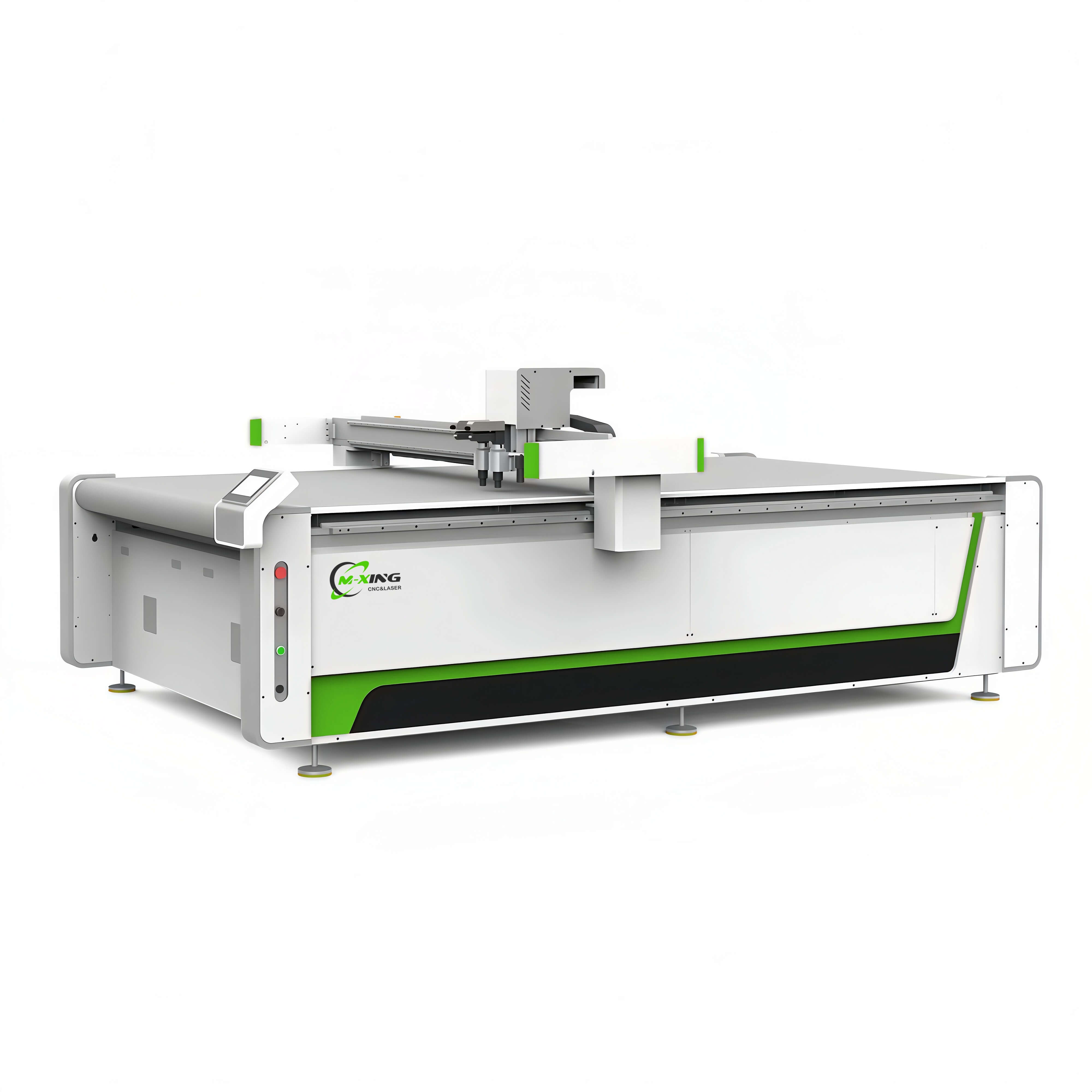
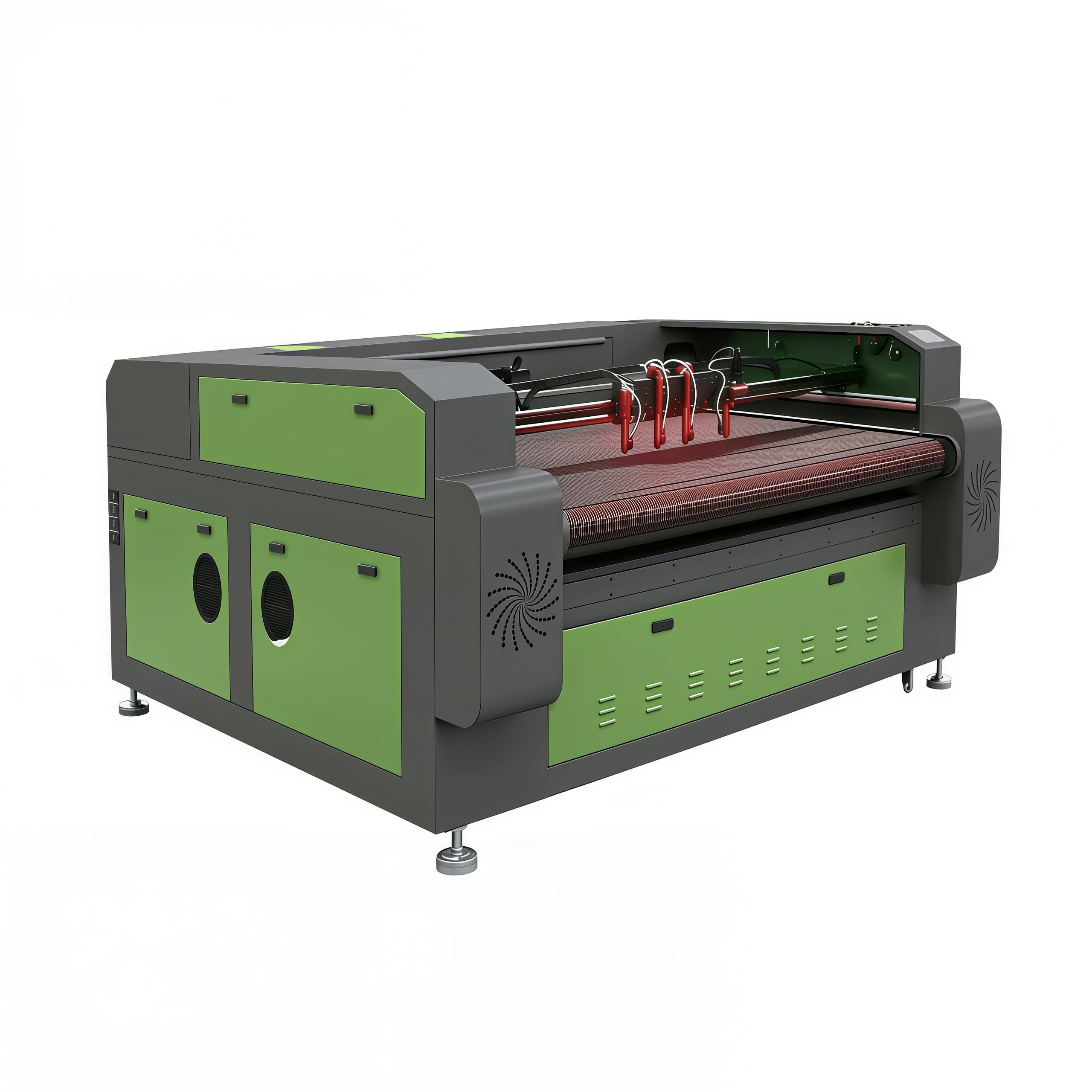
A laser cutter is blind. It trusts the file's coordinate origin and assumes the material is exactly where the drawing says it is. Every workaround operators use — squaring the sheet against stops, taping it down, cutting a test piece first — exists to make that assumption true.
A camera removes the assumption. It lets the machine see the actual sheet, find features that are already on it, and shift the toolpath to match. That is the whole function, and it is worth being precise about what it does and does not do.
It solves a positioning problem. It does not improve edge quality, cut speed or kerf. A camera on a badly focused machine produces a perfectly aligned, badly cut part.
Three different jobs get called "camera cutting", and they have different requirements:
Registration to existing marks. The material already carries fiducials, holes or edges. The camera finds them and offsets the file so the cut lands where it was designed to land.
Cut-to-print. The sheet carries printed artwork, and the cut must follow the print rather than the nominal drawing. This is the hardest of the three, because print is not rigid.
Nesting and remnant use. The camera maps what is actually usable on the sheet — the outline of an offcut, the position of a defect — and the operator nests parts inside that real area rather than a nominal rectangle.
A fourth, less discussed use is inversa digitalizatio : laying an existing part on the bed, tracing its outline on screen, and exporting a cut file. Useful for legacy parts with no drawing.
It is a common and expensive mistake to specify one camera for all of these, then judge it by the hardest one.
Tolerantia quae refert non est numerus principalis camarae. Est tolerantia coniunctionis in quam pars inseritur, comparata cum errore quem camera relinquit ad angulos lectuli , non ad centrum.
Praevisio ostendit artem allignatam ad lineas secandi. Opus exequitur. Dimidia tabula recta est et altera dimidia habet secationem abire a pictura. Haec est querela camarae communissima, et camera saepe non est causa.
Print is not a rigid body. Paper and board stretch and shrink with humidity. Laminates and films relax at different rates from the substrate they are bonded to. Screen printing can change the sheet's dimensions in the direction of the squeegee; digital print usually does not. Two sheets from the same box can differ. A printed sheet is therefore a slightly different size and shape every time — and not uniformly, but varying across the sheet and between sheets.
That is why a single offset-and-rotate cannot fix it. If the print has grown unevenly — more in the feed direction than across it, and more at one edge than the other — aligning three marks correctly still leaves the fourth area wrong. Cut-to-print needs local correction: several marks distributed across the sheet, with the software interpolating between them, or the sheet split into zones that are each aligned separately.
The rules that follow are simple:
Systema camerae tria calibrations habet, et unaquaeque fallit cum alia signatura.
Distortio lentis. Omnis lens curvat lineas rectas prope suos margines. Software corrigit hoc per modellem; si haec modellem est falsa aut desideratur, centrum imaginis est verum, sed margines non sunt.
Scala. Picturae ad milimetros. Si scala est falsa, dimensiones errant per certum procentum, et error crescit cum distantia ab puncto referentiae.
Distantia inter cameram et laserem. Camera aspicit punctum quod non est effusor. Haec distantia exacte cognosci debet, quia omne opus per eam translata est.
Haec tria signa sunt celerissima diagnosticatio in campo, et memorari merentur:
Demonstrationes laboratorii utuntur charta alba et punctis nigris. Officinae utuntur acrylico lucido, corio obscuro, metallo speculo-simili, arte impressa confusa et pellicula transparente. Detectio per cameram est problema contrastus ante omnia alia, et pleraeque defectus in situ sunt optici potius quam computatorii.
Contramediae sunt ingloriae:
When detection fails intermittently, check in this order: mark contrast, mark size relative to the field of view, lighting consistency, window cleanliness, then software thresholds. Operators usually start at the last item.
A camera adds cost, a calibration burden and a per-sheet alignment step. It pays when a mis-cut sheet costs more than that step.
The honest calculation is per job family, not per machine: list the jobs where a sheet is expensive or the print dictates the cut, and see whether the saved scrap pays for the option.
Systemata camerae differunt in modis quae magis valent quam folium promittit, et quaestiones sunt dignae proponi ante ordinem quam post installationem.
An camera fixa est ad caput an ad trabem? Camera ad caput fixa sequitur positionem incisionis et saepe tegit aream minorem altiore resolutione; camera ad trabem fixa potest capere totam laminam sed fortasse coniungit plures imagines. Camera ad caput fixa favet registrationi ad signa localia; camera ad trabem fixa favet mappae totius laminis et dispositioni reliquiarum.
Potestne videre totam basim, an coniungit imagines? Coniunctio operatur, sed omnis iunctura est locus ubi allignment potest deviare. Interroga quot imagines coniungat, et quam diu exploratio durat in maxima lamina quam uti vis.
Quae est procedura calibrandi, et quam diu durat? A calibration that needs a technician and half a day will not be redone when it should be. Ask for the routine and the tooling.
Does the software support multi-point alignment and remnant nesting? One-offset registration is a different product from zone-based cut-to-print. Check the workflow on your own file.
What does the accuracy figure refer to? Ask specifically: at the centre or at the corners, on what bed size, with what lens. A single headline number usually describes the best case.
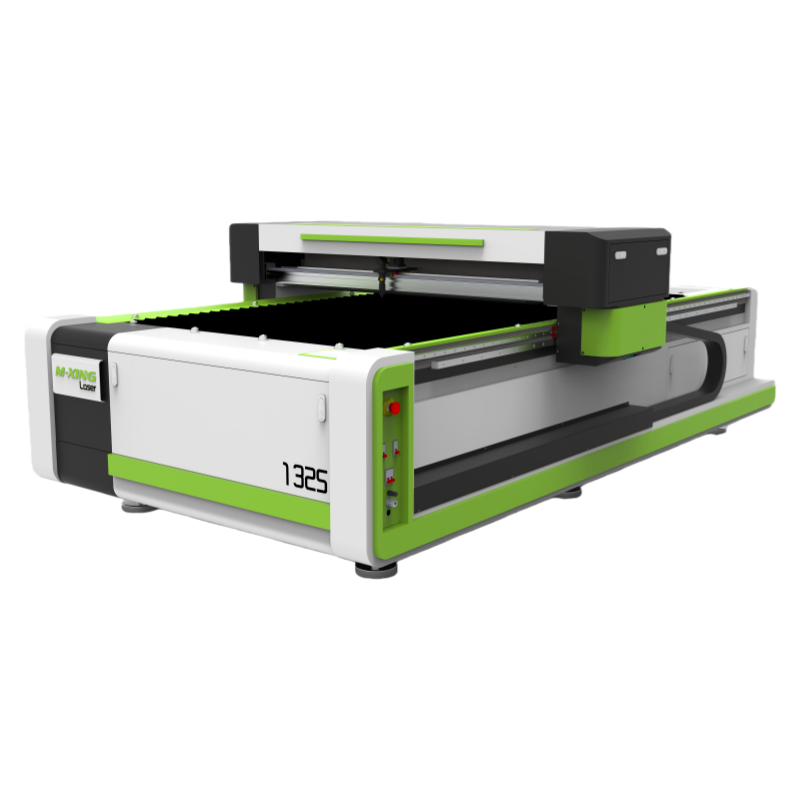
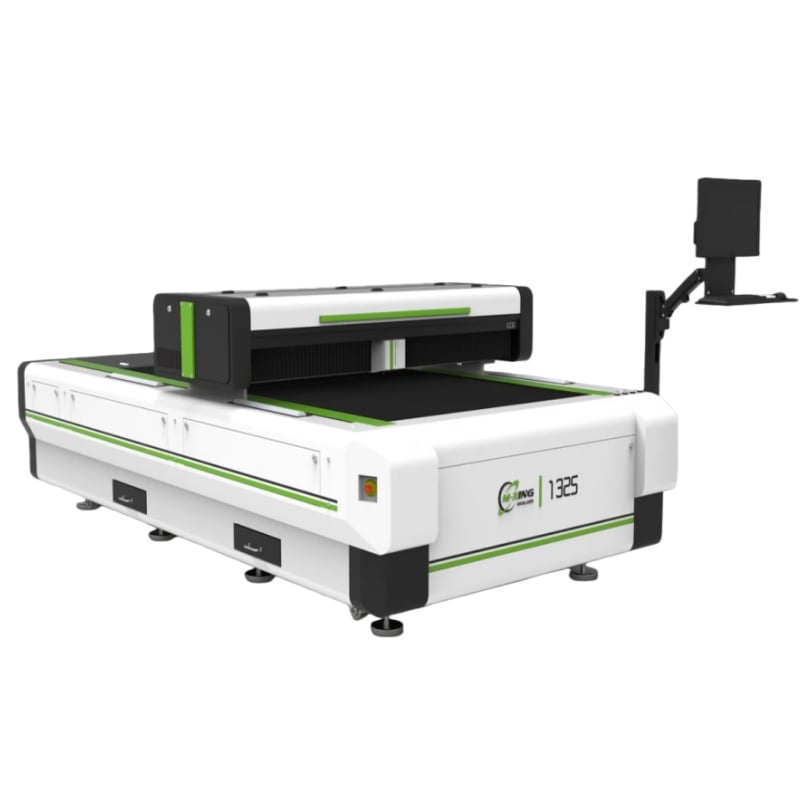
Mingxing Laser's 1325 platform is offered with an optional CCD camera for edge-patrol cutting, with Ruida and Xingduowei systems as options, alongside the standard 6090, 1390 and 1610 working formats. Whatever system is specified, the four-corner test is the only figure that describes what the machine will do on your material.
A camera is a positioning tool, and it is only as good as its calibration and its contrast. It will not rescue a wrong file, a wrong focus or a material that moves.
Usatus ubi pertinet — in opere impresso, in carissima lamina, in nidificatione reliquiarum, in partibus vetustis — iudicium operarii peritissimi in ritum repetibilem convertit, quod vere opus est officinae crescenti. Si pro disciplina processus substituitur, scoria celerius et confidentius producitur.
 Nuntii Calidi
2026-02-05
2026-02-03
2025-12-01

Mingxing Laser est praecipuus fabricator machinarum laser e Sinis, qui offert incisores laser CO₂, machinas laser ad secandum fibrosas, machinas CNC, machinas laser ad soldandum et ad notandum. Solutiones ad usum specialem (OEM/ODM) paratae sunt. Petite hodie consilium!
- Company Headquarters: Room 1303, Building 4, UnitedFortune Plaza, High-tech Zone, Jinan City, Shandong Province, China
- Manufacturing Plant: No. 18, Yinhe Road, Jibei Street, Jiyang District, Jinan City, Shandong Province, China
Copyright © 2026 Century Mingxing (jinan) Intelligent Technology Co., Ltd. All rights reserved. POLITICA PRIVATATIS

 EN